Washington — As debate intensifies over U.S. military involvement abroad, a group of retired military leaders and veterans in Congress are publicly raising concerns about the direction of American foreign policy, warning that recent rhetoric surrounding Venezuela risks repeating costly mistakes of the past.
Retired Lieutenant General Mark Hertling, who served multiple tours in Iraq, spoke candidly this week about what he described as a lack of clarity and long-term planning in discussions of regime change. In a written statement and subsequent interview, Hertling cautioned against treating regime change as a narrowly defined military operation rather than a sustained, whole-of-government effort requiring years—if not decades—of political, economic, and social engagement.

“One of the lessons we paid dearly to learn,” Hertling said, “is that legitimacy cannot be imported.” He emphasized that governments derive authority from the trust of their own populations, not from foreign military intervention. Drawing on his experience in Iraq, particularly in regions surrounding critical oil infrastructure, Hertling described how efforts to stabilize and rebuild economies were repeatedly undermined by security challenges and local resistance.
Hertling also expressed concern about recent public comments suggesting that U.S. officials could oversee aspects of governance in Venezuela without deploying significant ground forces. He noted that Venezuela’s size, population of roughly 30 million people, and sizable security apparatus would make any such undertaking extraordinarily complex. “These are conditions where unpredictability thrives,” he said, warning of the potential for insurgency or destabilization by former regime elements.
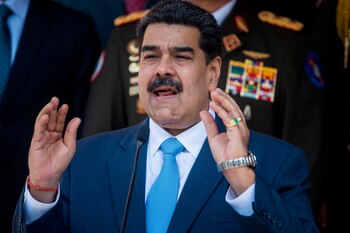
Those concerns were echoed by Representative Jason Crow of Colorado, a former Army Ranger and three-time combat veteran, who framed the issue through the lens of domestic accountability and public sentiment. Crow reflected on the two decades of war in Iraq and Afghanistan, pointing to the trillions of dollars spent and the thousands of American lives lost in conflicts that began without sustained congressional oversight.
Crow argued that the prospect of another prolonged foreign engagement stands in sharp contrast to the economic pressures facing many Americans. Rising costs for housing, health care, and food have strained households nationwide, he said, making foreign military commitments increasingly unpopular. “The American people are exhausted by wars that promise quick solutions but deliver long-term consequences,” Crow noted.
The congressman also highlighted what he described as a recurring imbalance in how decisions about war are made. While political leaders debate strategy in Washington, he said, the burden of combat consistently falls on young service members and their families. “When rhetoric escalates,” Crow said, “it is often those far removed from the policy tables who pay the highest price.”
Taken together, the remarks from Hertling and Crow reflect a broader unease among veterans who have witnessed firsthand the limits of military power in reshaping foreign societies. Their warnings arrive at a moment when the administration’s language about Venezuela has fueled speculation about expanded U.S. involvement, even as officials insist that no definitive plans have been finalized.
For critics, the issue is less about a single country than about the enduring lessons of recent history. Without clearly defined objectives, congressional authorization, and sustained international cooperation, they argue, the risk of repeating past failures remains high. As the national conversation continues, voices shaped by years of combat and reconstruction are urging caution—reminding policymakers that the consequences of intervention rarely end when the headlines fade.