The Melania Trump Film and the Quiet Normalization of Power-for-Favor Politics
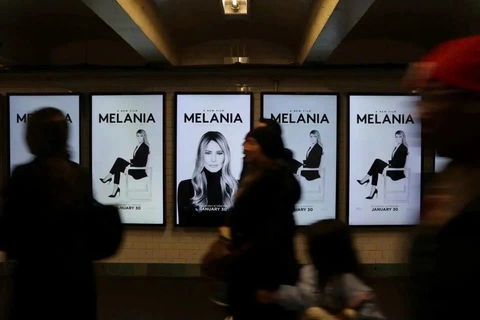
By the standards of Hollywood, Melania, the documentary released this past weekend about former First Lady Melania Trump, was a failure almost from the moment it reached theaters. Early box office reports from the United States, Canada, and the United Kingdom showed empty auditoriums, anemic ticket sales, and industry executives describing demand as “soft.” In at least one major London cinema, according to reporting from British trade publications, a single ticket was sold for an opening-day screening.
Yet measured purely by revenue, the film appears to have outperformed expectations, grossing a reported $7 million in its opening weekend—above initial projections of $3 to $5 million. That figure, however, obscures the larger financial picture. Amazon MGM Studios reportedly paid approximately $40 million to acquire distribution rights to the film and spent an additional $30 to $35 million on marketing, suggesting that the project is unlikely to recoup its costs through traditional box office performance.
That disparity has prompted a broader question that extends well beyond cinema economics: why did this film get made at this scale in the first place?
A Film, a Favor, and a Pattern
At the center of the controversy is Jeff Bezos, the founder of Amazon and owner of The Washington Post, whose company licensed and distributed the film. The release followed a private dinner between Bezos and Donald Trump at Mar-a-Lago, a meeting that took place amid ongoing regulatory scrutiny of Amazon and increasing political pressure on major technology companies.
Critics argue that the Melania documentary represents something less conventional than a commercial gamble: a political favor executed through corporate channels. While there is no evidence of an explicit quid pro quo, ethics experts note that the appearance of financial benefit flowing to the family of a sitting president from a billionaire whose business interests are affected by federal policy raises concerns about influence, access, and normalization.
Such arrangements are not illegal. But they are unusual in modern American politics—at least in their visibility.
“When private wealth and executive power intersect this directly, the issue isn’t criminality,” said one former federal ethics official. “It’s precedent.”
The Documentary Itself

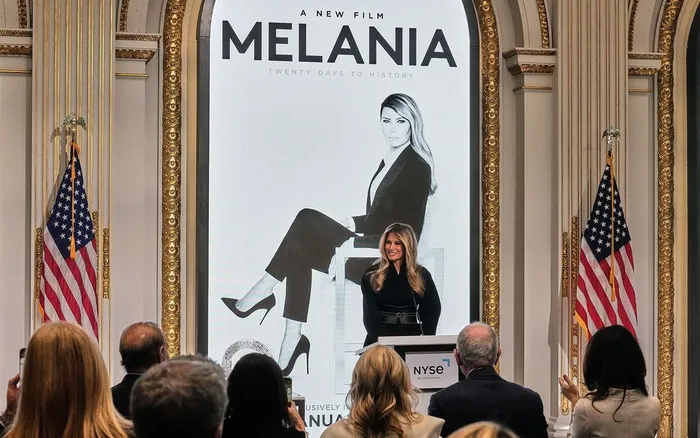
The film, directed by Brett Ratner, attempts to reframe Melania Trump’s public image, portraying her as a private, misunderstood figure exerting quiet influence behind the scenes. Reviews have been overwhelmingly negative. The Guardian described the film as “an elaborate piece of designer taxidermy… ice-cold to the touch,” adding that it lacked “a single redeeming quality.”
Ratner’s involvement has drawn renewed scrutiny following the release of Department of Justice documents related to Jeffrey Epstein. Photographs included in the Epstein files show Ratner socializing with Epstein in the presence of young women whose identities were obscured. While the images do not establish criminal conduct by Ratner, their circulation has intensified criticism of the film and its production team.
Donald Trump’s own name appears repeatedly in Epstein-related documents released over the years. Trump has denied wrongdoing and has not been charged with any Epstein-related crimes. Still, the timing of the film’s release—amid renewed public focus on those files—has fueled criticism that the documentary serves less as biography than as image management.
Media Silence and Historical Contrast
What has surprised observers as much as the film’s commercial failure is the muted institutional response.
When Hillary Clinton was First Lady, she faced weeks of scrutiny over a $100,000 profit she earned from cattle futures trading more than a decade before Bill Clinton became president. The controversy triggered internal reviews, congressional questions, and sustained media attention.
By contrast, the Melania film—potentially delivering tens of millions of dollars in indirect financial benefit to the Trump family through corporate licensing—has generated relatively little sustained outrage within mainstream political institutions.
“The scale is completely different,” said Adam Mockler, a political commentator. “But the reaction is inverted.”
Monetization as Governance
The documentary is not an isolated case. Over the past year, Melania Trump has reportedly demanded large payments for media appearances, including a $250,000 interview request to CNN ahead of her memoir’s release—a request the network declined, citing journalistic ethics.
Meanwhile, cryptocurrency ventures linked to the Trump brand, including a so-called “Melania” token, have collapsed in value by more than 90 percent, prompting accusations of opportunistic fundraising aimed at loyal supporters.
Together, these efforts form a pattern that critics describe as the commodification of political proximity: access, image, and association packaged for private gain.
Supporters argue that the Trumps are simply exploiting opportunities available to them in a free market. Detractors counter that the fusion of executive power, family enrichment, and corporate compliance reflects a deeper erosion of democratic norms.
Power Without Resistance
Perhaps the most revealing aspect of the Melania film saga is not its content or performance, but the environment in which it exists.
Corporate leaders appear increasingly willing to absorb financial losses in exchange for political insulation. Media institutions hesitate to escalate criticism. Regulatory agencies remain cautious. The presidency, critics argue, has become less a public office than a gravitational center around which private actors orbit, adjusting behavior accordingly.
This is not authoritarianism in its classic form—no decrees, no nationalizations, no overt censorship. Instead, it is influence exercised through expectation: the quiet understanding that resistance carries costs, and cooperation brings relief.
A Movie That Didn’t Matter—And Why It Does
In practical terms, Melania will likely fade quickly from public consciousness. It failed to attract audiences. It failed to persuade critics. It may fail even as a propaganda exercise.
But the system that produced it is far more durable.
The documentary stands as a case study in how power now operates in the United States—not through dramatic announcements, but through normalized transactions that would once have provoked scandal.
A nearly empty theater, it turns out, can still be a very expensive room.