Mark Kelly’s Lawsuit and a Senate Hearing That Changed the Stakes for the Pentagon
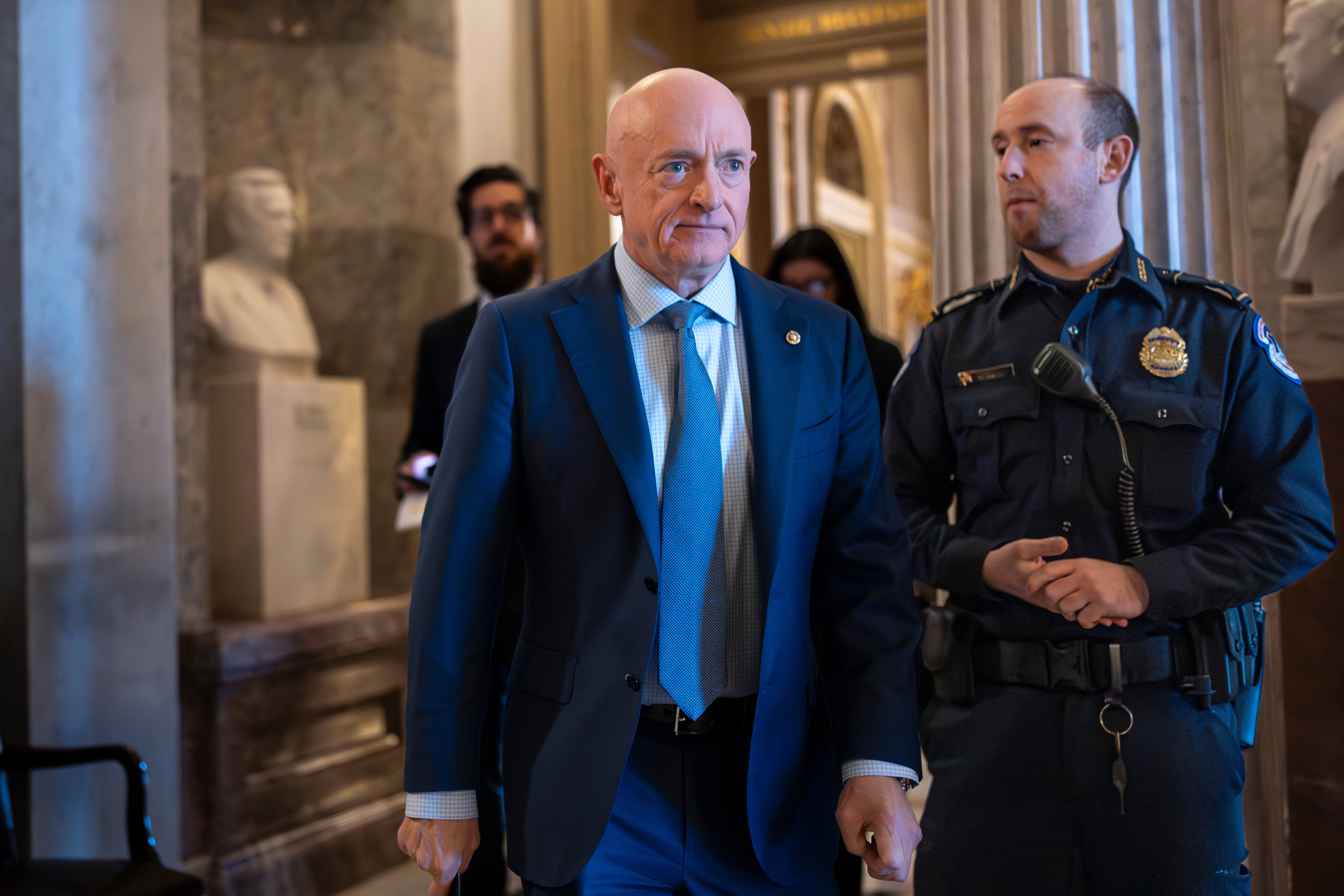
WASHINGTON — Senator Mark Kelly never intended to become the face of a constitutional confrontation with the Department of Defense. A former Navy combat pilot, test pilot, and NASA astronaut, Kelly has spent most of his adult life in institutions defined by hierarchy, discipline, and obedience to lawful command. On Tuesday, standing on the Senate floor, he said he had reached a line he could not cross.
“I just never expected,” Kelly told his colleagues, “that I would have to protect the rule of law against a secretary of defense.”
With that, the Arizona Democrat announced he had filed a lawsuit against Defense Secretary Pete Hegseth, accusing him of violating constitutional protections by threatening to censure and demote Kelly over public remarks critical of Pentagon leadership and military operations. The lawsuit, Kelly said, was not only about his own rights as a retired Navy captain, but about the precedent such actions could set for millions of current and former service members.
The move capped an extraordinary escalation in tensions between Congress and the Pentagon — tensions that had already been inflamed weeks earlier during Hegseth’s confirmation hearing before the Senate Armed Services Committee, when Kelly’s questioning triggered a political and media firestorm that continues to reverberate through Washington.
A Rare Confrontation
Kelly’s floor speech was deeply personal. He traced his oath to the Constitution back to 1986, when he graduated from the U.S. Merchant Marine Academy and was commissioned as a naval aviator. He recalled flying combat missions during Operation Desert Storm, when a Soviet-made surface-to-air missile locked onto his aircraft, exploding just above it. He spoke of his years as a test pilot and of commanding two space shuttle missions for NASA. He described, in quiet detail, his role recovering debris and remains after the Space Shuttle Columbia disintegrated during reentry in 2003.
That oath, Kelly said, did not expire when he retired from the Navy or when he entered the Senate after his wife, former Representative Gabrielle Giffords, was shot during a 2011 constituent event in Tucson.
According to Kelly, Secretary Hegseth is now seeking to punish him for statements that fall squarely within the duties of a senator and a member of the Armed Services Committee — including reiterating the long-established legal principle that service members must refuse unlawful orders, and criticizing the dismissal of senior military leaders.
Hegseth has denied any unconstitutional intent, framing the dispute as a matter of maintaining good order and discipline. Pentagon officials say no final action has been taken.
Legal scholars, however, note that attempts to retroactively demote or discipline retired officers for political speech would raise serious First Amendment and separation-of-powers questions.
“This is legally novel and constitutionally dangerous territory,” said one former Pentagon general counsel, who spoke on the condition of anonymity to avoid political entanglements. “If the executive branch can punish retired officers for speech critical of civilian leadership, oversight collapses.”
The Hearing That Changed Everything
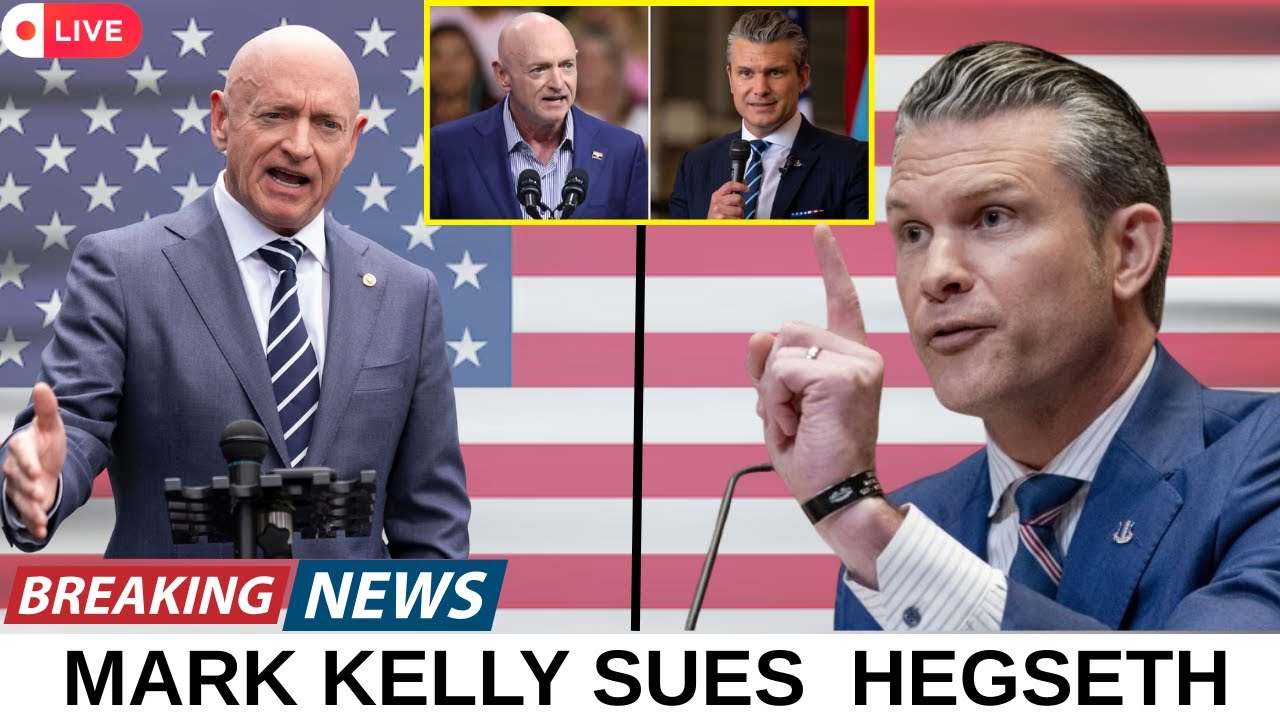
Kelly’s confrontation with Hegseth did not begin with the lawsuit. It began under the bright lights of a Senate hearing room.
At Hegseth’s confirmation hearing, which had proceeded largely along predictable partisan lines, Kelly’s allotted time appeared unremarkable — until he placed a single manila folder on the table and asked a question that stunned the room.
“Can you explain,” Kelly asked, “why you settled a sexual misconduct lawsuit for $50,000 just weeks before this hearing?”
According to Kelly, documents obtained by his staff showed that Hegseth had authorized a financial settlement related to allegations stemming from a 2017 incident at a Republican women’s conference. The settlement, Kelly said, included a non-disclosure agreement.
Hegseth declined to discuss specifics, citing legal advice and the absence of any admission of wrongdoing. Kelly pressed further, focusing not on legal conclusions but on timing — noting that the settlement occurred shortly after Hegseth’s nomination became public.
The exchange, captured by C-SPAN cameras, included a prolonged silence after Kelly asked whether the allegations involved unwanted sexual contact. Advocacy groups for survivors of military sexual assault said the moment underscored broader concerns about leadership credibility at a time when the Pentagon has struggled to address sexual misconduct within the ranks.
“Hearing a nominee for Secretary of Defense unable or unwilling to answer basic questions about such allegations is deeply troubling,” said a spokesperson for Protect Our Defenders, a nonprofit that advocates for survivors.
Political Fallout
Within hours, clips of the exchange spread rapidly across social media, amplified by prominent journalists, veterans’ groups, and former Pentagon officials. By evening, senior members of the Armed Services Committee announced plans to seek the full settlement agreement and to examine whether any provisions improperly attempted to limit congressional oversight.
Several Republican senators acknowledged privately that the questioning had complicated the confirmation process, though none publicly withdrew support. The White House has stood by Hegseth, calling him “fully qualified” and dismissing the controversy as politically motivated.
Still, the episode has sharpened scrutiny of both Hegseth’s judgment and the administration’s broader approach to civil-military relations.
Larger Stakes
Kelly’s lawsuit now raises the stakes even further. At issue is not only one secretary’s conduct, but whether retired service members — including those serving in Congress — can speak freely without fear of punitive action by the executive branch.
“If this stands,” Kelly warned, “then any retired veteran, of any political persuasion, could be threatened years later for saying something a secretary of defense or president doesn’t like.”
Historians of civil-military relations note that the United States has long balanced civilian control of the military with robust protections for political speech, particularly once service members return to civilian life.
“That balance is essential to democracy,” said Eliot Cohen, a former counselor at the State Department. “Once you erode it, you risk turning military service into a lifelong muzzle.”
An Unfinished Test
For now, the courts will decide whether Kelly’s constitutional challenge succeeds. The Senate, meanwhile, must determine whether Hegseth’s confirmation — and his actions since — meet the standards expected of the nation’s top defense official.
Kelly ended his Senate remarks by invoking the oath shared by every senator in the chamber.
“For 250 years,” he said, “this democracy has endured because people were willing to stand up not just for themselves, but for everyone else.”
Whether that resolve will prevail again is no longer an abstract question. It is now a test — of the Senate, the Pentagon, and the fragile boundaries that separate power from accountability in American democracy.