A Combative Interview Raises New Questions About the Administration’s Account of a Deadly ICE Shooting
WASHINGTON — What began as a routine cable news interview quickly became one of the most consequential public examinations yet of the Trump administration’s handling of the fatal shooting of Renee Good, a 37-year-old wife and mother of three who was killed last week during an encounter with federal immigration officers in Minneapolis.
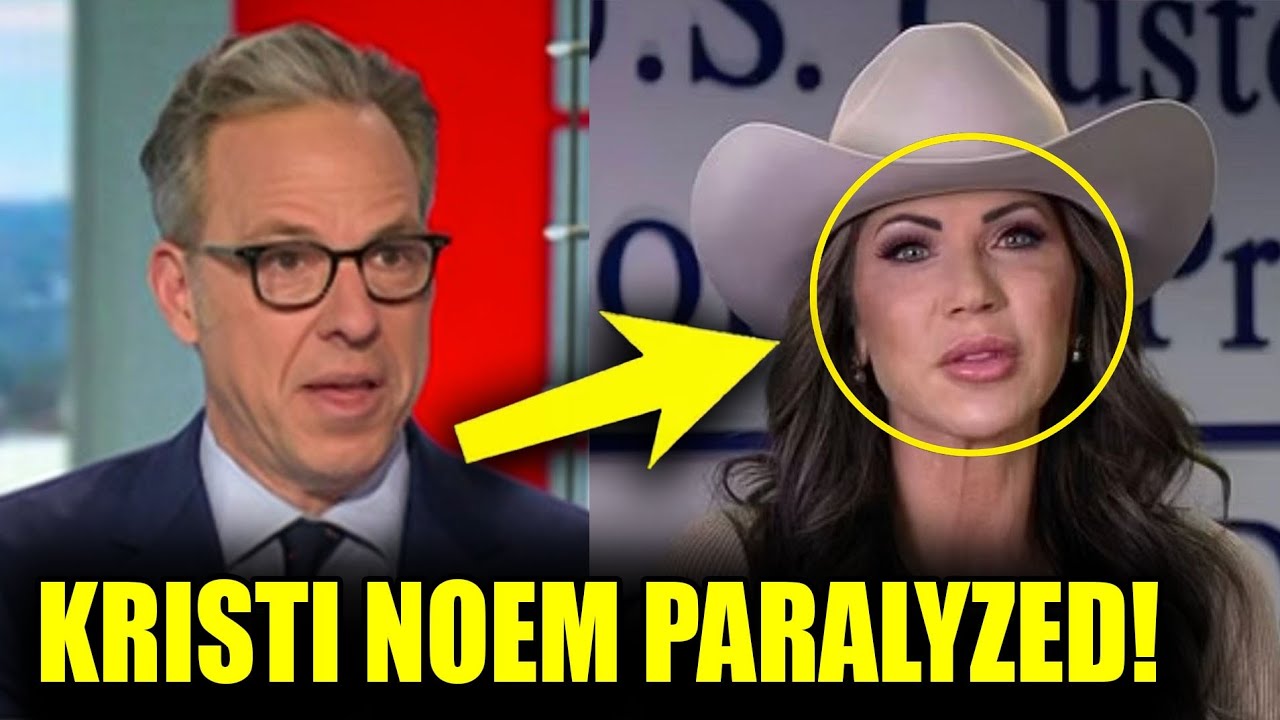
In a nearly 20-minute exchange on CNN, Jake Tapper methodically pressed Kristi Noem on the Department of Homeland Security’s rapid and definitive public response to the shooting — a response that critics say was issued before investigators could reasonably determine what had happened.
Rather than closing the gap between official statements and emerging evidence, the interview appeared to widen it, raising new questions about transparency, accountability and the politicization of federal law enforcement.
A Timeline Under Scrutiny
The core of Mr. Tapper’s questioning focused on timing.
According to public records, Ms. Good was shot shortly after 10:30 a.m. Eastern time. Just over two hours later, the Department of Homeland Security released a statement describing the incident in stark terms: ICE officers were conducting an enforcement action; Ms. Good was characterized as having attempted to ram officers with her vehicle; and the shooting was framed as a justified act of self-defense. The department went further, labeling the incident “domestic terrorism.”
That language was repeated by Ms. Noem at a press conference later the same day.
Even some Republicans expressed unease. Senator Thom Tillis publicly called it “very unusual” for senior law enforcement officials to reach firm conclusions while a scene was still being processed, evidence collected and video reviewed.
Pressed on why she did not wait for an investigation, Ms. Noem was unequivocal. Everything she had said, she told Mr. Tapper, was “factual.” She said she had already spoken with officers and supervisors and had reviewed video evidence before addressing the public.

Evidence Versus Assertions
That confidence became the interview’s fault line.
Mr. Tapper cited video footage that had since circulated widely on social media and been aired by multiple news outlets. The video, taken from the scene, does not clearly show Ms. Good attempting to ram officers in the manner described by DHS, critics say. Instead, it depicts a chaotic traffic confrontation whose interpretation remains contested.
“That is not what the video shows,” Mr. Tapper said at one point, referring directly to Ms. Noem’s description of events.
Ms. Noem rejected that characterization, repeating that the officers were impeded during an enforcement action and that Ms. Good blocked traffic for several minutes. The exchange highlighted a central concern for civil rights groups and legal experts: whether the department had locked in a narrative before allowing investigators to evaluate contradictory evidence.
“This is not a dispute about nuance,” said a former federal prosecutor, who reviewed the footage and spoke on condition of anonymity. “The concern is that conclusions were announced before the investigative process could test them.”
New Details, Old Questions
As the interview continued, additional complications emerged.
Mr. Tapper referenced reporting indicating that the officer who fired the shots, identified by federal sources as Jonathan Ross, had previously been involved in aggressive encounters during enforcement operations. That information had not been disclosed in the department’s initial statements.
Ms. Noem did not dispute that she had withheld such context, instead returning to her broader argument that officers must be defended against what she described as politically motivated attacks.
Then came one of the interview’s most arresting moments. Mr. Tapper played audio from an officer’s cellphone video in which a voice appears to use a slur directed at Ms. Good. Asked directly whether the voice belonged to Agent Ross, Ms. Noem did not deny it — nor did she condemn the language.
“I can’t determine which one it is,” she said, adding that it “could be.”
For many viewers, that hesitation spoke volumes. “If leadership cannot immediately denounce language like that,” said a senior official at a national civil liberties organization, “it signals a deeper problem with accountability.”

Use of Force and Unanswered Questions
The interview also turned to the mechanics of the shooting itself.
Video evidence indicates that three shots were fired: one through the windshield and two through a side window. Mr. Tapper noted that by the time the second and third shots were fired, the officer appeared no longer to be directly in front of the vehicle.
What justified those additional shots?
Ms. Noem did not offer a direct answer. Instead, she spoke broadly about training, split-second decisions and the dangers officers face. When Mr. Tapper attempted to follow up, she grew visibly irritated, accusing critics of exploiting the incident for political purposes.
To legal analysts, the exchange underscored the distinction between explanation and deflection. “Training explains why officers may act quickly,” said a former Justice Department use-of-force advisor. “It does not eliminate the obligation to justify each use of lethal force, shot by shot.”
A Tale of Two Standards
The interview’s final segment broadened the lens.
Mr. Tapper invoked the events of January 6, 2021, showing video of Trump supporters violently attacking law enforcement officers — conduct that was documented extensively and adjudicated in court. He noted that President Donald Trump later pardoned all individuals convicted in connection with the attack.
Ms. Noem responded by insisting that the administration enforces the law equally and without favoritism.
“That’s just not true,” Mr. Tapper replied, pointing to the pardons as evidence of a double standard: one for those aligned with the president, another for those who are not.
The exchange crystallized a critique that has followed the administration across multiple controversies — that loyalty to power, rather than neutral application of the law, increasingly determines outcomes.

Fallout and What Comes Next
By the end of the interview, Ms. Noem had not retracted her statements, but she had not resolved the contradictions either. Instead, she left viewers with competing claims: absolute certainty alongside unanswered questions; transparency alongside withheld details; accountability alongside preemptive judgment.
Ms. Good’s family has called for an independent investigation and has retained legal counsel. Minnesota officials continue to press for access to evidence, including full body-camera footage. The Department of Homeland Security says its internal review is ongoing.
For many observers, the interview marked a turning point — not because it delivered definitive answers, but because it exposed how fragile the administration’s narrative may be under sustained scrutiny.
“This was not about scoring points,” said a former DHS official. “It was about whether leadership is willing to let facts lead, even when they’re inconvenient.”
As the investigation continues, the questions raised on air are unlikely to fade. In a case already fraught with grief and anger, the demand from the public is simple, if difficult: not certainty without evidence, but truth earned through accountability.