Generation Z Turns Away From Trump, New Polling Shows, Reshaping the Midterm Landscape
WASHINGTON — Just months after helping propel Donald Trump back into the White House, Generation Z voters are now moving sharply away from him, according to new polling data that underscores how volatile — and politically decisive — the youngest segment of the American electorate has become.
A new survey released this week by CNN reveals a dramatic collapse in Mr. Trump’s standing among voters under 28, accompanied by a widening advantage for Democrats in party identification. The findings offer Democrats a rare source of optimism ahead of the 2026 midterm elections, even as analysts caution that Gen Z’s independence makes their allegiance anything but guaranteed.

A Swift Reversal
In the 2024 election, younger voters — particularly young men — proved pivotal for Mr. Trump, narrowing what had long been a reliable Democratic advantage among the under-30 electorate. At that time, Democrats led Republicans by only six points in party identification among Gen Z, a historically small margin.
That gap has now ballooned. According to CNN’s latest poll, Democrats hold a 20-point advantage among Gen Z — more than triple the margin seen just months earlier. It represents the largest partisan shift recorded among any age group in the survey.
“This is a free fall,” said Harry Enten, describing Mr. Trump’s standing with young voters. “There was movement across the electorate, but nothing close to what we’re seeing here.”
Approval Ratings Plunge
The reversal is even more striking when measured through Mr. Trump’s personal approval rating. In February 2025, roughly one month into his term, he posted a net approval of plus 10 points among Gen Z — a rare achievement for a Republican president.
Today, that number has flipped dramatically. Mr. Trump’s net approval among Gen Z now stands at minus 32, a 42-point swing in a matter of months.
“This isn’t erosion,” Mr. Enten said. “This is falling off a cliff.”

Why the Shift?
Interviews conducted by CNN with young voters suggest that disappointment — rather than ideological opposition — is driving the change. Many respondents cited frustration with the pace and execution of policies Mr. Trump emphasized during the campaign.
Immigration, once a rallying issue, has become a source of dissatisfaction. Some voters said deportations were not happening quickly enough to match Mr. Trump’s rhetoric, while others criticized what they saw as a lack of clarity and compassion in the administration’s approach.
“There was this promise of decisive action,” said one young voter interviewed in the focus group. “Instead, it feels chaotic and inconsistent.”
Others pointed to foreign policy. Mr. Trump’s pledge to quickly end the war in Ukraine resonated during the campaign, but months later, the conflict continues, feeding skepticism about his broader claims of deal-making prowess.
“He talks big,” another participant said. “But there’s a growing sense that the results don’t match the promises.”
Independence Defines a Generation
Perhaps the most important finding in the poll is not simply Gen Z’s movement toward Democrats, but their reluctance to commit fully to either party. Fifty-six percent of Gen Z respondents identified as independents when not prompted to choose a party — far higher than the roughly 40 percent average among older generations.
That independence is both an opportunity and a warning.
“For Democrats, this is good news — but it’s fragile,” Mr. Enten said. “These voters are not locked in. They can swing back just as quickly.”
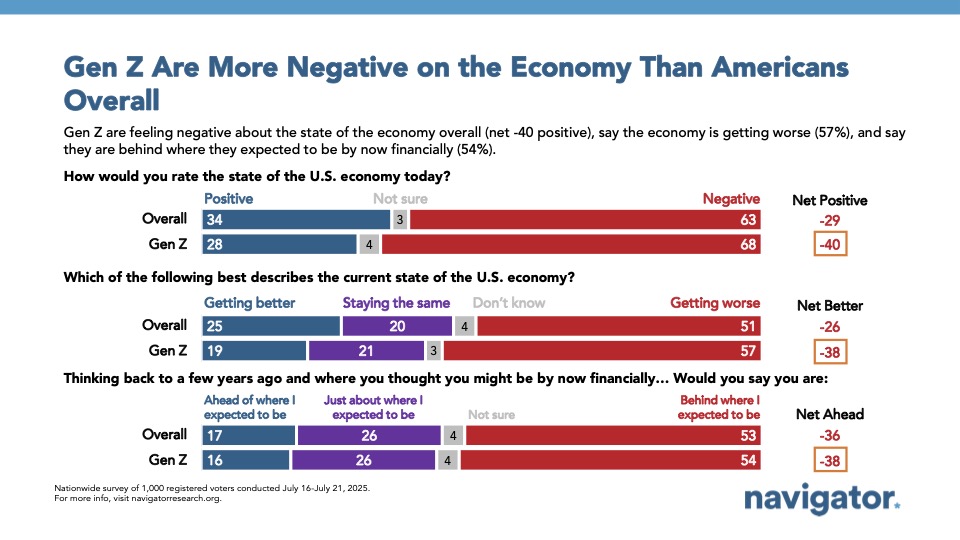
Political scientists note that Gen Z came of age amid economic instability, climate anxiety and institutional distrust, leaving them skeptical of long-term political loyalties. Many are burdened by student debt, face high housing costs and express frustration with both parties’ ability to deliver tangible improvements.
“They are pragmatic, impatient and unromantic about politics,” said a youth-vote researcher at Georgetown University. “They will support whoever they believe is responding to their reality — and abandon them just as fast.”
Implications for the Midterms
The shift carries major implications for the 2026 midterms. Historically, midterm elections favor the party out of power, and Democrats already see signs of momentum. Betting markets and aggregate polling suggest growing confidence that Democrats could retake the House, driven in part by youth turnout.
But turnout remains the central question. Gen Z voters are notoriously difficult to mobilize outside presidential elections, and enthusiasm alone may not translate into ballots cast.
“Democrats can’t assume these numbers will hold,” said a Democratic strategist involved in youth outreach. “They have to earn it — on housing, wages, climate and accountability.”
Republicans, meanwhile, face a strategic dilemma. Efforts to court young voters in 2024 paid dividends, but sustaining that support requires policy follow-through and a tone that resonates with a generation wary of political bravado.
A Warning for Both Parties
The CNN poll reinforces a broader lesson that has emerged repeatedly over the past decade: Gen Z is not a junior version of any previous generation. Their political behavior is fluid, transactional and heavily shaped by lived experience rather than party tradition.
For Mr. Trump, the data represents a stark warning. The coalition that helped him win in 2024 appears far less stable than it once seemed. For Democrats, it is a reminder that opportunity does not equal inevitability.
“You don’t inherit Gen Z,” said the Georgetown researcher. “You rent their support — and the lease is month to month.”
As the midterms approach, both parties are racing to define themselves in the eyes of a generation that has little to lose, little patience and enormous electoral power. Whether today’s numbers signal a lasting realignment or just another swing in a fickle electorate may determine not only the outcome of 2026, but the shape of American politics for years to come.