LONDON — A ferocious exchange in the House of Commons has plunged Prime Minister Keir Starmer’s government into its most destabilizing scandal since taking office, after he acknowledged that official security vetting flagged Lord Peter Mandelson’s continuing relationship with Jeffrey Epstein before Mandelson was appointed Britain’s ambassador to the United States.
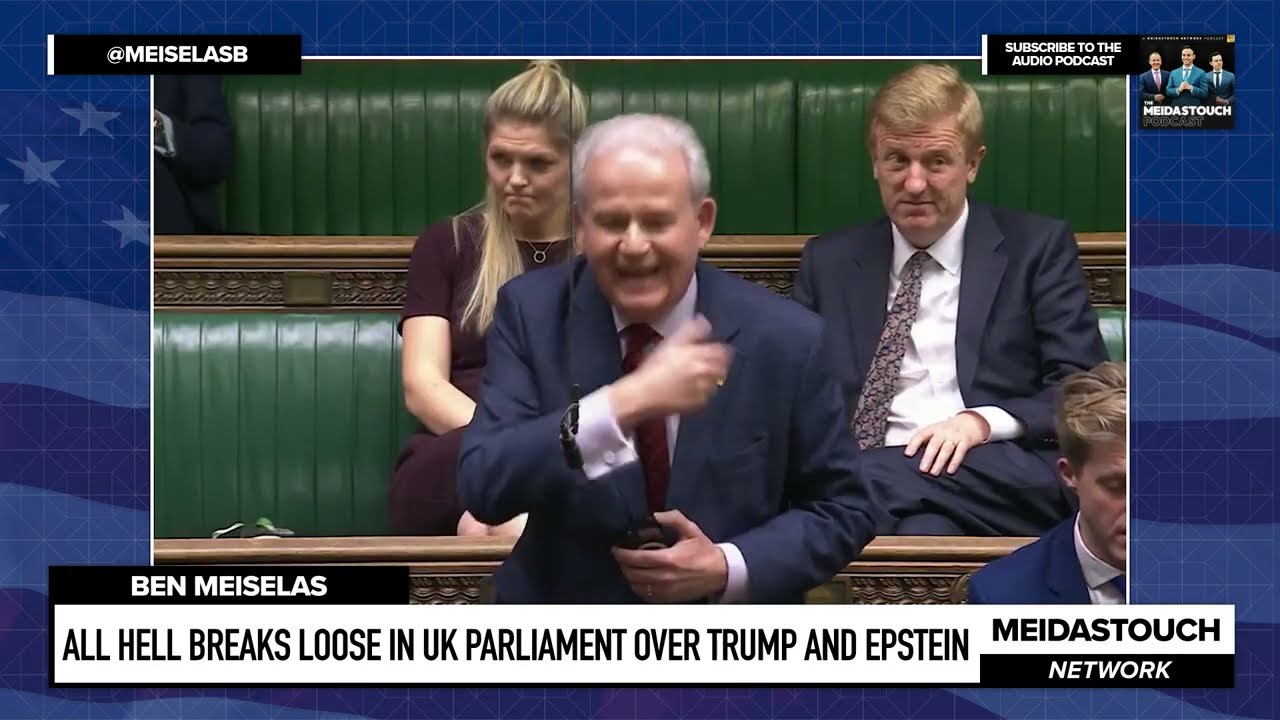
In a parliamentary session that MPs and commentators described as unusually charged even by Westminster standards, opposition lawmakers accused Starmer of a profound failure of judgment — and of attempting to contain the fallout only after pressure mounted inside his own Labour Party. Clips of the confrontation ricocheted across social media, where the most replayed moment was Starmer’s blunt answer to a question that has rapidly become the scandal’s fulcrum: whether the vetting process mentioned Mandelson’s ongoing ties to Epstein.
Starmer said it did.
The admission, followed by a scramble over whether and how to disclose the underlying documents, has driven a fast-moving political crisis: Mandelson has already been removed from the Washington post, and Starmer has issued an apology directed at Epstein’s victims, saying he had “believed Mandelson’s lies” about the extent of the relationship.
A relationship that would not go away — and a vetting that did not stop an appointment
Mandelson, a veteran Labour figure and longtime power broker, has faced intermittent scrutiny for years over his connection to Epstein. But the current uproar is not simply a re-litigation of those ties; it is focused on what the government knew at the moment of appointment, how the vetting was handled, and why the relationship did not disqualify him from representing the United Kingdom in Washington.
According to reporting carried by the Associated Press, the controversy intensified after newly released documents exposed details of Mandelson’s ties that critics say should have been plainly disqualifying — and that, in any case, were sufficiently well known that the government’s insistence it did not grasp the “depth” of the relationship has become a punchline among opponents.
The government’s defense has centered on a narrow distinction: yes, there was awareness of a continuing relationship; no, officials say, they understood its full scope. That line has proved politically toxic — in part because it invites the obvious retort heard repeatedly in the Commons: what is the “acceptable” level of closeness to a convicted sex offender for a senior diplomatic appointment?
“An audible gasp” — and a Parliament that demanded receipts
The Commons debate unfolded like a courtroom cross-examination, with opposition MPs stacking specifics: Mandelson’s prior public sympathies toward Epstein after an earlier conviction; questions about where Mandelson stayed during past trips; and why ministers, civil servants, and security officials supposedly failed to treat these issues as a red line.
As the pressure built, the government shifted ground. Sky News and ITV reported that ministers moved toward disclosing documentation about Mandelson’s appointment and vetting — with Parliament pushing for oversight through its Intelligence and Security Committee, a mechanism typically reserved for sensitive material.
That procedural battle matters because it cuts to the heart of the scandal: not only the relationship itself, but the integrity of the U.K.’s appointment and vetting process — and the credibility of the prime minister’s office when it insists it can be trusted to police conflicts, reputational hazards, and potential security vulnerabilities.
Starmer’s apology, delivered with unusually personal language for a British prime minister, appeared aimed at re-framing the issue as one of deception: Mandelson, he said, repeatedly misrepresented the relationship and presented Epstein as someone he barely knew.
Critics responded that even if Mandelson shaded details, Starmer’s central problem is what he conceded openly: that the relationship was ongoing and present in vetting materials.

Why Washington matters — and why the scandal won’t stay domestic
Diplomatic appointments are often read abroad as signals of a government’s priorities and culture. In Washington, where Epstein’s name remains a byword for elite impunity, a British ambassador credibly linked to Epstein was always likely to become a vulnerability — not just a moral one, but a practical one.
That vulnerability now extends to Starmer himself. The AP report noted that some political analysts see the episode as potentially premiership-threatening, precisely because it’s difficult to deflect onto staff work or bureaucratic error: the appointment was ultimately the prime minister’s call.
And unlike many Westminster controversies — which can be contained by reshuffles, resignations, or a public inquiry whose timeline drifts — this one comes with a simple, repeating question that is easy for opponents to weaponize in every interview and every future debate: You knew. Why did you do it anyway?
The larger question: what the scandal suggests about vetting, influence, and accountability
In the immediate term, the political danger for Labour is twofold.
First, it risks hardening a narrative of lax judgment at the top — a particularly damaging charge for a government that has staked much of its brand on competence and institutional seriousness.
Second, it opens space for broader allegations about how influence travels through modern politics: not only who is appointed, but who gains access, who brokers meetings, and what is recorded — and what is not. Opposition MPs have already begun to widen the lens to other contacts and contracts, arguing that Mandelson’s role, relationships, and networks warrant deeper scrutiny than a single personnel decision.
The government’s bet appears to be that transparency, even if uncomfortable, can cap the scandal: publish what can be published, route sensitive material through the Intelligence and Security Committee, and insist the system worked — however late — by removing Mandelson.
But crises like this rarely obey tidy scripts. They expand if disclosures drip out slowly, if internal accounts diverge, or if new documents reframe what senior officials understood at the time. Starmer’s apology may buy time; it may also raise the stakes by placing his own credibility at the center of the story.
For now, Westminster is left with an unresolved test: whether a prime minister who campaigned on restoring trust can survive a scandal that, at its core, is about trust — who deserved it, who received it, and who may have been trusted when they should not have been.