Canada Reopens Fighter Jet Decision, Forcing Washington to Confront an Uncomfortable Question of Control

Ottawa — Canada’s decision to reopen its long-anticipated $27 billion fighter jet procurement has sent a tremor through Washington, unsettling what American defense planners once assumed was a foregone conclusion. The move places Sweden’s Saab Gripen back into direct competition with the U.S.-made F-35 Lightning II, challenging not only a weapons platform but the deeper architecture of alliance power, control, and dependence that has defined North American defense for decades.
For years, Canadian officials publicly described the F-35 as the inevitable replacement for the Royal Canadian Air Force’s aging CF-18 fleet. Interoperability with U.S. forces, advanced stealth capabilities, and seamless integration into NATO’s digital battle networks were framed as decisive. But behind closed doors, according to defense analysts and former officials speaking publicly on policy forums and social media, doubts never fully disappeared.
Those doubts have now resurfaced—loudly.
At the heart of the renewed review is not a narrow comparison of radar signatures or weapons payloads, but a broader question: how much operational sovereignty Canada is willing to trade for technological integration with the United States.
A Fighter Jet—and a System of Dependence
The F-35 is not merely an aircraft. It is a sprawling digital ecosystem, tightly controlled by the United States and governed by complex software permissions, data-sharing rules, and sustainment contracts. Maintenance, mission planning, and upgrades depend on American-managed systems that span continents.
That architecture has increasingly unsettled Canadian defense planners, particularly as geopolitical relationships grow less predictable. In closed parliamentary hearings and open commentary echoed by Canadian defense experts online, concerns have focused on whether Canada could operate its own aircraft freely in a moment of political disagreement—or whether access to critical software updates and diagnostics could become leverage.
The Gripen, by contrast, is deliberately designed to operate with minimal external dependence. Saab has emphasized that customer nations retain full control over mission software, maintenance, and operational use. For Ottawa, that distinction has become central.
“Capability alone is no longer sufficient,” one senior Canadian official said recently, echoing a line that has circulated widely among defense analysts on X. “Control matters.”
The Arctic Factor
Geography has sharpened the debate.
As Russia expands its military footprint across the Arctic and China pushes deeper into polar shipping routes, Canada’s vast northern airspace has become a strategic front line. The challenge is not just intercepting aircraft, but doing so from remote regions where infrastructure is scarce and weather conditions are extreme.
The Gripen was built for precisely those conditions. Designed during the Cold War to operate from short runways and dispersed road bases, it can be serviced by small crews and launched quickly from austere locations. Canadian analysts have repeatedly highlighted these features in public commentary, noting their relevance to Arctic sovereignty patrols.
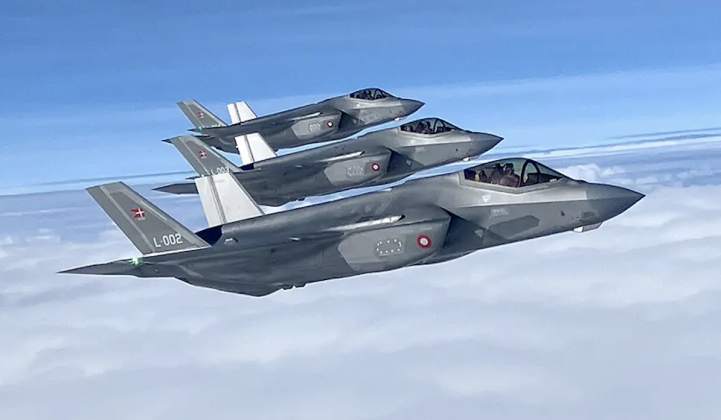
The F-35, while technologically superior in stealth and sensor fusion, requires more elaborate support infrastructure—an issue that has drawn scrutiny in defense forums and think tank discussions shared widely on social media.
Shock Waves in Washington
In Washington, the reaction has been cautious but unmistakably anxious.
Pentagon officials have avoided public criticism, but defense commentators close to the program warn that Canada’s shift could weaken the tightly integrated air defense framework underpinning the North American Aerospace Defense Command (NORAD). The concern is not merely operational. It is symbolic.
The F-35 program functions as a strategic binding mechanism. By sharing logistics, data, and upgrades, it locks allies into long-term dependence on U.S. systems. If Canada—America’s closest defense partner—chooses a different path, other allies may feel emboldened to ask similar questions.
That anxiety is evident in the commentary of prominent U.S. defense analysts and former officials, many of whom have taken to social media to argue that interoperability, intelligence sharing, and coalition warfare depend on common platforms. Others, however, have conceded that the issue of sovereign control can no longer be dismissed.
Economics and Industrial Guarantees
Industrial considerations further complicate the picture.
Canada was promised significant economic returns through participation in the F-35 supply chain. But critics, including economists and policy commentators cited frequently in Canadian media, argue that those benefits are contingent and vulnerable to political shifts in Washington.
The Swedish proposal, by contrast, includes explicit guarantees for domestic maintenance, technology transfer, and local industrial participation. For a government under pressure to deliver tangible economic value alongside defense capability, those assurances carry weight.
Sweden’s recent accession to NATO has also altered the strategic calculus. The Gripen is no longer an outlier aircraft within the alliance. It is now backed by a NATO member deeply integrated into European security planning, undermining claims that alliance unity requires exclusive reliance on American platforms.
A Test of Alliance Power
No final decision has been announced, and Canadian officials emphasize that the review is ongoing. But the signal is clear. Ottawa is no longer prepared to treat alignment with Washington as automatic.
Instead, Canada is asserting a right increasingly voiced by middle powers across Europe and the Indo-Pacific: the right to operational independence, even within alliances.
If Canada ultimately walks away from the F-35, the implications would extend far beyond procurement. It would mark one of the most significant recalibrations in North American defense relations in a generation, forcing Washington to confront an uncomfortable reality—that allies are no longer willing to outsource sovereignty in exchange for access to American systems.
As one widely shared defense analyst post put it bluntly: alliances built on dependence are being tested by a world defined by uncertainty.
In that sense, Canada’s fighter jet review is no longer about jets at all. It is about who controls power, data, and decisions in an era when even the closest partnerships are being renegotiated.
And Washington is watching closely.