Greenland Fortifies Its Democracy as TRUMP’s Arctic Ambitions Meet a Legal Wall
Greenland’s parliament has passed a set of sweeping new laws that, while not explicitly naming TRUMP, are widely understood as a direct response to his renewed push to acquire the Arctic island—an idea that has moved from offhand provocation to a matter of serious geopolitical alarm. The measures, framed as protections of democratic integrity and national sovereignty, arrive amid mounting unease in Nuuk and Copenhagen over rhetoric from Washington that has left even close allies rattled.

Contrary to viral headlines, Greenland has not banned TRUMP from entering the island, nor has it imposed a lifetime travel prohibition. Lawmakers and officials have been clear on that point. What they have done instead may be more consequential: they have systematically closed off the practical pathways through which a powerful foreign actor could exert influence over Greenland’s political future.
At the center of the legislative package is a complete ban on foreign political donations. Under the new law, no outside money—American or otherwise—may flow into Greenlandic politics, and anonymous donations are likewise prohibited. The stated purpose is to safeguard democratic decision-making in a small society of roughly 57,000 people, where even modest financial interventions could dramatically tilt the political field.
A second pillar tightens restrictions on land ownership. Non-citizens are now barred from purchasing property unless they have lived in Greenland for at least two years. The requirement is designed to prevent speculative or strategic land acquisitions by wealthy outsiders seeking to establish leverage through ownership and economic dependency, a method often associated with gradual influence-building rather than overt coercion.

Greenlandic lawmakers drafting the legislation were unusually candid about their motivations. They cited “geopolitical interests and threats from representatives of an allied great power” expressing interest in taking over and controlling Greenland. In diplomatic language, there is little ambiguity about whom they mean. TRUMP has repeatedly suggested that the United States should acquire Greenland, citing its strategic location, its mineral wealth, and its growing importance as climate change reshapes the Arctic.
Those comments have taken on a darker edge as senior U.S. officials declined to rule out military options, prompting warnings from Denmark that any use of force would devastate the transatlantic alliance and undermine NATO itself. Greenland’s prime minister has been unequivocal: the island is not for sale, and its people do not want to be Americans.
Public opinion backs that stance. Polling consistently shows that roughly 85 percent of Greenlanders oppose joining the United States. While there is active debate inside Greenland about eventual independence from Denmark—a process rooted in the island’s autonomous status since 2009—there is near-universal rejection of annexation by Washington. Independence, Greenlandic leaders stress, is about self-determination, not swapping one distant capital for another.
In that context, the new laws take on added significance. By eliminating foreign money from elections and curbing land purchases, Greenland has removed the most realistic non-military tools for external influence. Any future debate over independence or international alignment must now unfold almost entirely on Greenlandic terms, funded by Greenlandic citizens, and accountable to Greenlandic voters.
The timing is deliberate. As Greenland moves closer to potential statehood, its leaders are signaling that sovereignty will not be negotiated under pressure. The message is aimed not only at Washington but also at Europe and the wider international community: Greenland intends to decide its own fate, and it expects that decision to be respected.
For Denmark, the stakes are enormous. Greenland remains part of the Danish realm, and Copenhagen retains responsibility for foreign policy and defense. Danish officials have warned that coercion against Greenland would shatter trust within NATO and destabilize a security framework that has endured for decades. European leaders, quietly but firmly, have aligned themselves with that view.
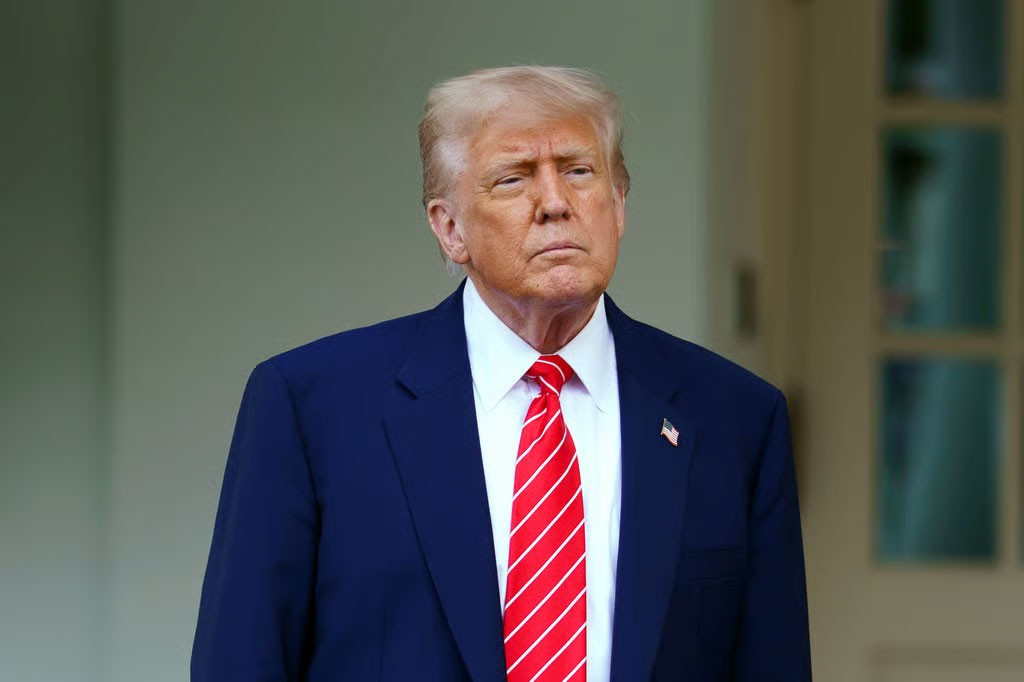
TRUMP, for his part, shows little sign of abandoning the idea. His interest in Greenland dates back to his first term, when a proposal to buy the island was met with disbelief in Europe and anger in Washington after Denmark rejected it outright. Now back in power, his administration has revived the issue with sharper language and fewer diplomatic guardrails, even as Greenland erects legal ones.
The result is a stark asymmetry: a superpower with global reach pressing its case, and a small Arctic society responding not with threats, but with statutes. It is, in many ways, a modern test of whether international norms around self-determination still hold when confronted by raw power.
Greenland’s answer, so far, is clear. It has not barred TRUMP at the border, but it has barred his money, his influence, and his ability to quietly reshape its future from the outside—and as the full clip continues to ricochet across social platforms, the internet is effectively exploding with debate over whether this legal stand marks a turning point or the opening chapter of a far larger confrontation.