Washington — Former President Donald Trump’s renewed rhetoric about expanding American territorial control has sparked fresh concern among U.S. allies, particularly in Europe, as questions mount over the boundaries of presidential power, international law, and Washington’s long-term strategic intentions.

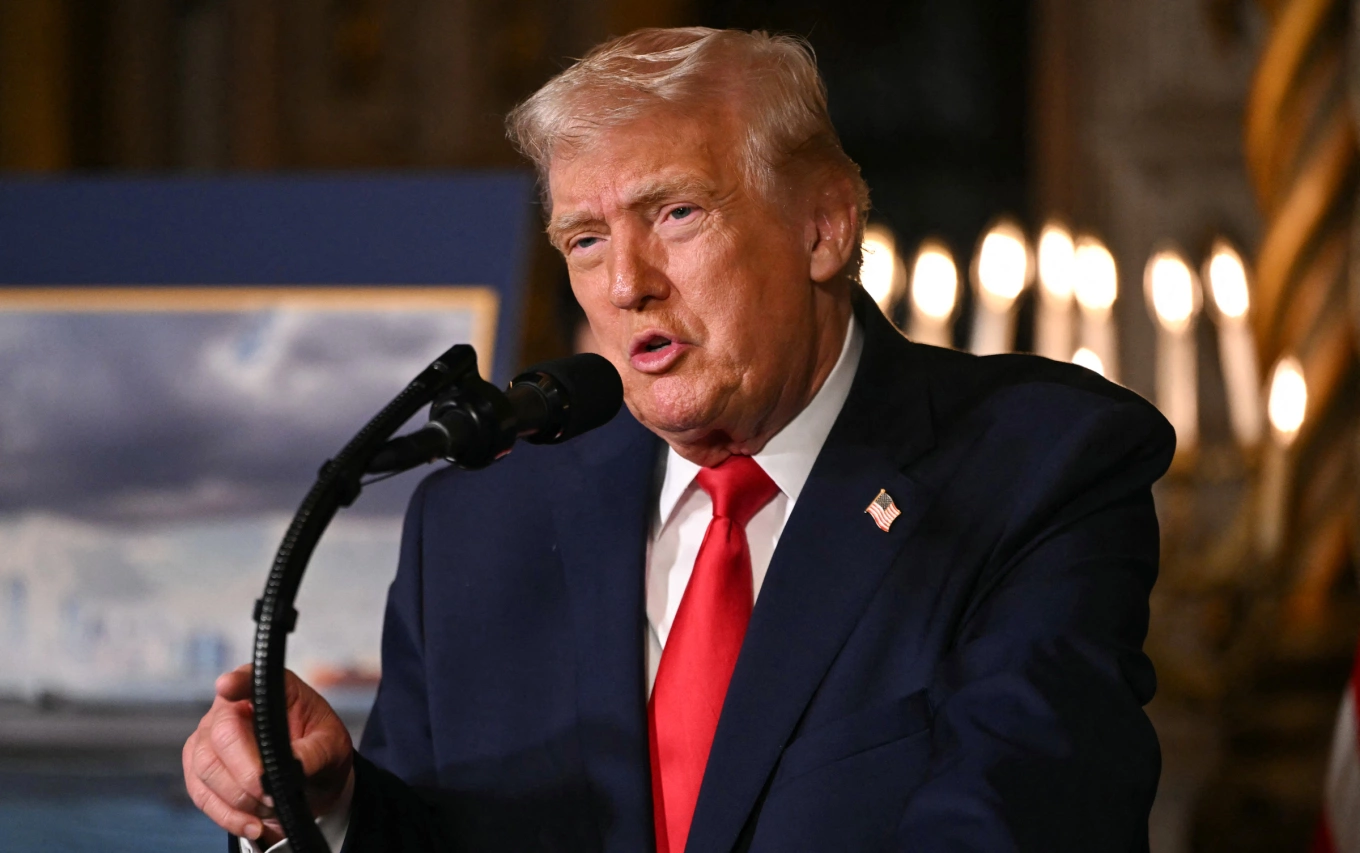
In recent public remarks, Mr. Trump reiterated ideas he has raised intermittently since his first term: asserting U.S. control over strategic locations such as the Panama Canal and Greenland, reframing them as matters of national security rather than economic ambition. At a press conference, he declined to rule out the use of military force to achieve those aims, comments that drew swift reactions from lawmakers and foreign governments alike.
Greenland, an autonomous territory within the Kingdom of Denmark, has become a focal point of the controversy. Mr. Trump has argued that U.S. control of Greenland is necessary to counter growing Chinese and Russian activity in the Arctic, framing the issue as a defense imperative “for the free world.” Danish officials have repeatedly rejected those claims, emphasizing that Greenland’s status is governed by international law and longstanding agreements.
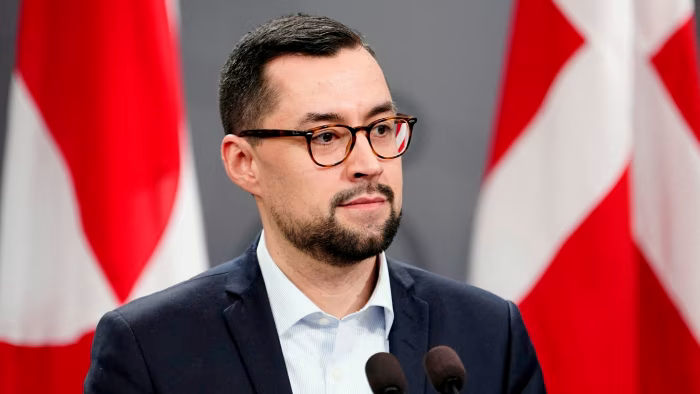
The issue intensified after a social media post by Katie Miller, the wife of White House Deputy Chief of Staff for Policy Stephen Miller, depicted Greenland overlaid with the American flag, accompanied by the caption “Soon.” While the post was not an official government statement, it prompted a pointed response from Greenland’s leadership.
Jens-Frederik Nielsen, Greenland’s premier, said the image was “disrespectful” and underscored that Greenland’s future “is not decided by social media posts.” In a written statement, he reaffirmed that Greenland is a democratic society with self-government, free elections, and institutions grounded in international law. “Our country is not for sale,” he said, adding that relations between nations must be built on mutual respect rather than symbolic gestures.
The episode has heightened unease among European leaders, particularly within NATO, who view Greenland as a strategically sensitive region but also as a test case for alliance cohesion. Analysts note that while the United States maintains a significant military presence in Greenland through existing agreements, any attempt to alter sovereignty would represent a profound departure from postwar norms.
Domestically, Mr. Trump’s comments have also drawn criticism from members of Congress. Senator Bernie Sanders said that unilateral military action, even against authoritarian governments, would violate the Constitution’s allocation of war powers. He called for renewed congressional oversight to prevent what he described as an erosion of democratic checks and balances.
Supporters of Mr. Trump argue that his blunt approach reflects a willingness to challenge outdated assumptions about American leadership and security. They contend that Arctic competition, energy routes, and great-power rivalry require bold thinking. Critics counter that such rhetoric risks destabilizing alliances at a time of heightened global tension.
Foreign policy experts emphasize that Greenland differs fundamentally from other geopolitical flashpoints. Unlike countries mired in internal conflict, Greenland operates within a stable legal and political framework recognized by the international community. Any suggestion of coercion, they argue, would undermine the very rules-based order the United States has long championed.
As the debate continues, Greenland’s government has sought to project calm, reiterating its commitment to dialogue and international cooperation. Yet the controversy underscores a broader question confronting U.S. foreign policy: whether assertive rhetoric aimed at projecting strength ultimately reinforces American influence—or erodes trust among the partners on whom that influence depends.