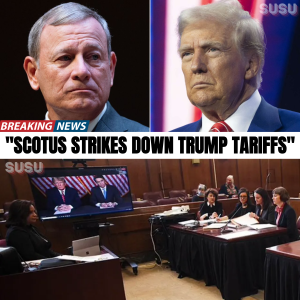
Trump’s Tariff Threat to Canada Underscores the Risks of Weaponized Trade
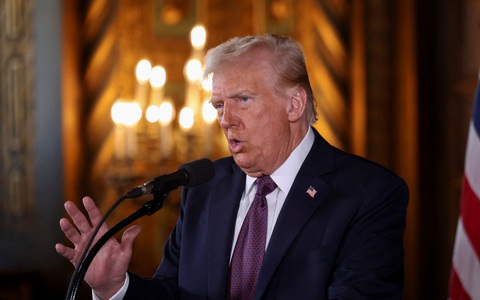
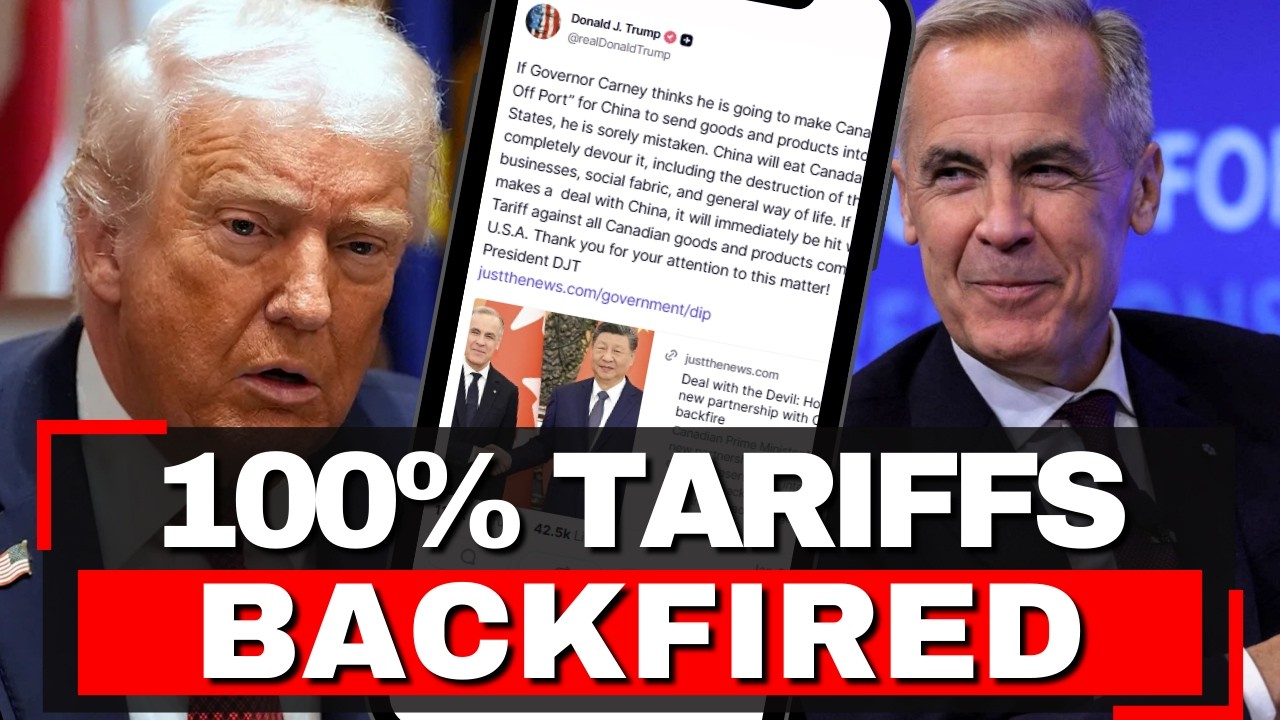
WASHINGTON — When President Donald Trump threatened to impose a 100 percent tariff on Canadian goods should Ottawa deepen trade ties with China, the reaction across financial markets and diplomatic circles was less shock than recognition.
The threat came less than 24 hours after Canadian Prime Minister Mark Carney delivered a widely discussed speech at the World Economic Forum in Davos, warning that great powers were increasingly using tariffs as leverage and supply chains as vulnerabilities to be exploited. In responding with precisely such a threat, Mr. Trump appeared to validate the very framework Mr. Carney had laid out.
The episode also exposed a deeper contradiction at the heart of American trade policy under Mr. Trump: an oscillation between public endorsement of allied economic autonomy and punitive retaliation when that autonomy challenges U.S. leverage.
Only days earlier, Mr. Trump had praised Canada’s preliminary trade arrangement with China, calling it a sensible move and encouraging Ottawa to pursue agreements where it could. That agreement — limited in scope and far from free trade — reduced tariffs on Canadian agricultural exports like canola while allowing increased Chinese electric vehicle imports under a modest tariff regime.
Eight days later, the same agreement was cited as grounds for economic retaliation.
A Threat at Odds With Economic Reality
From a financial perspective, the threat raised immediate questions about feasibility.
Canada is the largest destination for U.S. goods exports, accounting for roughly $350 billion annually. Nearly $3.6 billion in goods and services cross the U.S.–Canada border each day, and Canada is the top export market for more than half of U.S. states. Few bilateral relationships in the world are as deeply integrated.
Energy ties are even more entrenched. Canada supplies the majority of U.S. crude oil imports and a substantial share of cross-border electricity. These flows are governed not by short-term contracts but by decades of physical infrastructure — pipelines, refineries, power grids — designed around Canadian supply.
“A 100 percent tariff is not a policy lever in this context,” one U.S.-based commodities analyst wrote on X. “It’s a theoretical threat against a supply chain that physically can’t be unwound.”
The KUSMA Constraint
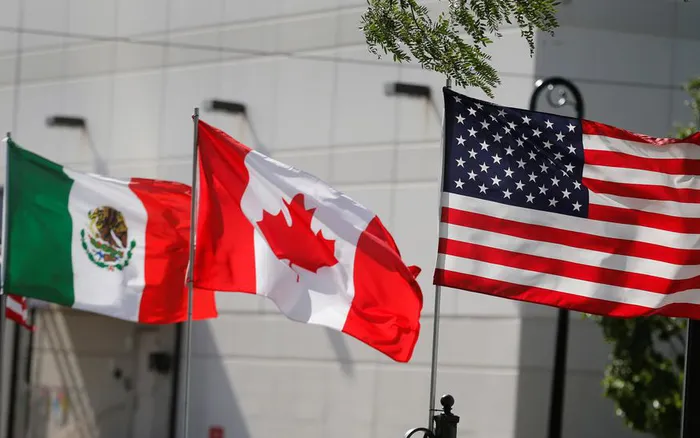
Complicating matters further is the Canada–U.S.–Mexico Agreement (KUSMA), negotiated and signed during Mr. Trump’s first term. The agreement provides duty-free treatment for most Canadian exports that meet rules-of-origin requirements, limiting the president’s ability to impose blanket tariffs without either violating the agreement or withdrawing from it entirely.
Congressional Research Service analyses have repeatedly noted that while sector-specific tariffs have been imposed under various authorities, KUSMA-compliant goods remain largely protected. A unilateral 100 percent tariff would therefore introduce immediate legal uncertainty across North American manufacturing, agriculture, and energy markets.
That uncertainty matters more than the threat itself.
In financial markets, credibility is a form of capital. Repeated threats that are later walked back — a pattern investors have observed since Mr. Trump’s first term — tend to lose their signaling power. Analysts often refer to this dynamic as “threat inflation”: when every disagreement is framed as an existential confrontation, markets eventually stop listening.
Davos and the Politics of Retaliation
Many analysts believe the tariff threat was less about China than about Mr. Carney’s Davos speech itself.
In that address, Mr. Carney argued that the global economic order had experienced a rupture, not a transition, and that middle powers faced a strategic choice: compete individually for favor with superpowers, or coordinate to reduce exposure to coercion. Tariffs, he warned, had become instruments of political pressure rather than economic adjustment.
The timing of Washington’s response was hard to ignore. Canada’s invitation to a U.S.-led peace initiative was reportedly withdrawn the day after the speech. The tariff threat followed within 24 hours.
Instead of blunting the message, the response amplified it. Commentary from Australian, European, and Asian policymakers — widely circulated on social media and in financial newsletters — framed the episode as a case study in why diversification had become a strategic necessity.
Accelerating the Very Shift Washington Fears
Trade data suggests that shift is already underway.
According to Statistics Canada, while Canadian exports to the United States declined modestly in late 2025, exports to other markets rose sharply, reaching record levels. Growth was strongest in shipments to the United Kingdom, the European Union, and China.
From a financial risk perspective, this is straightforward behavior: reducing single-point-of-failure exposure. The more unpredictable U.S. trade policy appears, the stronger the incentive for allies to hedge.
Ironically, this diversification undermines the very leverage tariff threats are meant to preserve. As alternative markets deepen, the marginal cost of defying U.S. pressure declines.
The 2026 Trade Review Looms
The episode also arrives ahead of a scheduled 2026 review of KUSMA, when Congress is expected to reexamine the scope of presidential tariff authority. Lawmakers from both parties have already expressed concern that excessive reliance on unilateral tariffs creates instability for U.S. businesses and allies alike.
“If agreements can be threatened based on political speech rather than policy violations,” one former trade official wrote in a policy forum, “then the incentive to negotiate them evaporates.”
That logic extends beyond Canada. For third countries weighing long-term partnerships, reliability often matters more than raw market size. China’s offer of multi-year tariff arrangements — whatever its geopolitical motivations — contrasts sharply with the volatility of Washington’s signaling.
A Self-Inflicted Erosion of Influence
None of this suggests that the United States is about to lose its economic primacy. But influence erodes incrementally, through moments when power is exercised without strategy and threats substitute for policy.
Global Affairs Canada has warned that rising tariff uncertainty is already weighing on North American growth, with U.S. tariff levels reaching heights not seen since the mid-20th century. Markets have begun to price that uncertainty in.
The paradox is that Mr. Trump’s tariff threat appears designed to punish Canada for seeking alternatives to U.S. dependence. Instead, it has provided a compelling demonstration of why those alternatives are increasingly attractive.
Five years from now, policymakers in Washington may find themselves asking why allies are less accommodating, why trade agreements carry higher risk premiums, and why economic leverage no longer works as it once did.
The answer may trace back to moments like this — when a warning about economic coercion was answered with economic coercion, and credibility quietly slipped away.