A Speech, a Threat, and the Quiet Unraveling of a North American Assumption
It did not begin with tariffs. It did not even begin with trade.
It began with a speech.
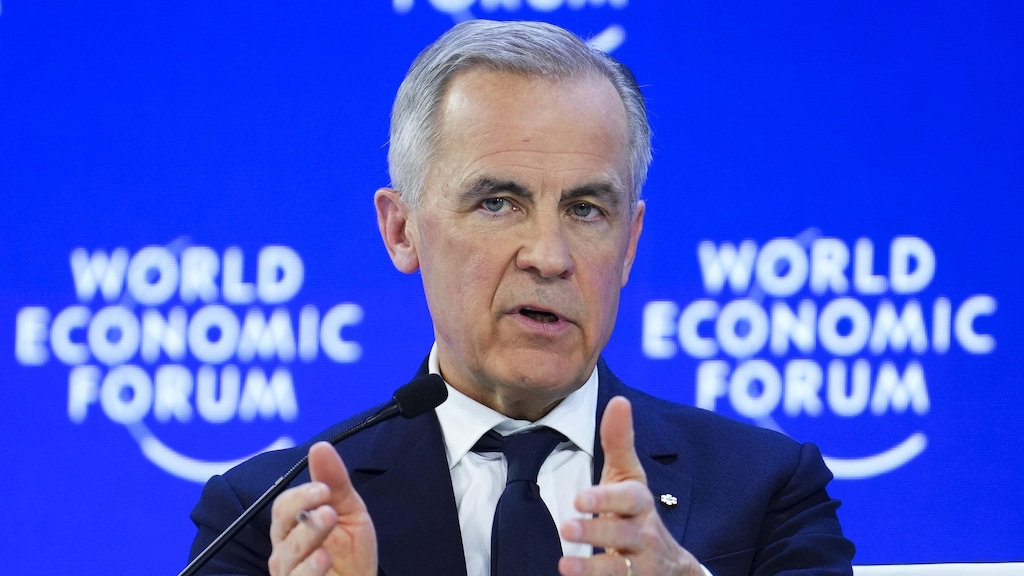
On a cold January morning in Davos, before an audience of chief executives, central bankers, heads of state, and defense officials, Canada’s prime minister delivered remarks that departed sharply from the diplomatic caution that usually defines the World Economic Forum. There were no raised voices, no direct accusations, and no theatrics. Instead, Mark Carney spoke calmly about coercion in the modern global economy — about how powerful countries increasingly weaponize tariffs, manipulate supply chains, and exploit financial systems to discipline smaller partners.
No country was named. None needed to be.
The response was immediate. European officials nodded. Executives applauded. Delegates from countries long exposed to economic pressure recognized the message instantly. And within hours, so did Washington.
What followed — a public insult, a diplomatic rupture, and a threat of a 100 percent tariff on all Canadian goods — has since become one of the most revealing episodes in recent U.S.–Canada relations. Not because the tariffs are likely to be imposed. Most analysts believe they are not. But because the episode exposed something deeper: the erosion of trust at the heart of one of the world’s closest economic partnerships.
From Critique to Confrontation
The Davos speech itself was unremarkable in volume, but extraordinary in implication. Carney described tariffs not as policy tools but as instruments of intimidation. Supply chains, he argued, were being transformed into choke points. Economic interdependence, once seen as stabilizing, was increasingly used as leverage.
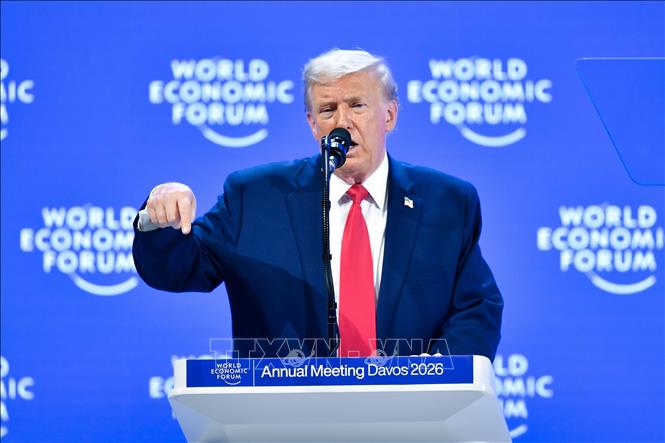
Within 24 hours, President Donald Trump responded publicly — not with a policy rebuttal, but with a personal broadside. Referring to Canada as dependent and subordinate, he suggested the country “lives because of the United States,” framing the relationship as protection rather than partnership.
Diplomats noted the shift immediately. This was not negotiation. It was dominance signaling.
Canada did not reply right away. When it did, the response was brief and pointed. Carney said only that Canada does not exist because of the United States — it thrives because it is Canada.
In diplomatic language, it was a quiet rejection of hierarchy. And by most accounts, it infuriated the White House.
Soon after, Canada was removed from Trump’s newly announced “Board of Peace,” a loosely defined initiative that had already failed to attract participation from several European allies. Then came the escalation.
On social media, Trump issued one of the most sweeping trade threats ever directed at a U.S. ally: a 100 percent tariff on all Canadian goods entering the United States should Ottawa proceed with trade engagement involving China.
The framing was apocalyptic. China, Trump claimed, would “eat Canada alive.” Canadian leadership was again mocked. The message was unmistakable: alignment was mandatory.
An Economically Implausible Threat
Markets reacted with confusion rather than panic.
The reason was arithmetic.
The United States imports roughly four million barrels of oil per day from Canada — oil that supplies refineries across the Midwest and underpins regional fuel prices. Canadian auto parts cross the U.S. border multiple times before final assembly in American factories. Fertilizer, aluminum, steel, and critical minerals flow south in volumes that make North American manufacturing possible.
A blanket 100 percent tariff on these goods would not simply hurt Canada. It would disrupt American production, raise consumer prices, and idle U.S. factories within weeks.
Automotive executives described the idea privately as “economically incoherent.” Energy analysts warned of immediate gasoline price spikes. Trade lawyers noted that such a move would likely violate the USMCA agreement that Trump himself championed.
History reinforced the skepticism. Trump has repeatedly issued maximalist trade threats only to reverse course quietly. Recent warnings aimed at Europe, Iran-linked trade partners, and even Canadian provincial disputes ultimately went nowhere.
But credibility, experts noted, was not the point.
The Damage That Happens Anyway
Even when tariffs never materialize, their effects can be real.
Each threat injects uncertainty. Each public insult erodes confidence. Each reversal reinforces the perception that U.S. trade policy is volatile, emotional, and personalized.
Inside Canada, the reaction was not outrage but recalibration.
Consumer boycotts of American products gained momentum. Travel to the United States declined noticeably. Public opinion hardened. What had once been accepted as episodic friction began to feel structural.
More importantly, Ottawa accelerated changes long discussed but rarely prioritized.
Trade diversification efforts moved forward. Economic ties with the European Union deepened. Engagement with Asia resumed in carefully defined areas. Diplomatic channels with China reopened selectively. Outreach to India expanded. Supply chains were reassessed and, in some cases, permanently rerouted.
Officials described the process not as retaliation, but as insurance.
The objective was not to abandon the United States — still Canada’s largest trading partner by far — but to reduce exposure to unpredictability.
That distinction matters. Because leverage only works when the target believes there are no alternatives.
Canada no longer does.
A Broader Pattern
Other countries were watching closely.
European governments, already wary after years of tariff threats and security pressure, have begun reducing exposure to U.S. economic leverage. Asian economies are building parallel supply chains. Even close allies now plan for volatility rather than assume stability.
In that context, the Canada episode appears less like an anomaly and more like a case study.
For decades, American economic power rested on reliability. Access to the U.S. market was valuable not just because of its size, but because its rules were predictable.
That assumption is weakening.
When trade policy becomes a tool of personal grievance, allies adapt accordingly. Not with dramatic breakups, but with quiet diversification. And once that process begins, leverage fades incrementally but permanently.
The Irony of Escalation
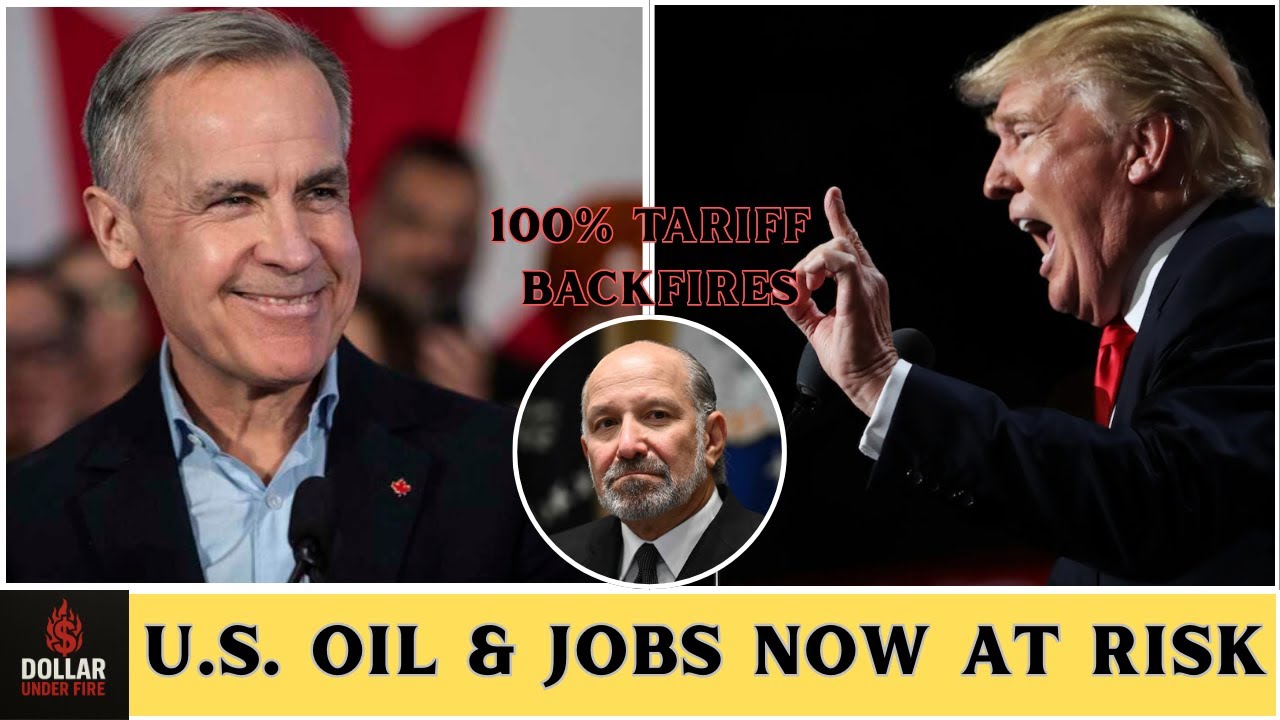
The most striking outcome of the tariff threat may be how completely it backfired.
Intended to force compliance, it accelerated disengagement. Meant to assert dominance, it underscored instability. Designed to project strength, it revealed vulnerability.
Canada did not fold. It did not escalate. It prepared.
And preparation, in geopolitics, is often more consequential than confrontation.
Whether a 100 percent tariff ever appears is almost beside the point. The episode revealed a shift in assumptions that cannot easily be reversed. Once countries internalize the idea that access to the U.S. market can be threatened overnight, diversification becomes a matter of national security.
Threats fade. Exposure does not.
In that sense, the speech in Davos marked something larger than a diplomatic spat. It signaled the quiet end of an era — one in which economic integration was assumed to be stabilizing, and American leadership was taken as a given.
What replaces it will emerge slowly, unevenly, and without ceremony. But the direction is already visible.
Power in global trade no longer flows from fear. It flows from reliability.
And in this moment, that may be the leverage Washington is losing fastest.