Trump’s Tariff Threats Hand Canada a Moment of Truth
By exposing the logic of intimidation, Washington may have accelerated the very independence it sought to prevent.
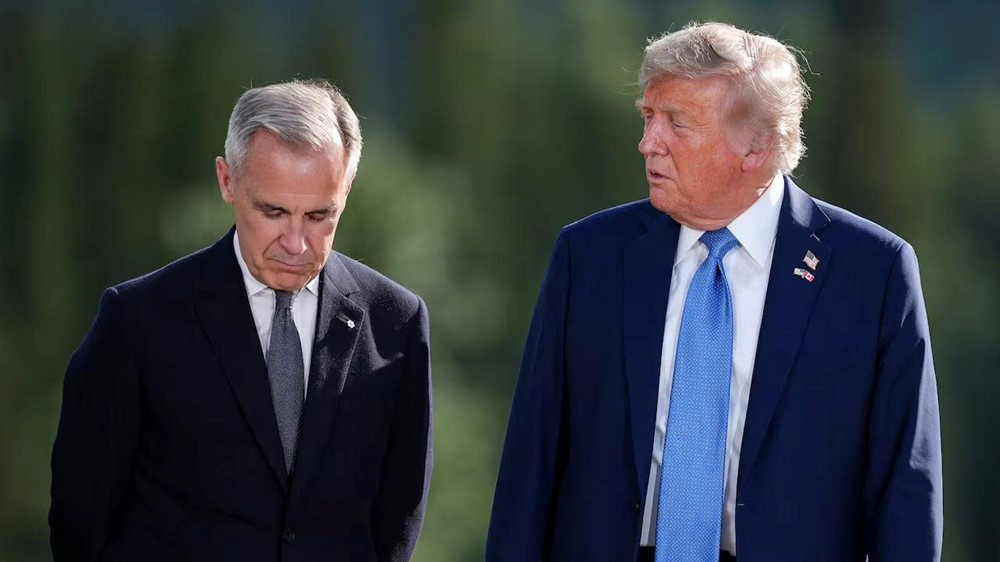
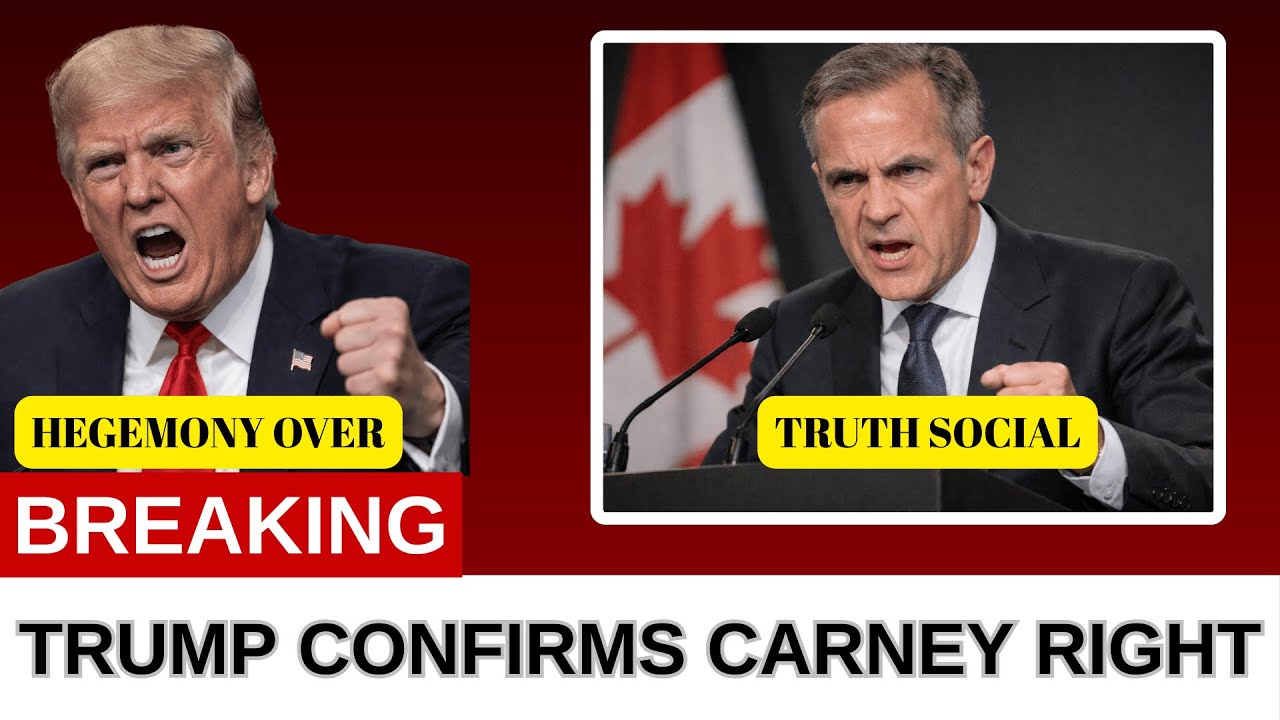
When President Trump threatened Canada with a sweeping 100 percent tariff on all exports — and publicly withdrew Prime Minister Mark Carney’s invitation to what he described as the “Board of Peace” — the move was widely interpreted in Washington as a show of strength. In Ottawa, and increasingly beyond, it was read very differently.
Rather than undermining Mr. Carney’s case, the threats appeared to validate it.
Just days earlier, speaking at the World Economic Forum in Davos, Mr. Carney had delivered an unusually blunt assessment of the global order — and of Canada’s place within it. He avoided the language of friendship or shared destiny that has long defined North American diplomacy. Instead, he spoke clinically of “American hegemony,” of economic integration weaponized into leverage, and of the dangers faced by countries that confuse dependence with partnership.
The response from Washington was swift, personal, and public. Mr. Trump did not rebut the argument. He did not dispute the facts. He reached instead for the tool he knows best: pressure.
In doing so, analysts say, he may have clarified the stakes of the moment more effectively than any speech could.
A Relationship Reframed
For decades, Canada’s strategy toward the United States rested on quiet accommodation. Disputes were managed behind closed doors. Dependency was acknowledged but rarely challenged. The assumption was that stability lay in discretion.
Mr. Carney broke from that tradition.
At Davos, he invoked the dissident playwright Václav Havel and the idea that systems of power endure not because they are universally believed, but because they are universally performed. The lie, Havel argued, persists only as long as everyone agrees to act as though it were true.
Applied to modern geopolitics, Mr. Carney’s message was unmistakable: the pretense that economic integration automatically implies mutual benefit no longer holds when that integration can be turned into punishment.
That argument has been circulating quietly among American allies for years. What was new was hearing it stated openly — and by the leader of the United States’ closest trading partner.
The Language of Leverage

Mr. Trump’s reply, first delivered in remarks and then amplified through posts on Truth Social, spoke the language of hierarchy. Canada, he suggested, “lives because of the United States.” Gratitude was expected. Deviation would carry consequences.
This framing was not new. Mr. Trump has long described international relations as transactions in which leverage exists to be used. What made the moment notable was the context. The threat followed a speech questioning whether such leverage could coexist with genuine alliance.
In Washington, some commentators defended the president’s approach as overdue realism. Others, including voices across mainstream media and foreign policy circles, warned that it confirmed the very anxieties driving allies to diversify away from U.S. dependence.
On social media, the contrast was stark. Clips of Mr. Carney’s Davos address circulated widely alongside screenshots of Mr. Trump’s posts, creating a visual narrative of calm assertion followed by retaliatory force.
Independence, Redefined
Canada is not declaring autarky. Nor is it abandoning the United States. But the direction is clear.
Ottawa has accelerated trade discussions beyond North America, deepened energy diplomacy with Europe and the Gulf, and signaled openness to partnerships that would once have been considered politically sensitive. These moves mirror similar shifts across the European Union and parts of Asia, where governments increasingly speak of “strategic autonomy” rather than alliance management.
What distinguishes Canada’s position is its symbolism. If even Canada — culturally intertwined, geographically inseparable, economically integrated — concludes that overreliance on Washington is a liability, the message to others is unmistakable.
Mr. Trump’s actions may have unintentionally strengthened that conclusion.
Power and Its Limits
American influence has always rested on more than coercion. It has depended on restraint — on the idea that power need not be exercised to be effective. That restraint fostered trust, and trust sustained the system.
By contrast, the overt monetization of relationships risks hollowing that system out. Allies who feel exposed seek insurance. Insurance takes the form of diversification.
This is not rebellion. It is risk management.
Mr. Carney’s argument is not that the United States is weak, but that power wielded without reciprocity erodes its own foundations. A hegemon that demands obedience may secure compliance in the short term, but it forfeits the loyalty that makes leadership durable.
A Moment Others Are Watching
Perhaps the most consequential audience for this exchange is not in Canada or the United States, but elsewhere.
From European capitals to Asian trade ministries, officials are watching closely how Washington responds to dissent — and what it costs to speak plainly. The lesson many are drawing is not that resistance is painless, but that silence carries its own risks.
Mr. Carney accepted those risks publicly. Mr. Trump’s reaction underscored them. Together, the episode has transformed an abstract debate about sovereignty into a concrete case study.
The Illusion Cracks
Havel wrote that when one person stops pretending, the system is exposed for what it is. That exposure does not end power overnight. But it changes how power is perceived — and perception shapes behavior.
By threatening tariffs and withdrawing symbolic access, Mr. Trump may have demonstrated strength to his supporters. To others, he revealed a system intolerant of candor.
That revelation, analysts suggest, may outlast any single trade dispute.
Canada’s future is not one of isolation, but of recalibration. Independence, in this sense, does not mean separation from the United States. It means refusing to confuse dependence with destiny.
Whether that recalibration succeeds will depend on economic resilience, political discipline, and global conditions far beyond Ottawa’s control. But one thing is now clear: the old assumptions no longer hold unchallenged.
Mr. Trump sought to assert dominance. Instead, he clarified the choice facing American allies.
And once that choice is visible, it cannot be unseen.