Bipartisan U.S. Lawmakers Travel to Greenland to Reassure Allies Amid Trump’s Renewed Threats

NUUK, Greenland — A bipartisan delegation of United States lawmakers traveled to Greenland this week in an unusually direct show of solidarity with Denmark and the autonomous Arctic territory, seeking to reassure allies rattled by renewed rhetoric from former President Donald J. Trump suggesting the United States could seize Greenland by force.
The delegation, composed of 10 senators and House members from both major parties and independents, included Republicans such as Senator Lisa Murkowski of Alaska and Senator Thom Tillis of North Carolina, alongside Democrats including Senator Jeanne Shaheen of New Hampshire and Senator Chris Coons of Delaware. Standing beside Greenlandic and Danish lawmakers in Nuuk, the capital, the Americans delivered a blunt message: Congress does not support any threat against Greenland’s sovereignty, Denmark’s territorial integrity, or the NATO alliance.
“We have your back,” several lawmakers said in unison, according to video of the event circulated widely across U.S. and European media. “These relationships are not Republican or Democrat. They are American.”
The visit came amid growing alarm in Denmark and Greenland following Trump’s repeated public assertions that the United States “needs” Greenland for national security reasons — statements he has refused to walk back, even when pressed by allies. The rhetoric has stirred anxiety across the Arctic, where Greenland occupies a strategically vital position between North America, Europe, and Russia.
A Show of Congressional Defiance
Senator Murkowski, speaking at Greenland’s parliament, emphasized the importance of continuity in U.S. alliances.
“When it comes to relationships with our friends and our allies, this is not a subject of Republicans versus Democrats,” she said. “It is a recognition of a strong and continuing relationship over decades — one that must be nurtured.”
Senator Coons, who led the delegation, echoed that message, highlighting 225 years of cooperation between the United States and Denmark and reaffirming NATO’s core principles of sovereignty and self-determination.
“We spoke with clarity about the importance that the people of Greenland make their own decisions about their future,” Coons said. “That is non-negotiable.”
Greenlandic officials welcomed the visit, describing it as a critical moment of reassurance. One senior lawmaker said the dialogue was essential as public anxiety has risen, particularly following Trump’s refusal to rule out military action.
“Dialogue is first and foremost what we need,” the official said. “We are a member of NATO, and we want to cooperate through NATO — not live in fear of it.”
NATO, Russia, and the Arctic Balance
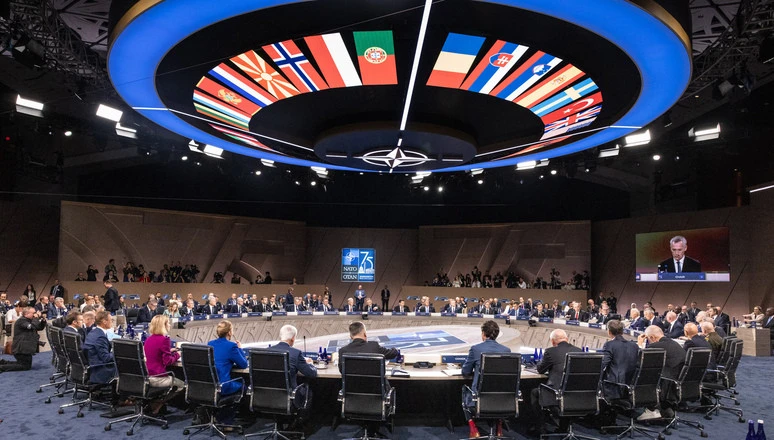
Several lawmakers warned that even rhetorical threats against Greenland could have cascading consequences for NATO unity. Senator Shaheen was among the most explicit, saying that the mere suggestion of a U.S. takeover undermines decades of trust.
“An American military takeover of Greenland would threaten NATO as we know it,” she said. “And even short of that, the suggestion alone does real damage — not just to Denmark and Greenland, but to America’s own national security.”
Shaheen noted that such rhetoric plays directly into the hands of Russia and China, both of which have sought to exploit fractures within NATO. Russian officials have long viewed the Arctic as a key arena for competition, particularly as melting ice opens new shipping lanes and access to critical minerals.
Danish intelligence services revealed in 2019 that Russia had conducted a covert disinformation campaign falsely suggesting that the United States planned to seize Greenland — an operation intended to sow discord within NATO. Several U.S. lawmakers now argue that Trump’s public statements are achieving the same effect without foreign interference.
“It turns out Russia didn’t need a false-flag operation,” one U.S. lawmaker said privately. “The damage is being done in plain sight.”
Polls and Public Opposition
Polling data suggests Trump’s position is far from popular at home. A recent national survey, cited repeatedly by lawmakers during the visit, found that 86 percent of Americans oppose the use of military force in Greenland. That opposition cuts across party lines, reinforcing congressional claims that Trump’s rhetoric does not reflect the will of the U.S. public.
Nevertheless, anxiety in Greenland has been palpable. Danish and Greenlandic officials have spoken openly about fear among residents, including reports of children worrying about a possible invasion.
“These are not abstract debates here,” Shaheen said. “They are deeply personal.”
Broader Concerns: Power, Technology, and Governance
The Greenland controversy has unfolded alongside other developments that have intensified scrutiny of the Trump-aligned policy ecosystem. Lawmakers and analysts have raised alarms over the concentration of power among a small group of private actors, particularly in technology and defense.
Recent announcements that the Department of Defense plans to integrate artificial intelligence systems developed by Elon Musk’s company XAI into classified and unclassified networks have sparked bipartisan concern in Congress. Critics argue that Musk’s influence over both information platforms and government infrastructure represents an unprecedented consolidation of power.
Several members of Congress have pointed to past controversies involving AI misuse, including the spread of deepfake content, as evidence that safeguards remain insufficient.
“This fusion of ideological power, economic leverage, and military systems should alarm every American,” one lawmaker said.
A Rare Moment of Unity

Despite deep partisan divisions in Washington, the Greenland delegation underscored an area of rare consensus: the preservation of alliances and the rejection of unilateral territorial ambition.
Lawmakers stressed that if the United States seeks to expand military presence, extract critical minerals, or enhance Arctic defenses, existing treaties already provide a path forward — through partnership, not coercion. The U.S. and Denmark have maintained defense agreements dating back to 1951, and the United States once operated 17 bases in Greenland at Denmark’s invitation.
“The threats are unnecessary,” Shaheen said. “And they are counterproductive.”
As the delegation departed Nuuk, Greenlandic leaders expressed cautious optimism. While Trump’s rhetoric has not subsided, the presence of bipartisan American lawmakers offered reassurance that the institutional foundations of U.S. foreign policy — Congress, alliances, and public opinion — remain intact.
Whether that reassurance will be enough, however, remains an open question. In the Arctic, where geopolitics is rapidly warming alongside the climate, words alone can reshape realities.