Canada’s Quiet Arctic Pivot: How a Forgotten Rail Line Is Rewriting North American Trade

*WINNIPEG—*For much of the past century, Canada’s trade geography has followed a predictable path: west to Vancouver, south through the United States, or east via American-linked Atlantic ports. It was not ideology but infrastructure that made those routes inevitable. Rail capacity, port depth, and logistics scale all lay beyond Canada’s northern frontier, leaving exporters with little choice but to pass through American systems and pay American fees.
That reality is now being quietly, deliberately challenged—by a rail line most Canadians had long forgotten.
In November 2025, standing alongside Manitoba Premier Wab Kinew in Winnipeg, Prime Minister Mark Carney announced a $51 million federal commitment toward upgrading the Hudson Bay Railway. Combined with provincial funding, total investment reached $262 million. The language Carney used was striking. This was not framed as regional development or routine maintenance. It was described as the foundation of a new trade corridor—one that would move Canadian resources directly to Europe through the Arctic, bypassing U.S. infrastructure entirely.
In Washington, the announcement attracted little attention. In Ottawa, it marked a strategic turning point.
A Rail Line Written Off—Then Reclaimed
The Hudson Bay Railway stretches nearly 1,300 kilometers from The Pas, Manitoba, to the Arctic port of Churchill. Built between the 1920s and 1930s, it was conceived as a nation-building project: a direct northern route that would free Prairie exports from dependence on southern railways and foreign ports.
The vision was elegant. The execution was punishing.
Permafrost shifted. Muskeg swallowed track beds. Flooding regularly washed out sections of rail. Extreme cold cracked steel and stressed bridges. The shipping season through Hudson Bay was short—often just four months—and Churchill lacked the infrastructure to compete with deep-water ports to the south. While the railway technically existed, it never achieved the reliability or capacity required for modern trade.
By the 1990s, the federal government no longer viewed the line as strategic. In a move that later came to symbolize national neglect, Ottawa sold both the railway and the port of Churchill to a U.S. company for $1. Investment dwindled. Maintenance was deferred. When catastrophic flooding hit in 2017, service collapsed entirely, cutting Churchill off from the rest of Canada for more than a year.
The line’s revival began in 2018, when a consortium of 41 First Nations and northern municipalities—operating as the Arctic Gateway Group—purchased the assets. At the time, many analysts in both Canada and the United States viewed the move as symbolic rather than transformative. Indigenous ownership of neglected infrastructure carried political weight, but few believed it would reshape continental trade.
They underestimated how fast geopolitics would change.
From Neglect to Leverage
The shift did not come from the Arctic alone. It came from the south.
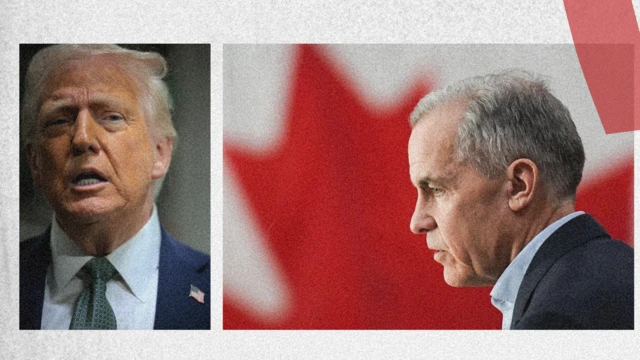
As trade tensions with Washington intensified and Donald Trump returned to office openly threatening Canadian sovereignty and economic pressure, Ottawa reassessed long-standing assumptions. Canada’s dependence on American infrastructure—rail corridors, ports, refineries—was no longer viewed as a benign economic reality. It was a strategic vulnerability.
The Hudson Bay Railway, once a liability, began to look like leverage.
What makes the current investment different is not merely the money, but the standard. The goal is to upgrade the railway to Class One specifications—the highest freight standard in North America. That classification allows for heavier loads, higher speeds, unit trains, and modern reliability expectations. In practical terms, it determines whether global exporters will take a route seriously.
The rebuild includes stabilizing roadbeds over permafrost, reinforcing bridges, replacing rail and ties, and deploying advanced monitoring systems—ground-penetrating radar, LiDAR mapping, drones, real-time sensors, and AI-driven predictive maintenance. This is not a patch. It is a reconstruction.
For logistics companies, the signal is unmistakable: this corridor is intended to last.
What Moves North—and Why It Matters
Grain is the immediate prize. Saskatchewan and Manitoba produce enormous volumes of wheat, canola, and specialty crops, much of which currently flows south or west before reaching Europe. The route to Churchill is shorter. With Class One capacity and expanded port handling, unit trains can move north efficiently, cutting distance and costs.
Potash may matter even more. Saskatchewan controls roughly 95 percent of Canada’s potash production, most of it destined for export. For decades, large volumes moved through U.S. logistics networks. Agreements already announced by fertilizer producers suggest that is beginning to change. Every ton shipped through Churchill is a ton that bypasses American railways, ports, and storage facilities.
Critical minerals add a strategic dimension that resonates far beyond Canada. Northern Manitoba, Ontario, Quebec, and Saskatchewan hold deposits of nickel, lithium, cobalt, and rare earth elements—materials central to electric vehicles, defense systems, and energy transitions. A northern rail-to-port corridor allows these minerals to reach European buyers without transiting U.S. refineries or ports, a development closely watched by policymakers on both sides of the Atlantic.
Energy projects loom in the background. Proposals linked to “Port of Churchill Plus” include liquefied natural gas, hydrogen in ammonia form, and expanded electricity transmission. Alberta officials have openly discussed an energy corridor to Churchill—an idea once dismissed as impractical, now treated with cautious seriousness.
Then there is Arctic resupply. Communities across Nunavut rely on seasonal shipping for essential goods. Strengthening Churchill’s role lowers costs, improves reliability, and reinforces Canada’s sovereignty in its own Arctic—an issue increasingly salient as great-power competition intensifies in northern waters.
The American Dimension

None of this eliminates southern routes. Vancouver remains indispensable for Pacific trade. Established corridors through the United States will continue to handle vast volumes.
What changes is choice.
For more than a century, Western Canadian exporters used American infrastructure because they had no alternative. Fees, scheduling priorities, and capacity constraints were imposed by geography, not negotiation. A functional Arctic corridor breaks that monopoly.
In U.S. policy circles and logistics industry commentary—particularly on Bloomberg terminals, trade-focused podcasts, and X (formerly Twitter)—the concern is not dramatic disruption but gradual erosion. Port fees lost here. Rail volumes diverted there. Competitive pressure introduced where none existed before.
There is no trade case to litigate, no tariff to challenge. Canada is not restricting access. It is simply using its own infrastructure.
Climate, Ironically, Tilts the Math
Climate change complicates the story. Thawing permafrost increases engineering challenges. But it also lengthens the shipping season through Hudson Bay. Where Churchill once operated roughly four months a year, recent seasons approach five or six, with icebreaker support extending the window further.
The conditions that once doomed the railway are no longer static. Combined with modern engineering and monitoring, the economics that failed in the 20th century look different in the 21st.
A Strategic Bet
Spending hundreds of millions to rebuild a rail line through some of the most difficult terrain in North America might once have seemed reckless. In today’s strategic environment, it looks calculated.
By reducing dependence on foreign-controlled logistics, Canada is not merely saving money. It is reclaiming leverage—over fees, routes, priorities, and ultimately, sovereignty.
For decades, the Hudson Bay Railway symbolized ambition unrealized. Now it represents something else entirely: a reminder that in trade, as in geopolitics, infrastructure determines who sets the rules.
And once alternatives exist, power quietly shifts north.