When Oil Stops Being a Commodity and Becomes a Threat

WASHINGTON — For decades, oil has been a tool of power. Rarely, however, has it been wielded as starkly as in the recent decision by the administration of President Donald Trump to cut off oil flows to Cuba in their entirety, a move intended to apply economic pressure and force political concessions from Havana.
In theory, the strategy was familiar. Energy sanctions have long been a cornerstone of Washington’s foreign policy, from Iran to Venezuela. The logic is straightforward: restrict supply, create scarcity, generate internal instability, and compel the target government to change its behavior.
This time, the expected outcome did not materialize.
An Old Assumption in a New World
When the oil cutoff was announced, many analysts in Washington and Miami quickly predicted a familiar scenario: widespread blackouts, transportation paralysis, fuel shortages in essential sectors, and, ultimately, political pressure forcing Cuba to seek accommodation with the United States.
Public estimates suggested that Cuba lost more than 26,000 barrels of oil per day — nearly half of its imported supply. Under traditional economic models, such a shock would normally trigger an immediate crisis.
But weeks passed, and no collapse came.
There was no public capitulation. No emergency diplomatic missions to Washington. No visible retreat.
Instead, Havana went quiet — and began to adapt.
Adaptation Over Submission
According to regional diplomatic sources and U.S. energy analysts tracking Caribbean trade flows, Cuban officials quickly activated alternative channels. The focus was not on pleading for relief but on identifying partners willing to treat energy as commerce rather than coercion.
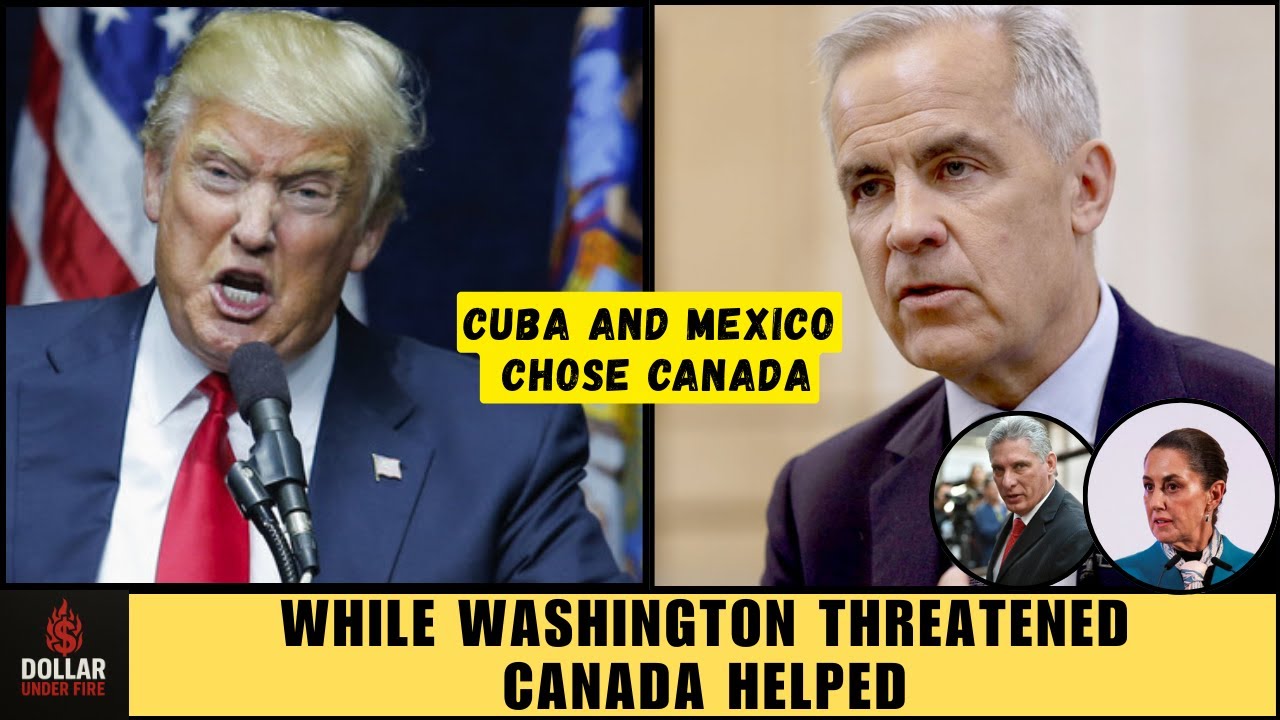
Mexico emerged first.
Under President Claudia Sheinbaum, Mexico avoided grand political statements or confrontational messaging. Supply arrangements were described as strictly commercial — no political alignment demanded, no concessions extracted, no effort to leverage Cuba’s vulnerability for strategic gain.
The volumes Mexico provided were not sufficient to fully replace what was lost. But they did something more consequential: they shattered the central assumption behind the pressure campaign — that Cuba had no alternatives.
Once alternatives exist, leverage begins to erode.
Canada’s Telling Silence

While Washington escalated its rhetoric and headlines focused on White House threats, Ottawa said almost nothing.
That silence was not indifference. It was a signal.
Canada produces more than five million barrels of oil per day and exports the majority of it. More importantly, it has spent decades building a reputation that is increasingly rare in global energy markets: reliability.
Under Prime Minister Mark Carney, Canada’s energy policy has been described by analysts at Bloomberg and Foreign Affairs as maximally depoliticized. Contracts are honored across election cycles. Supply is not weaponized. Political disagreements do not translate into fuel cutoffs.
In a global energy environment defined by volatility, that stability has become a form of soft power.
When Threats Become Risk
U.S. intelligence assessments, according to officials familiar with classified reporting and echoed in policy-focused analyses, did not support predictions of imminent collapse.
The language was careful.
Cuba could struggle. The economy was strained. Governance would become more difficult. But the assessments avoided words like inevitable or imminent failure.
In policy circles, the difference between “strained” and “collapsed” is decisive. That gap undermined the entire pressure strategy.
Sanctions work only when the target cannot adapt.
A Ripple Beyond Cuba
The most significant impact of the decision was not confined to Havana.
Every energy ultimatum sends a message not just to the target, but to every country watching. When a major supplier can shut off fuel overnight, contracts stop feeling permanent. Importers begin asking an uncomfortable question: if this can happen to Cuba, could it happen to us?
That question does not need to be answered to reshape behavior.
It encourages diversification. It accelerates risk-spreading. It pushes countries to seek suppliers that may be more expensive but less volatile.
In energy markets, predictability is as valuable as price.
A Quiet Shift in Power
President Trump projected decisiveness. But he also projected unpredictability — the one quality markets consistently punish.
Foreign policy analysts writing in major U.S. outlets and independent policy platforms have noted that politically theatrical energy decisions often produce long-term strategic losses. Markets do not argue with volatility; they route around it.
Canada did not “win” this moment through confrontation. It won by doing nothing — and allowing contrast to do the work.
One model uses energy to demand obedience. The other treats energy as infrastructure.
One shifts with political mood. The other operates through contracts.
Conclusion: When Stability Becomes Power
This crisis will pass. Supplies will adjust. New deals will be struck. But the lesson will endure.
In a world where oil can be cut off by a single announcement, stability becomes strategic capital. When energy is weaponized, trust becomes scarce. And when nations are forced to choose between survival and sovereignty, they gravitate toward partners who do not require that trade-off.
Power today is no longer defined solely by the ability to apply pressure. Increasingly, it is defined by the ability not to need to.
That is the quiet, structural shift now unfolding — strategically, steadily, and in plain sight.