Washington is witnessing an unprecedented confrontation between an ambitious President and the foundational walls of American democracy. Donald Trump has returned to the White House with a promise of absolute strength, but his executive power is colliding with fierce legal and military barriers. Sensational headlines about the “Pentagon refusing to deploy troops” are more than mere rumors; they are symptoms of a quiet rebellion within the core institutions of the United States.
This article dives deep into the reality of this political “explosion,” where the President’s orders are no longer considered ultimate.

Imagine you are Donald Trump: You command the world’s most powerful military. You issue stern threats against Iran, declaring the U.S. is “locked and loaded.” You float the idea of using military force to seize Greenland. You have already secured military control in Venezuela, and now, you seek to deploy the National Guard into major American cities like Chicago and Los Angeles to suppress protests and enforce immigration laws.
This should have been the moment of Trump’s supreme authority. Instead, he faces a harsh reality: People are saying “No”.
-
Domestically: Federal judges are blocking the deployment of the National Guard. State governors are refusing to allow Trump to federalize their troops.
-
Internationally: European leaders and even some Republican lawmakers have dismissed the plan to seize Greenland as “insane”.

There is a glaring disconnect between Trump’s fiery rhetoric and actual military action. While Trump threatens to strike Iran, troop levels and deployments in the Middle East remain unchanged. The Pentagon has not released any offensive strike plans.
Military planners appear to be “slow-walking” the President’s most high-risk schemes. They are not openly defying orders—which would trigger a constitutional crisis—but they are moving with extreme caution. Responsible military leaders are highlighting risks, demanding more planning time, and asking difficult questions about strategic objectives, thereby creating delays that restrain Trump’s ambitions.
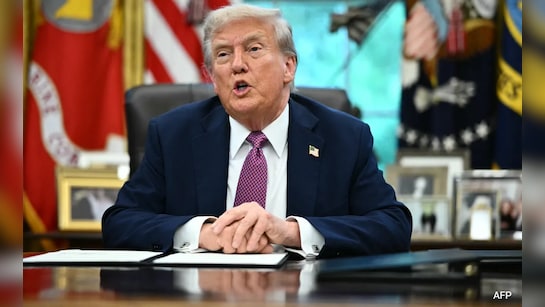
The heaviest blow to Trump’s efforts to utilize the military domestically has come from the judicial system.
-
Los Angeles: Trump attempted to federalize the California National Guard to handle immigration protests. However, a federal judge in California rejected this, arguing that the administration failed to provide a valid legal basis to strip the state governor of control.
-
Chicago: The Supreme Court has ruled that Trump cannot send troops into the Chicago area if faced with opposition from the state government.
Trump’s announcement to “temporarily” abandon these plans was not a strategic choice, but a forced retreat under the pressure of the law. State governors view Trump’s actions as a grave abuse of power against state sovereignty and are currently winning these legal battles.
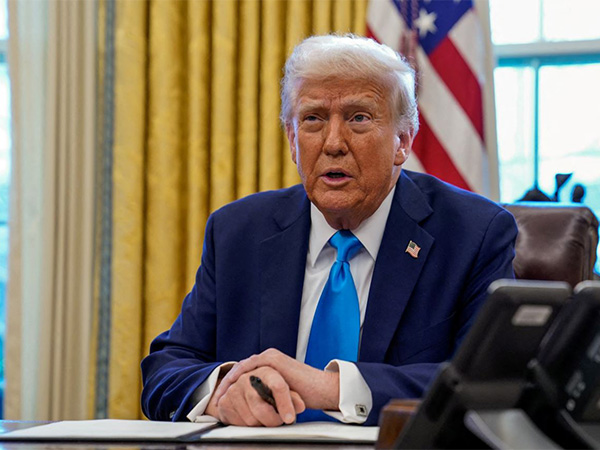
Trump is claiming that the War Powers Resolution—the law requiring the President to obtain Congressional approval for prolonged military operations—is unconstitutional. He asserts that he does not need anyone’s permission to use force.
However, the Senate is considering new legislation to limit Trump’s ability to unilaterally launch wars following the raid in Venezuela. This is a constitutional showdown over who holds supreme authority in deploying the military. If Congress succeeds in reasserting its power, Trump will be stripped of the most significant tool in his “iron fist” foreign policy.
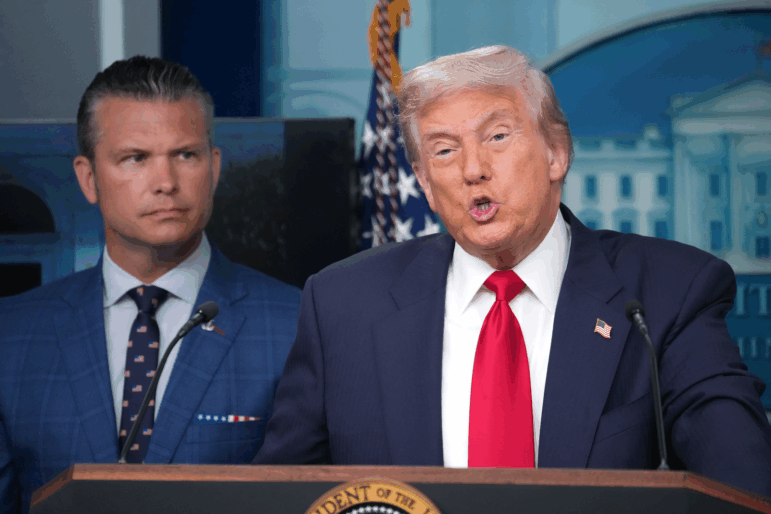
There are two opposing views regarding the resistance Trump is encountering:
-
The Pro-Democracy View: This is exactly how the system was designed to work. The courts, Congress, and state governments are acting as vital safeguards to prevent one individual from wielding too much power, ensuring that the use of force is always deliberate and legal.
-
The Executive Support View: Trump’s supporters argue that this is an act of obstruction, preventing the President from executing the national security mandate entrusted to him by voters. They believe that the military and courts saying “No” makes America look weak and indecisive before global adversaries.
Currently, the United States exists in a state of unstable equilibrium. Trump continues to issue threats, institutions continue to push back, and Trump largely cedes ground. However, this balance is fragile. If Trump decides to go further—by ignoring court orders or firing generals who do not comply—America will plunge into a full-scale constitutional crisis.
The system is holding, but the biggest question is how long it can endure if the President decides to break all barriers to achieve his goals. The world is holding its breath as it watches every next step in Washington.