As Financial Strain Mounts, Sarah Ferguson Faces a Reckoning Beyond the Palace Walls
In the late summer of 2025, Sarah Ferguson made what would become her final confirmed public appearance: a memorial service for Catherine, Duchess of Kent. The setting was solemn, the choreography familiar. Cameras captured her arrival, poised and composed. Nothing in that moment suggested retreat. Yet in the months that followed, her public calendar fell silent.
By early 2026, the silence had taken on new meaning.
Over the course of 72 hours in mid-February, six business entities associated with Ferguson were dissolved: Phoenix Events Limited, Philanthropian Limited, Fergus Farm Limited, Luna Investments Limited, Solomony Limited and Planet Partners Productions Limited. While business closures are not uncommon among public figures who diversify their ventures, the speed and simultaneity of the filings drew attention in Britain’s tightly observed royal ecosystem. Days later, Sarah’s Trust — a charitable foundation she founded in 2020 to support women and children across 20 countries — announced the indefinite suspension of its operations.
The sequence suggested not routine restructuring but contraction under pressure.
The financial unraveling coincided with renewed scrutiny linked to documents released on Jan. 30, 2026, by the United States Department of Justice as part of its long-running investigation into Jeffrey Epstein. Ferguson has not been accused of criminal wrongdoing. Still, her past association with Epstein — including a 2009 visit to his residence shortly after his release from a Florida jail sentence — resurfaced in public discourse. Old headlines circulated anew. In Britain, where memory within elite and media circles can be enduring, reputational rehabilitation is rarely swift.
For Ferguson, 66, the convergence of financial instability and revived controversy has created a moment of reckoning.
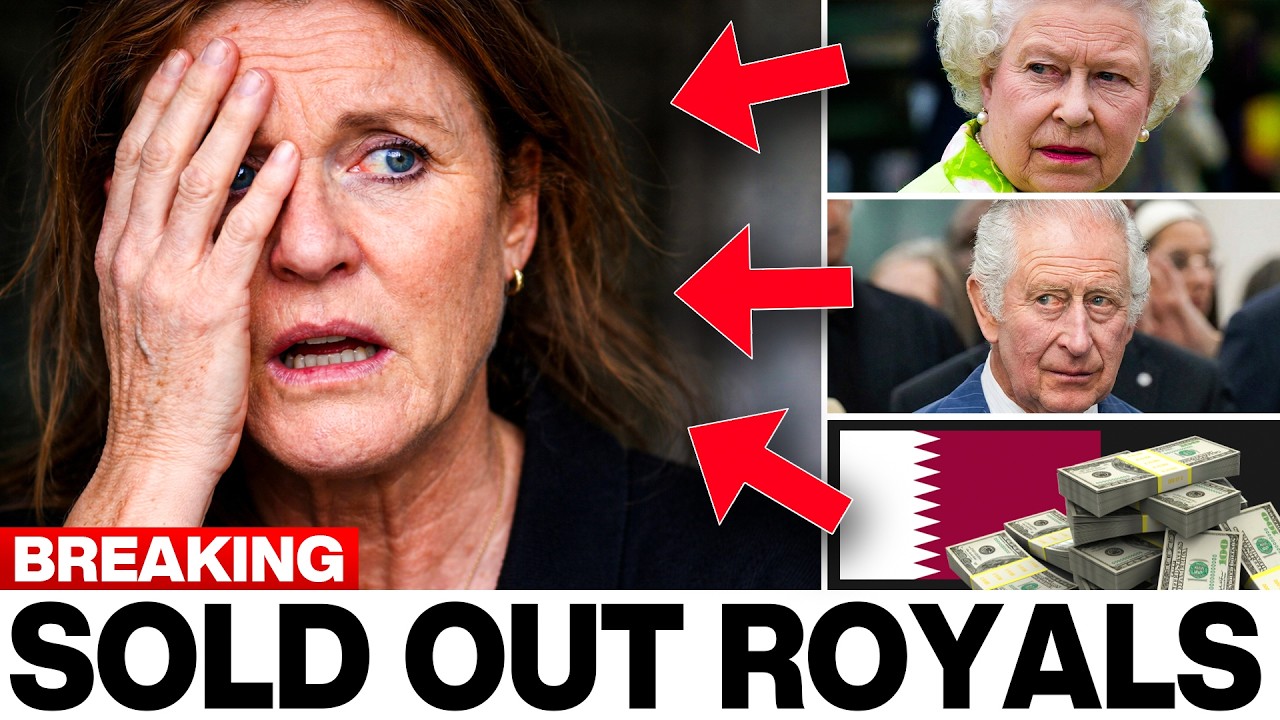
According to individuals familiar with her recent movements, she spent time in the Gulf region shortly after her September 2025 appearance, with particular attention focused on reported discussions in Qatar. No formal agreement has been publicly confirmed. Yet accounts of exploratory talks involving potential investment backing and residency arrangements have circulated among royal observers and advisers.
In isolation, international travel by a former senior royal would attract little notice. Members of Britain’s extended royal family have long cultivated global philanthropic and commercial relationships. What distinguishes this moment is context. With multiple ventures closing and charitable operations paused, alternative sources of financial stability carry greater weight. In that environment, reported Gulf discussions appear less speculative and more strategic.
The implications extend beyond personal solvency. Ferguson’s life inside the monarchy — from her 1986 wedding at Westminster Abbey to her 1996 divorce from Prince Andrew — granted her proximity to an institution that relies heavily on discretion and coordinated messaging. For three decades after her divorce, she occupied a delicate position: present at family milestones yet outside official duties; visible but peripheral. That balance was sustained, in part, by silence.
Silence, in royal life, has long functioned as currency.
Recent reports suggest that advisers had privately explored the possibility of a televised interview with an American network in late 2025 as a means of stabilizing finances. Such an appearance, potentially commanding significant compensation, never materialized. If alternative backing emerged abroad — whether through structured investment, advisory roles or carefully negotiated media partnerships — it could provide not only financial relief but greater control over timing and narrative.
Within palace circles, the prospect of independent negotiations abroad has reportedly generated unease. The concern is less about confirmed disclosures than about leverage. The monarchy’s stability depends on unity of presentation. When a former insider with decades of lived experience engages external partners without visible coordination, questions arise about influence and optics.
Those sensitivities are heightened under King Charles III, whose reign has been defined by efforts to modernize while preserving continuity. Any development that risks reopening old controversies complicates that balance. For Prince William, who has sought to project discipline and forward focus, the stakes are similarly clear: narrative control remains central to institutional resilience.
Yet to frame Ferguson’s situation solely as institutional tension risks overlooking the more personal dimension. Since her divorce, she has operated without the formal financial protections afforded to working royals. Unlike Prince Andrew, who is reportedly eligible for a government pension through his naval service, Ferguson has relied primarily on commercial ventures and publishing projects. When those ventures contract, the impact is immediate.
:max_bytes(150000):strip_icc():focal(734x319:736x321)/sarah-ferguson-not-attend-coronation-041323-2-6e7692a9a193424fafd047e7c1dfbecf.jpg)
In that light, reported discussions in Qatar can be read as pragmatic rather than provocative — an attempt to secure long-term stability in a narrowing domestic landscape. Analysts of Gulf wealth networks note that British tabloid controversies often carry less enduring consequence in parts of the Middle East. For public figures seeking distance from the intensity of London’s media cycle, that distinction matters.
Nothing publicly substantiated suggests imminent disclosure or documentary revelation. The tension rests instead in possibility — in the inherent value of proximity to power, and in the recalibration of silence as financial and reputational pressures evolve.
For more than 30 years, Ferguson navigated the boundary between inclusion and independence with careful restraint. Whether the current moment represents strategic repositioning or simple survival is, for now, an open question.
What is clear is that in the modern monarchy, as in global finance, stability is rarely permanent. And when long-held arrangements begin to shift, even silence can take on a different price.