When a President Keeps Telling the World He’s a Genius
There are few things more revealing in politics than the traits leaders feel compelled to announce about themselves.
Strength, competence, intelligence — these are qualities that, in theory, speak most convincingly through action. Yet throughout modern history, moments of insecurity often surface not through policy failure, but through insistence. The louder the claim, the more it invites scrutiny.
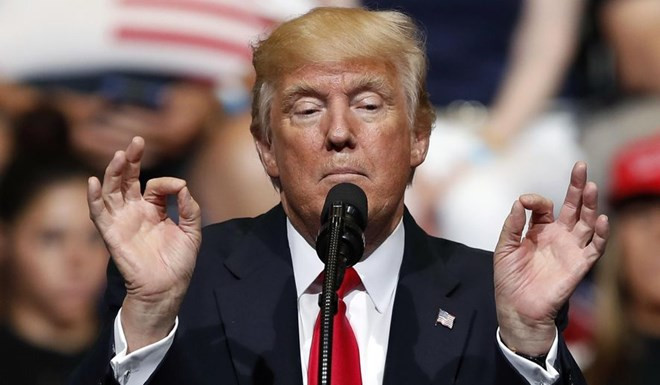
Few American presidents have asserted their intelligence as frequently or as publicly as Donald Trump.
For more than a decade, Trump has returned to the subject with remarkable consistency. Long before entering office, he declared on social media that his IQ was “one of the highest,” reassuring critics that their skepticism stemmed not from evidence but from insecurity. During his presidency, he escalated those claims, challenging political rivals, journalists, and even his own Cabinet members to intelligence comparisons. When doubts about his mental fitness emerged, he responded not with medical transparency but with a phrase that would come to define an era: “a very stable genius.”
The words were not carefully crafted. They were spontaneous, emotional, unmistakably personal. And precisely because of that, they became unforgettable.
In American political life, language often matters less for what it proves than for what it exposes. Trump’s repeated emphasis on intelligence revealed something deeper than ego. It illuminated a worldview in which leadership is treated as a contest of personal dominance rather than institutional responsibility — where validation matters more than verification.
Comedy, unusually, became the arena where this tension played out most clearly.
:max_bytes(150000):strip_icc():focal(742x313:744x315)/stephen-colbert-late-show-012726-2-e8a9da783b284008993571c9d01286bf.jpg)
Stephen Colbert, like several late-night hosts, did not challenge Trump’s intelligence through evidence or psychological assessment. Instead, he challenged the performance of intelligence — the need to proclaim it. His response was not diagnostic but philosophical: truly intelligent people, he argued through satire, do not need to announce their intelligence at all.
The joke landed because it touched something universal.
In ordinary life, intelligence is inferred. Insecure authority, by contrast, demands recognition. Trump’s declarations did not persuade skeptics; they energized critics. Each assertion created not credibility, but material — raw, repeatable, endlessly adaptable content for political satire.
Nowhere was this dynamic clearer than in the aftermath of Trump’s 2020 cognitive test.
The assessment itself was routine, designed primarily to screen for serious neurological impairment. But Trump transformed it into a public performance. He described it in interviews with dramatic pride, recounting memory prompts — “person, woman, man, camera, TV” — as though they were feats of exceptional brilliance.
The moment became cultural shorthand almost instantly.
Late-night television seized not on the test itself, but on the mismatch between the claim and the context. What Trump presented as evidence of genius was, in reality, evidence of basic cognitive function. The dissonance — not the test — was the joke.
Colbert’s response was devastating precisely because it required no exaggeration. By repeating Trump’s own words, he allowed the absurdity to speak for itself. The laughter came not from distortion, but from fidelity.
This is the deeper political phenomenon at work: satire thrives not when leaders lie, but when they oversell.
Trump’s frustration with comedians has always followed a predictable pattern. He condemns them as untalented. He questions their legitimacy. He demands consequences. And in doing so, he reinforces the very narrative they are constructing — that he is uniquely reactive to mockery, uniquely sensitive to ridicule.
Every angry response becomes tomorrow’s monologue.
This cycle reveals something important about power in the media age.
Presidents once existed above entertainment culture. They were discussed, not dialogued with. But modern media has collapsed that distance. Trump did not merely endure satire; he engaged with it, fought it, personalized it. In doing so, he elevated comedians into political antagonists — and in some cases, into more trusted narrators of political reality than official spokespeople.
Colbert does not wield authority. He cannot pass laws or issue executive orders. But satire operates on a different plane: it shapes perception. And perception, in a fragmented media environment, often matters more than persuasion.
The clash between Trump and late-night comedy was never really about humor. It was about image control.
Trump sought to define himself as exceptional — smarter, sharper, superior. Comedy sought to question the necessity of saying so at all. One depended on declaration; the other on contrast.
That contrast proved powerful.
Because when leaders repeatedly insist upon their own brilliance, they invite the public to ask a dangerous question: why is reassurance necessary?
The American presidency has always involved performance. Franklin Roosevelt mastered radio intimacy. John F. Kennedy embodied visual confidence. Ronald Reagan understood narrative optimism. But performance traditionally served policy — it translated governance into public meaning.
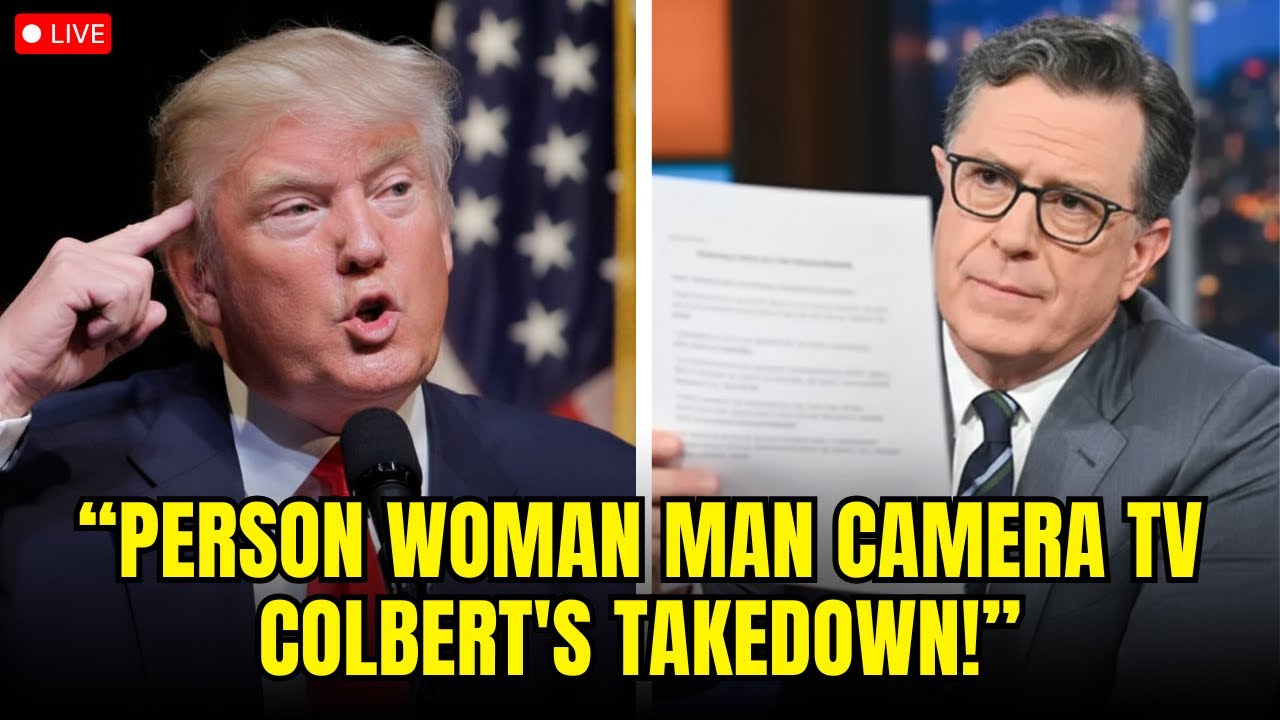
Trump inverted that relationship. Performance became the product.
In that environment, intelligence itself became theatrical. Genius was not demonstrated through strategy or restraint, but asserted as identity. And identities, once claimed, must be constantly defended.
That is why the jokes never stopped.
Colbert did not create Trump’s obsession with intelligence. He merely reflected it. Like all effective satire, his comedy functioned as a mirror rather than a weapon. The reflection was uncomfortable not because it was cruel, but because it was accurate.
In the end, this story is not about whether Donald Trump is intelligent. That question is almost beside the point.
It is about what kind of leadership feels the need to keep telling the public it is.
And what it means, in a democracy, when the loudest arguments about intelligence come not from policy rooms or academic halls, but from comedy stages — where the truth, stripped of power, is sometimes easier to see.
In an age overwhelmed by declarations, satire reminds us of something quietly enduring: confidence rarely announces itself. It simply acts — and lets history decide the rest.