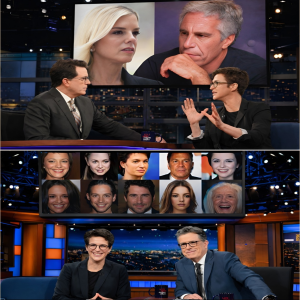
A late-night television segment featuring Stephen Colbert this week reignited public debate over former President Donald Trump’s past statements about Jeffrey Epstein, after Colbert challenged Trump’s claim that he was never close to the disgraced financier by presenting archival photographs during a live broadcast.
The segment aired as part of Colbert’s regular monologue, following renewed attention to Epstein-related questions after Trump reiterated, in a recent interview, that he had “nothing to do” with Epstein and was never personally close to him. The denial was delivered forcefully and without qualification — a posture Trump has taken repeatedly in recent years as Epstein’s name continues to surface in political and cultural discussions.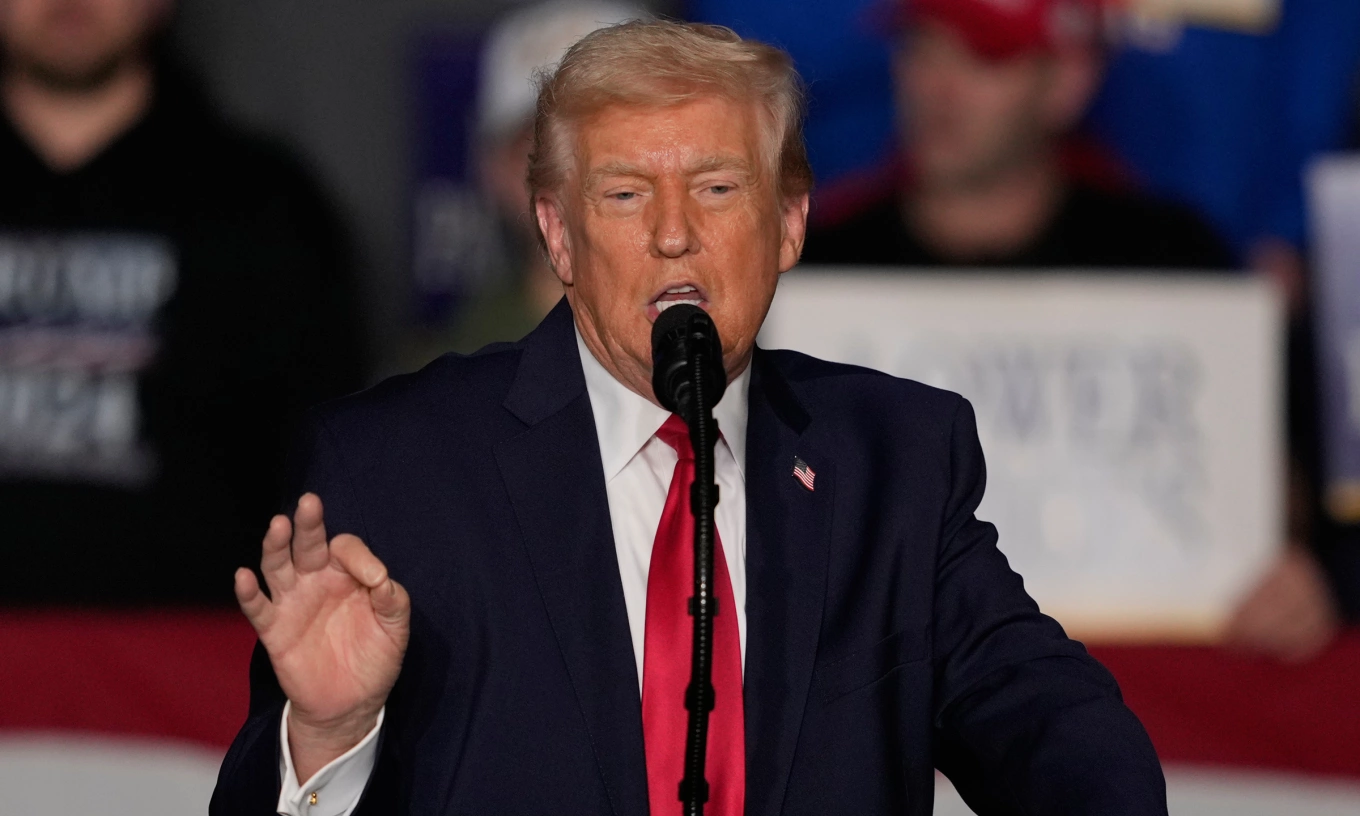
Colbert approached the topic with a notably restrained tone. Rather than opening with satire or direct accusation, he introduced Trump’s statement verbatim, then paused. What followed departed from the familiar rhythm of late-night comedy.
One by one, photographs appeared on screen showing Trump and Epstein together at various social events from the 1990s and early 2000s — images that have circulated publicly for years and have been previously reported on by major news organizations. Colbert initially offered no commentary, allowing the images to linger as the studio grew quiet.
“The absence of narration was the point,” said Amanda Lewis, a media studies lecturer at Northwestern University. “By withholding interpretation, the segment invited viewers to confront the contradiction on their own.”
As the images continued, audience laughter — common in Colbert’s studio — faded. When Colbert finally spoke, his remark was brief and carefully worded, stopping short of alleging wrongdoing while highlighting the tension between Trump’s categorical denial and the documented record of social association.
Colbert did not accuse Trump of criminal conduct, nor did he suggest that appearing in photographs constituted legal culpability. Instead, the focus remained on the narrow claim at issue: whether Trump had ever been close to Epstein. The segment concluded without escalation, applause arriving later and more subdued than usual.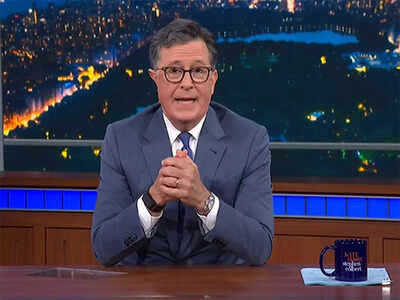
Trump has previously acknowledged knowing Epstein socially, famously telling New York Magazine in 2002 that Epstein was a “terrific guy” who enjoyed the company of “beautiful women.” In subsequent years, Trump has said he distanced himself from Epstein before Epstein’s legal troubles became public, and he has denied any involvement in Epstein’s criminal activities.
Following the broadcast, Trump criticized the segment on social media, accusing the show of misleading editing and political bias. He did not dispute the authenticity of the photographs themselves, instead arguing that the images did not reflect a close relationship and were being used out of context.
Representatives for Trump did not respond to requests for further comment. CBS declined to comment on internal editorial decisions related to the segment.
Within hours, clips from the broadcast circulated widely online, drawing intense reaction across the political spectrum. Supporters of Trump accused Colbert of reviving a topic they view as settled, while critics argued that the segment underscored the risks of absolute denials in the face of well-documented public records.
“The power of that moment wasn’t in accusation, but in juxtaposition,” said David Klein, a former cable news editor. “It demonstrated how categorical statements can be vulnerable when visual evidence exists, even if that evidence does not imply illegality.”
The episode highlights a broader trend in political media, where late-night programs increasingly adopt evidentiary formats traditionally associated with news commentary. Rather than relying solely on satire, hosts now often employ archival material, timelines, and primary sources to interrogate public claims.
For Colbert, whose show blends comedy with political critique, the segment marked a deliberate slowing of pace. By allowing silence and imagery to carry the moment, the program departed from punchline-driven commentary and leaned instead on documentation.
As debate over the segment continues, the moment has become less about Epstein himself and more about credibility, precision, and the risks of unqualified assertions in a media environment where past statements and images remain easily accessible.
In the end, the broadcast offered a reminder that in public life, denials are judged not only by their forcefulness, but by their durability when confronted with the record.