A Viral “Trump vs. Jasmine Crockett” Clip Blends Real Insults With Scripted Drama
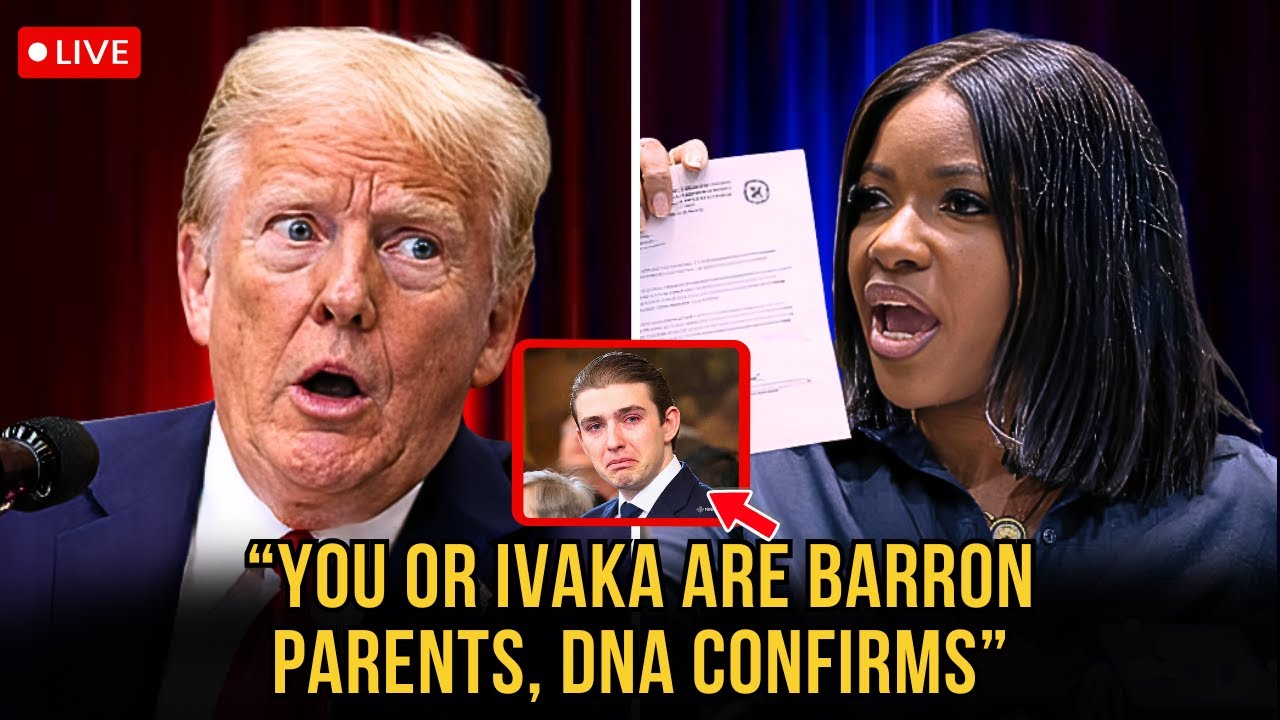
A YouTube video titled “Trump INSULTS Jasmine Crockett LIVE — Her CALM Comeback Turns the Crowd Into APPLAUSE” is spreading online with the familiar promise of a decisive, made-for-television reversal: an attack, a pause, a measured response, and a crowd that suddenly shifts sides. The transcript attached to the video, however, reads less like a verifiable broadcast record than a piece of political storytelling—complete with stage directions, cinematic tension, and dialogue that is difficult to trace to a single, documented event.
Crockett, a Democrat representing Texas’s 30th Congressional District since 2023, has become a frequent presence in viral political clips because of her combative style in hearings and her visibility in national media. The video builds on that visibility by presenting a “debate stage” confrontation with Donald J. Trump, framing her as a poised foil to his provocation.
The transcript’s opening line—Trump calling Crockett “low IQ”—is not invented out of whole cloth. Trump has publicly used that phrase about Crockett in remarks reported by outlets and repeated across social media. Another clip circulated from the National Republican Congressional Committee dinner shows Trump mocking Crockett as Democrats’ “new star,” language the YouTube ecosystem often repurposes into “live” showdown narratives.

But the viral video’s structure does something more ambitious than reporting: it dramatizes. The transcript supplies a restless audience, a high-stakes studio setting, and a line-by-line “turn” in the room—without providing the basic identifiers that would allow viewers to confirm the scene: the program name, moderator, date, network, or full unedited footage. Instead, it relies on the aesthetics of credibility—“the room froze,” “cameras lingered,” “control quietly shifted”—to imply a singular public event.
That technique has become common in political click media. It allows creators to weave together authentic fragments (a real insult, a real clip, a real public figure) with invented connective tissue that heightens drama and delivers a moral: composure beats bluster; substance beats spectacle. In this script, Crockett answers not with a counter-insult but with an appeal to “truth, transparency, and accountability,” then pivots to broader themes about leadership and the misuse of personal attacks. The point is not merely to rebut Trump, but to portray an archetype of restraint.
Crockett herself has responded to Trump’s “low IQ” label in public statements and interviews, treating it as a political distraction and arguing that the insult says more about the speaker than the target. Those responses are real, even if the video’s “live debate” framing appears highly produced.
The larger significance of the clip may be less about Crockett or Trump than about the medium that carries them. Viral political videos increasingly operate like short films: they borrow real politics for raw material, then rebuild it into a story with clean beats and a satisfying ending. For viewers, the practical question is simple: can the “moment” be verified outside the creator’s narration? When a clip cannot answer that, what it offers is not news—it’s narrative.