A Night of Fractures: Polls, Pressure and the Strain Inside Trump’s Coalition
xamxam
WASHINGTON — A volatile cascade of polling data, cable news segments and late-night social media posts set off a wave of recriminations across pro-Trump circles this week, underscoring a moment of political fragility for President Donald Trump as he approaches a pivotal midterm cycle.
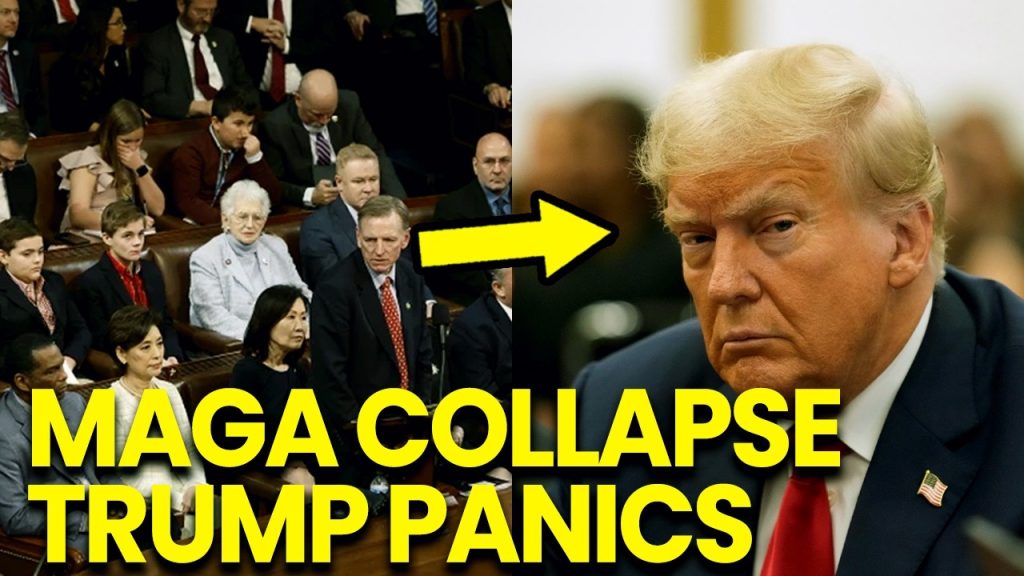
The spark was statistical, not theatrical. An NBC News decision desk poll of nearly 22,000 adults showed the president’s job approval at 39 percent, with 61 percent disapproving — numbers that placed him firmly underwater. Other surveys echoed the downturn. Gallup reported a sharp slide from near parity earlier in the year to a markedly negative rating. An AP-NORC poll in early February found a net approval of minus 26. Reuters polling suggested erosion even on immigration, long considered Mr. Trump’s strongest issue.
No single poll defines a presidency. But the convergence of results across firms and methodologies has intensified scrutiny inside Republican ranks and among activists who have built their political identities around the Make America Great Again movement.
Public reaction from Mr. Trump and some of his allies was swift and combative. In posts and statements, the president dismissed unfavorable surveys as biased or fraudulent and suggested that hostile media coverage was distorting public perception. Advisers, speaking privately, described a tense atmosphere in which messaging strategy became a focal point of internal debate.
Yet beyond the rhetoric, the data point to more structural challenges. Surveys show slippage not only among independents but within the Republican coalition itself. An NBC News poll found that strong approval among self-identified MAGA Republicans declined over several months, and that a smaller share of Republicans now label themselves as MAGA. While the shifts are not catastrophic, they are statistically meaningful in a polarized electorate where turnout margins often determine outcomes.
For Republican lawmakers facing competitive districts in 2026, the numbers carry practical implications. Midterm elections historically function as referendums on the sitting president. A chief executive with approval in the 30s can complicate down-ballot races, particularly in suburban and swing areas. Already, some Republican members of Congress have shown a willingness to diverge from the White House on key votes — a dynamic that was far less common during the height of Mr. Trump’s first term.
Economic unease appears to be a central driver. Inflation has moderated from its peak but remains salient in public perception. Voters continue to cite grocery costs, rent and fuel prices as persistent burdens. While the White House has pointed to global supply disruptions and prior fiscal policy, polling indicates that many Americans evaluate economic stewardship in immediate, personal terms.
Immigration, too, has become more complicated terrain. Although a majority of Republican voters support stricter enforcement, several high-profile enforcement actions — including a deadly incident during a raid in Minneapolis — have prompted broader debate about tactics and proportionality. Polls suggest that some voters who favor border security are nonetheless uneasy about the optics and human consequences of aggressive operations.
Demographic currents add another layer of uncertainty. Surveys reported by major outlets indicate diminished support among younger voters and among some Black and Hispanic voters who had shown incremental openness to Mr. Trump in recent cycles. These shifts are gradual rather than sweeping, but in close elections even marginal changes can prove decisive.
Fundraising, notably, has not kept pace with the decline in approval. Mr. Trump’s political operation recently announced raising more than $300 million, a sum that underscores the durability of his donor network and the intensity of his core supporters. Money can finance advertising, field operations and data analytics. It cannot, however, guarantee shifts in public sentiment.
Within conservative media ecosystems, the reaction has ranged from alarm to defiance. Some commentators argue that unfavorable polling reflects methodological bias or oversampling of Democrats. Others warn that dismissing every negative data point risks strategic blindness. The debate itself illustrates a broader tension: whether the movement should double down on its existing approach or recalibrate in response to changing voter attitudes.
The president’s critics describe his late-night posts and sharp denunciations as evidence of political anxiety. Allies counter that Mr. Trump has long used confrontation as a mobilizing tool and that public displays of indignation energize rather than repel his base. Both interpretations may contain elements of truth.
What is clear is that perception has become a battleground in its own right. In an era of fragmented media and algorithm-driven amplification, a series of polls can trigger a narrative of decline even absent concrete legislative defeats. That narrative, in turn, can influence donors, activists and elected officials who must assess risk in real time.
For now, there is no formal schism, no organized exodus. The Republican Party remains institutionally aligned with the president, and primary voters continue to reward loyalty. But the episode has exposed fissures — in tone, in strategy, in expectations.
As the 2026 midterms approach, the White House faces a choice familiar to second-term administrations: adjust course in response to public feedback or attempt to reshape the electorate’s priorities through persuasion and mobilization. The path Mr. Trump selects will determine whether this week’s turbulence proves a temporary squall or the opening chapter of a deeper realignment.
In Washington, numbers rarely speak for themselves. They are interpreted, contested and weaponized. Yet they also have a stubborn gravity. Whether that gravity pulls the president’s coalition back together or accelerates its drift apart remains an open question — one that will define the next phase of his presidency.