The death of Iran’s Supreme Leader Ayatollah Ali Khamenei in a joint U.S.-Israeli airstrike has plunged the Middle East into unprecedented escalation, triggering immediate Iranian retaliation across Israel and Gulf states while raising alarms over global energy security and the prospects for regime stability in Tehran.
Ayatollah Khamenei Killed in Daring U.S.-Israeli Strike as War Erupts
TEHRAN — In a stunning opening salvo of what the United States has dubbed Operation Epic Fury, Iran’s Supreme Leader Ayatollah Ali Khamenei was killed on February 28, 2026, during a precision airstrike on his compound in Tehran. The 86-year-old cleric, who had ruled the Islamic Republic with an iron grip since succeeding Ayatollah Ruhollah Khomeini in 1989, perished alongside several senior officials in the predawn assault coordinated by U.S. and Israeli forces.
President Donald Trump announced the development on Truth Social, describing Khamenei as “one of the most evil people in history” and framing the operation as a necessary step to dismantle Iran’s nuclear ambitions and missile capabilities. Israeli officials confirmed the strike, with Prime Minister Benjamin Netanyahu stating that the supreme leader’s residence was “entirely destroyed.” Satellite imagery from commercial providers showed the targeted site in ruins, corroborating reports of the compound’s obliteration during the holy periods of Shabbat and Ramadan, when defenses may have been less vigilant.
Iranian state media quickly confirmed Khamenei’s “martyrdom” and declared 40 days of national mourning. A temporary leadership council has assumed control, though no permanent successor has been named amid the chaos. Experts note that Iran’s theocratic system includes a succession mechanism through the Assembly of Experts, but the sudden decapitation strike has injected uncertainty into the regime’s continuity.
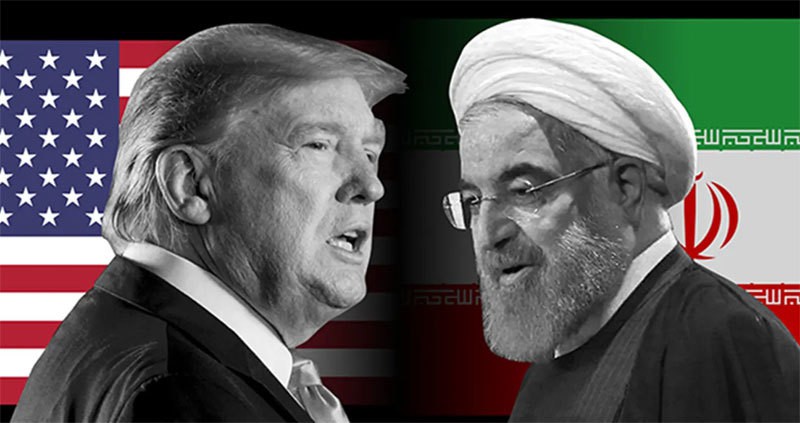
Far from signaling capitulation, Khamenei’s death has galvanized Iran’s response. Within hours, the Islamic Revolutionary Guard Corps (IRGC) launched waves of ballistic missiles and drones targeting Israel and U.S. allies in the Gulf. A direct hit was reported in Tel Aviv, where air defenses intercepted most projectiles but at least one breached the Iron Dome, causing damage in central areas. In Israel, strikes also affected residential zones near Beit Shemesh, killing several civilians and wounding dozens.
The retaliation extended beyond Israel. Iranian drones and missiles struck civilian infrastructure in Bahrain, the United Arab Emirates, and other Gulf nations hosting American military assets. High-rise buildings in Bahrain caught fire after drone impacts near the U.S. Navy’s Fifth Fleet headquarters. Dubai International Airport sustained significant damage, prompting evacuations and flight suspensions, while reports emerged of strikes on luxury hotels and ports in Abu Dhabi and Dubai. Shipping data indicates dozens of oil and gas tankers halting or diverting from the Strait of Hormuz, the critical chokepoint for 20-30% of global seaborne oil. Major shipping companies have suspended transits, raising fears of immediate spikes in energy prices and broader economic disruption.
The strikes have not been one-sided. U.S. and Israeli forces continued operations into Sunday, targeting Iranian missile sites, naval assets, and Revolutionary Guard facilities. Iranian officials reported civilian casualties, including a devastating hit on a girls’ elementary school in Minab that killed scores of children — an incident Tehran has condemned as a war crime. The U.S. military acknowledged initial losses, with several service members killed in retaliatory attacks on regional bases.
Trump, speaking from Mar-a-Lago where he monitored developments alongside key advisers, offered a blunt assessment in interviews. He suggested the campaign could end swiftly if Iran halts its nuclear and missile programs, but warned of overwhelming force otherwise. Critics, including some within his administration’s orbit, have questioned the strategy of regime decapitation without a clear endgame, noting that history shows successors in Iran often prove more hard-line.
The conflict’s rapid expansion has drawn global condemnation and calls for de-escalation. Allies like Canada expressed support for curbing Iran’s nuclear threat, while others urged restraint to avoid a wider conflagration. Protests erupted worldwide, with some Iranians celebrating the regime’s blow as a potential path to freedom, though many mourned amid fears of prolonged instability.
As the Strait of Hormuz remains imperiled and missiles continue to fly, the killing of Ayatollah Khamenei — once seen as an untouchable figure — has reshaped the regional power balance in ways that remain unpredictable. Whether this marks the beginning of regime collapse or a more entrenched era of confrontation hangs in the balance, with the world watching anxiously for the next move.