Obama Warns of Strains on Democratic Norms in Speech Criticizing Trump
Former President Barack Obama delivered a pointed critique of President Donald Trump’s governing approach during a public conversation at Hamilton College in Clinton, N.Y., framing his concerns not as policy disagreements but as warnings about the health of American democratic norms.
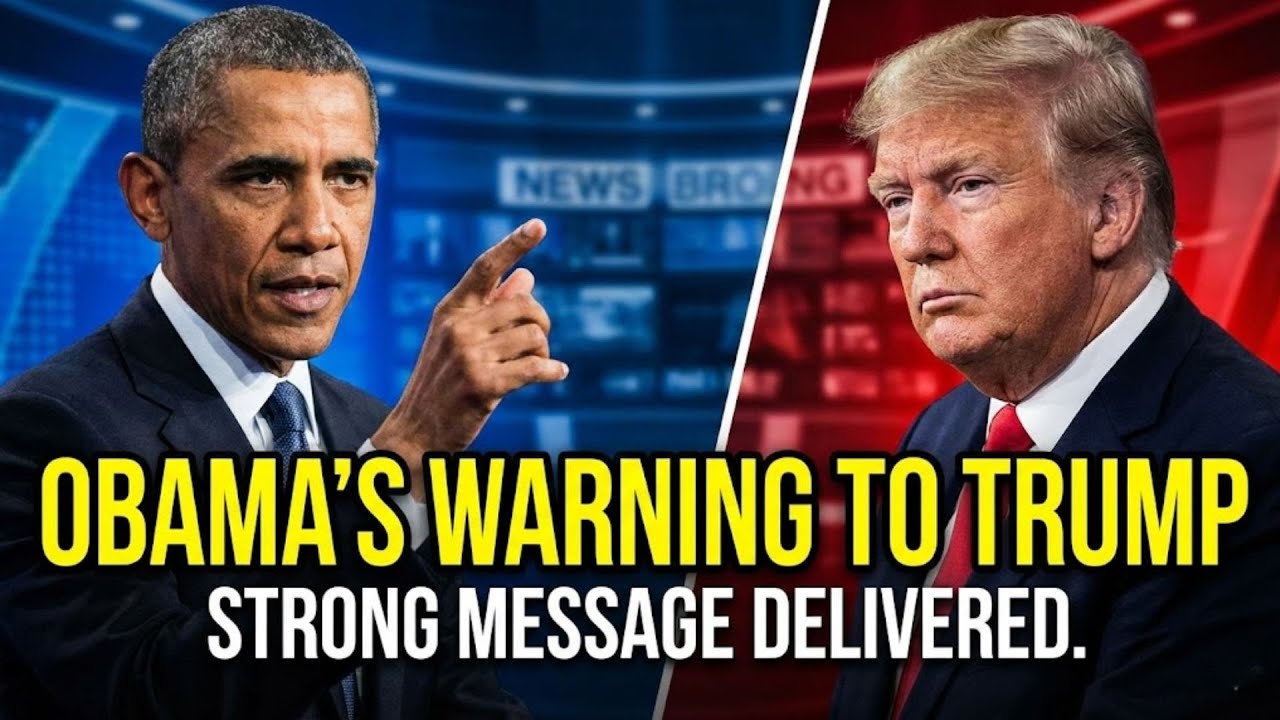
Speaking as part of the college’s Sacerdote Great Names Series, Mr. Obama argued that the nation’s political divisions now extend beyond disputes over tariffs, taxes or budget priorities. Instead, he said, the deeper question is whether Americans still share a common commitment to constitutional principles such as the rule of law, separation of powers, an independent judiciary and freedom of the press.
“The deeper issue,” Mr. Obama suggested, “is whether we still agree on the basic rules of the road.”
His remarks quickly spread online through video clips and excerpts, drawing praise from supporters and criticism from Trump allies. The speech adds Mr. Obama’s voice — still one of the most influential in the Democratic Party — to an intensifying national debate over the use of executive power and the durability of democratic institutions.
A Shift From Policy to Process
Mr. Obama acknowledged that he and Mr. Trump hold sharp disagreements on economic and trade policy. But he emphasized that his central concern was procedural rather than ideological.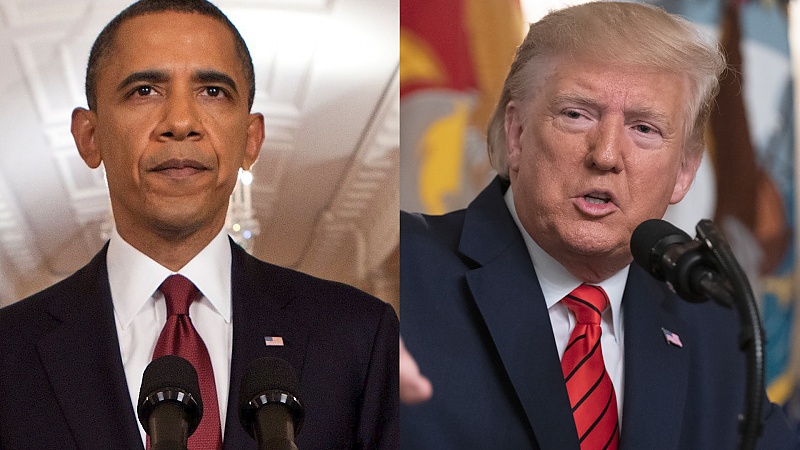
After World War II, he said, Democrats and Republicans often clashed fiercely but accepted certain foundational norms: adherence to the Constitution, respect for judicial independence, and a shared belief that political disputes would be resolved within established rules.
Those norms, he argued, were imperfectly applied and frequently tested. Yet most Americans, he said, broadly agreed that they were worth upholding.
Mr. Obama suggested that consensus has weakened in recent years.
He attributed the erosion to several factors: growing distrust of government, increasing political tribalism, widening economic inequality and a fragmented media environment that makes agreement on basic facts more difficult.
“A democracy depends on a well-informed public and a free, effective press,” he said, arguing that sustained attacks on trust in information have destabilized the political landscape.
Concerns About Institutional Pressure
Turning to current events, Mr. Obama said he is troubled by what he described as federal pressure on institutions that traditionally operate independently of partisan politics.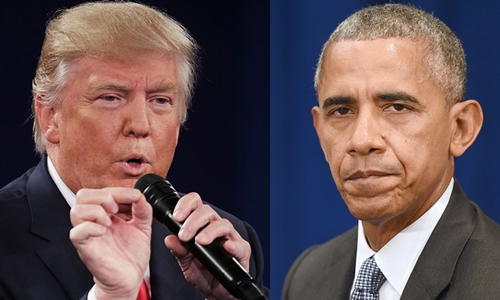
He cited concerns about government actions toward universities, law firms and media organizations. In particular, he questioned the use of federal authority to influence campus speech policies or to threaten legal firms representing clients opposed to administration positions.
He framed these developments as part of a broader shift in how executive power is exercised.
“Imagine if I had done any of this,” Mr. Obama told the audience, asking them to consider how similar actions might have been received during his presidency.
He suggested that responses to executive conduct often vary depending on which party holds power — a phenomenon he described as a troubling double standard.
Supporters of Mr. Trump reject that framing, arguing that government oversight of institutions is within executive authority and that universities and large firms have long wielded political influence of their own.
The Practical Case for Norms
Mr. Obama sought to make a practical rather than purely philosophical case for institutional stability.
A predictable legal system, he said, helps create economic prosperity by allowing businesses to operate without fear of arbitrary punishment or corruption. Citizens can support a political candidate without worrying about government retaliation. Contracts can be enforced. Courts function as neutral arbiters.
These features, he argued, have long underpinned American economic strength.
If weakened, he warned, the effects would not remain abstract.
“Those institutions shape everyday stability,” he suggested, linking democratic norms to economic outcomes.
A Call for Civic Responsibility
Addressing the question of why he chose to speak publicly now, Mr. Obama said the responsibility does not rest with a single leader but with citizens.
“The most important office in a democracy,” he said, “is the office of citizen.”
He urged individuals and institutions to uphold principles even when doing so carries professional or financial risk. Universities, he suggested, should correct genuine violations of law or policy — but resist intimidation if they believe pressure is unjustified. Law firms, he said, may face choices between financial security and defending legal norms.
Democratic habits, he argued, weaken when people assume they require no active defense.
A Broader Debate
The speech arrives at a moment of intense polarization. Many Americans express fatigue with political conflict, while institutions face heightened scrutiny from both sides of the ideological spectrum.
Supporters of Mr. Obama view his remarks as a necessary defense of constitutional norms. Critics see them as partisan intervention by a former president who remains a central Democratic figure.
The White House has not issued a comprehensive response to the speech, though allies of Mr. Trump have argued that the administration’s actions are lawful and appropriate.
Beyond immediate political reactions, the address highlights a larger question confronting the country: whether disagreements over policy are evolving into disputes over the rules that govern political life itself.
Mr. Obama’s message was not one of alarmism but of engagement. Democratic values, he argued, do not sustain themselves automatically.
“They survive when people practice them,” he said.
As the 2024 political cycle intensifies, his remarks are likely to continue reverberating — energizing supporters, provoking critics and placing renewed focus on the norms that define American governance.