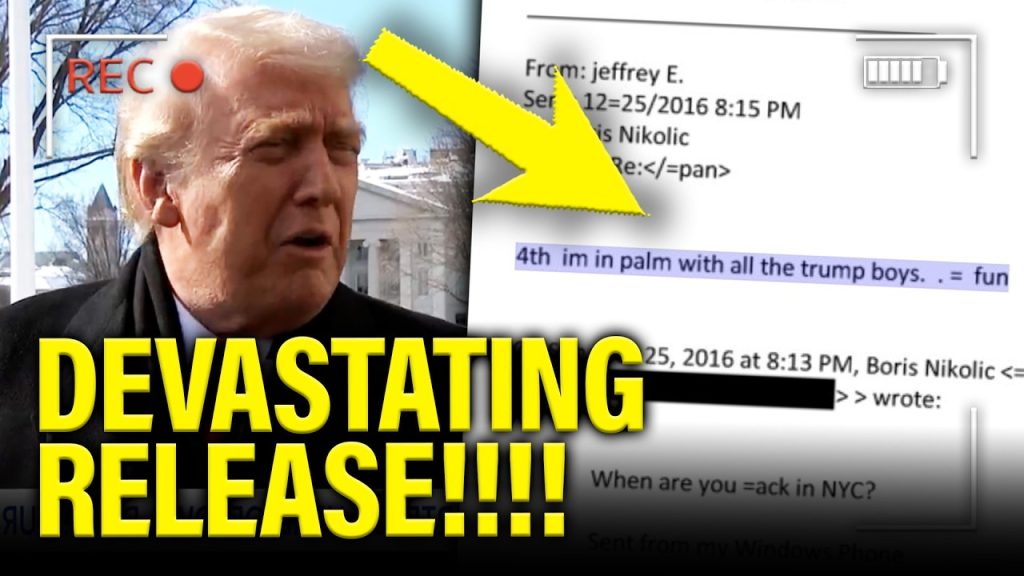
A new release of documents tied to the late financier Jeffrey Epstein has once again pushed Donald Trump into an uncomfortable national conversation — not through allegation or indictment, but through proximity, repetition, and the lingering power of unresolved questions. The disclosure, part of a broader Justice Department document dump, illustrates how even carefully worded findings can carry political weight when names, timelines, and public memory collide.
The latest batch of materials does not accuse Trump of criminal conduct. The Justice Department has reiterated that point clearly, noting that allegations referenced in the documents are unproven and, in some cases, explicitly denied. Yet Trump’s name appears repeatedly in the records, including references to past social interactions and a resurfaced accusation from a decades-old lawsuit that has long circulated at the margins of public discourse. The effect has been less legal than reputational — a reminder that in American politics, attention alone can be destabilizing.
The release arrives against a familiar backdrop. Epstein’s network has long implicated powerful figures across business, politics, and philanthropy, producing a case that refuses to settle into clean moral categories. Associations are documented. Intentions remain disputed. Accountability, for many observers, still feels incomplete. In that unresolved space, the appearance of any prominent name becomes combustible.
Trump has responded as he often does: by denying wrongdoing while reframing the narrative as politically motivated. In past statements, he has insisted that he had nothing to do with Epstein’s crimes and has pointed to other figures — particularly Democrats — as the true focus of scrutiny. The new documents complicate that strategy, not by contradicting his denials directly, but by reviving questions he has tried to put to rest.
What stands out in the current moment is not only the content of the documents, but the reaction to them. Conservative media outlets that once treated Epstein-related revelations as front-page scandals when they involved political opponents have been comparatively restrained. Commentators who once demanded exhaustive investigations now emphasize legal caution, evidentiary limits, and the dangers of guilt by association. The contrast has not gone unnoticed.
Analysts point out that the documents themselves are written with notable restraint. Phrases are careful. Context is emphasized. Assertions are hedged. Yet that very caution has amplified their impact. By stopping short of accusation, the records leave interpretation to the public — and in doing so, invite comparison. What would the response look like, critics ask, if a different political figure’s name appeared with similar frequency and ambiguity?
The files also underscore a broader challenge facing American institutions: how to reckon with historical misconduct when legal thresholds are unmet, evidence is fragmented, and public trust is already strained. Epstein’s case has become a prism through which frustrations about elite accountability are refracted. Each new release is less about what is definitively proven than about what remains unanswered.

For Trump, the timing is particularly delicate. His political brand has long rested on the promise of disruption — draining the swamp, exposing hidden networks, confronting corruption. Yet repeated associations, even disputed ones, risk turning that narrative inward. Critics argue that the more Trump insists the Epstein story belongs solely to his opponents, the more vulnerable he becomes when documents suggest otherwise.
At the same time, defenders caution against conflating mention with misconduct. They note that Epstein moved easily through elite circles for years, cultivating relationships that were social, transactional, or superficial. Being named in documents, they argue, does not equate to culpability. That distinction, central to the rule of law, is one the Justice Department itself has emphasized.
Still, politics does not operate solely on legal standards. It operates on perception, symmetry, and memory. Trump’s past statements — including his own public comments about Epstein decades ago — are now being replayed alongside the new findings. Video clips, old interviews, and photographs are circulating again, not as evidence of crime, but as reminders of familiarity that many voters find unsettling.
The episode has also reignited debate about transparency. Trump signed legislation supporting the release of Epstein-related materials, a move his allies once framed as proof of confidence. But as disclosures emerge gradually, often redacted and context-heavy, critics argue that the piecemeal approach only fuels suspicion. If there is nothing to hide, they ask, why does clarity arrive so slowly?
Democrats, for their part, have attempted to shift the focus away from partisan deflection and toward uniform standards. Some have called for public testimony from all figures named in the documents, regardless of party or status. The message is less accusatory than procedural: equal scrutiny, applied consistently.
What makes this moment distinct is its ambiguity. There is no single revelation that transforms the political landscape overnight. Instead, there is accumulation — of names, references, and unanswered questions — that erodes certainty at the edges. For Trump, whose political success has often depended on dominating the narrative, ambiguity is a less controllable adversary.

In the end, the significance of the latest Epstein findings may lie not in what they prove, but in what they reopen. They remind the public that some stories never fully close, especially when they involve power, secrecy, and harm left insufficiently addressed. For Trump, the renewed attention is an unwelcome return to terrain he would rather leave behind. For the country, it is another test of whether accountability can exist without spectacle — and whether restraint, in an age of outrage, can still command attention.