Melania Trump Seeks Dismissal of Defamation-Related Suit as Jurisdiction Dispute Intensifies
A legal dispute involving Melania Trump and author Michael Wolff has escalated in federal court, with the former first lady arguing that a case connected to alleged defamatory statements should be dismissed or transferred out of New York.
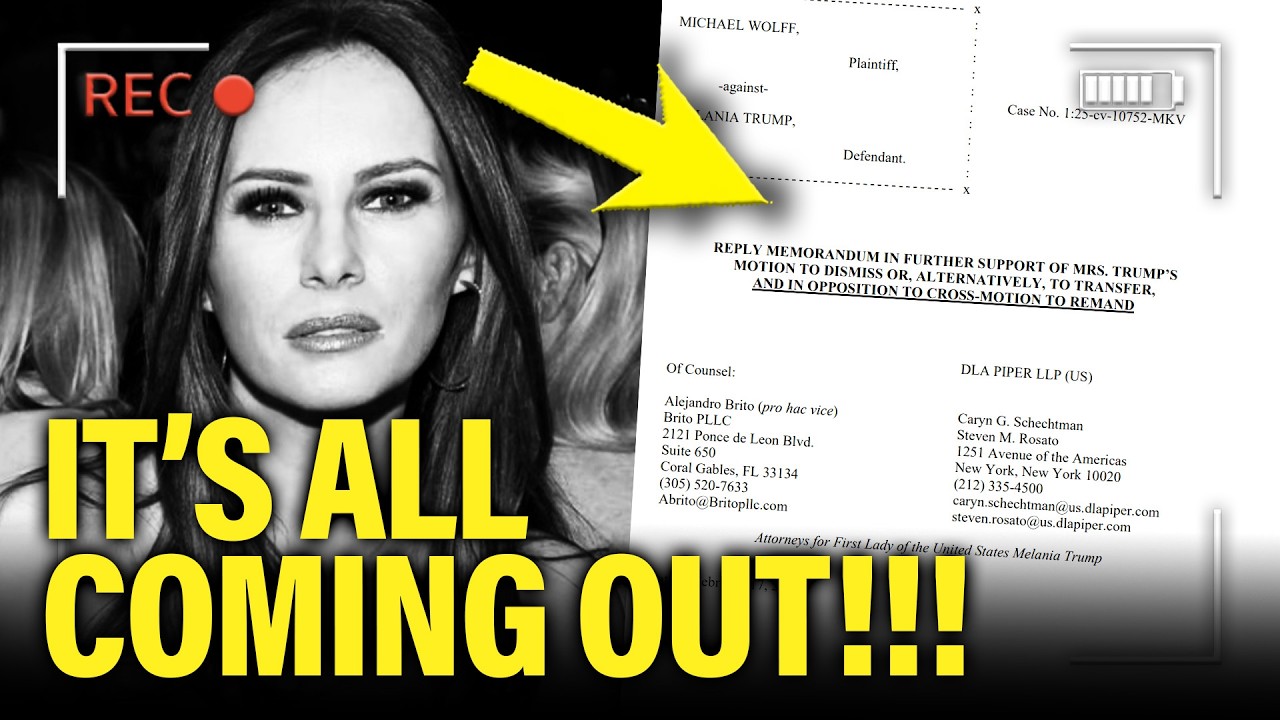
The conflict stems from a demand letter sent by Mrs. Trump’s legal team in October, in which she threatened to pursue defamation claims seeking more than $1 billion in damages. The letter asserted that statements made by Wolff concerning her alleged connections to Jeffrey Epstein and Ghislaine Maxwell were false and had caused severe reputational harm.
Rather than waiting to be sued, Wolff filed what is known as an anti-SLAPP action in New York state court. Anti-SLAPP statutes are designed to protect individuals from lawsuits intended to chill free speech. In his filing, Wolff argued that Mrs. Trump’s threat of litigation was an attempt to silence commentary protected under the First Amendment.
Mrs. Trump’s legal team subsequently moved the case into federal court and is seeking dismissal on procedural grounds. According to court filings, her attorneys contend that she was not properly served and that New York courts lack jurisdiction because she is domiciled in Florida. They cite her voter registration, driver’s license, and residence at Mar-a-Lago in Palm Beach as evidence that she is a Florida resident.

Wolff disputes that characterization. In his response, he argues that Mrs. Trump maintains substantial ties to New York, including regular residence at Trump Tower and public statements describing New York as her home. He contends that these connections establish jurisdiction and that the case should proceed in New York.
The legal maneuvering also touches on broader questions about reputational harm. Mrs. Trump’s filing maintains that the $1 billion figure referenced in her demand letter was not arbitrary, describing her as “one of the most high-profile people on the planet” with a reputation of significant value. Wolff counters that the statements at issue fall within protected speech and that any claim of damages would face high constitutional hurdles, particularly given her status as a public figure.
Under longstanding Supreme Court precedent, public officials and public figures must meet the “actual malice” standard in defamation cases, meaning they must show that false statements were made knowingly or with reckless disregard for the truth. That standard often makes such cases difficult to win.
Complicating the backdrop is renewed public attention to documents related to Epstein that have been released in recent months. Those documents include references to numerous public figures, though inclusion in such materials does not itself establish wrongdoing. The broader controversy has fueled political and media debate, intensifying scrutiny around individuals named in various contexts.
At this stage, the dispute remains procedural. The court must determine whether jurisdiction is proper and whether the case should proceed in New York or be dismissed or transferred. No ruling has yet been issued.
Legal analysts note that if the case moves forward, discovery could require sworn testimony and document exchanges, raising the stakes for both parties. For now, however, the matter centers not on the merits of the allegations but on where — and whether — the legal fight will unfold.