WASHINGTON, Feb. 25, 2026
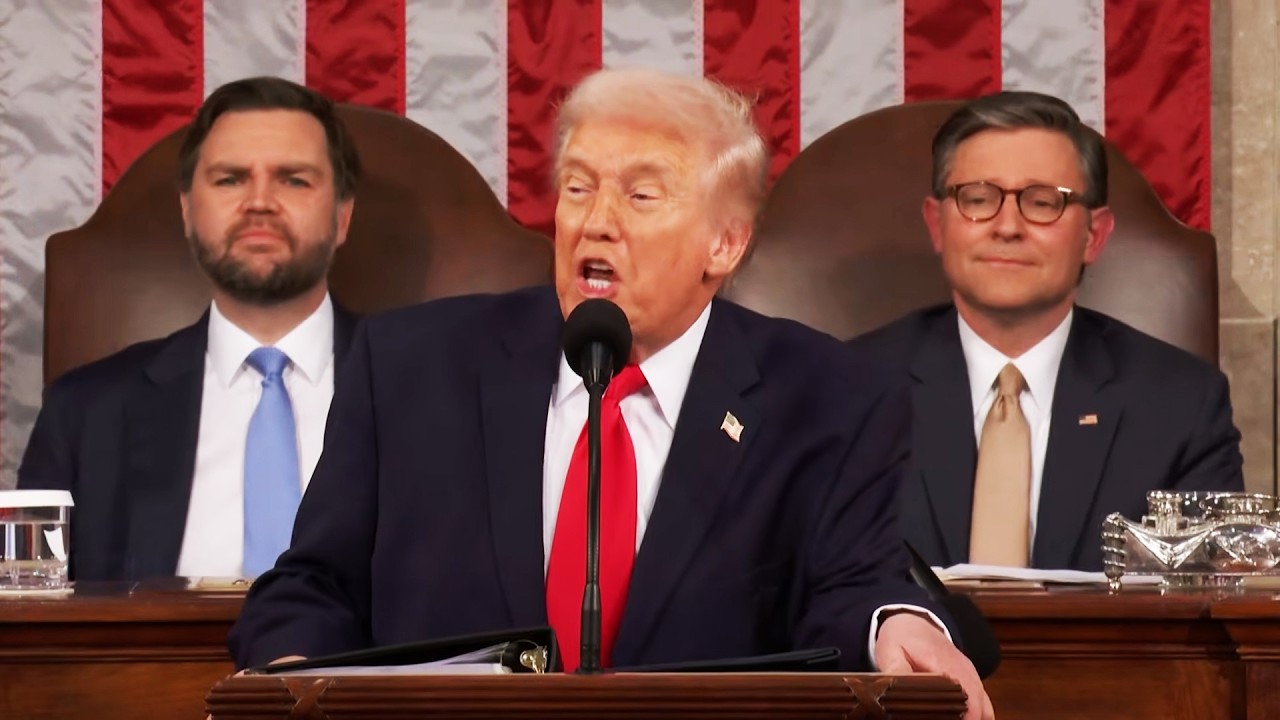
President Donald Trump delivered his 2026 State of the Union address Tuesday night, presenting an optimistic portrait of the nation’s trajectory while drawing sharp criticism from Democratic lawmakers and fact-checkers who challenged several of his claims.
Speaking before a joint session of Congress, Mr. Trump declared that the country had undergone “a transformation like no one has ever seen before,” pointing to economic indicators, border enforcement efforts and what he described as diplomatic breakthroughs abroad. “The state of our union is strong,” he said, reprising a line that prompted sustained applause from Republican members.
The president asserted that he inherited “a stagnant economy” marked by record inflation. Government data show that inflation stood at 2.8 percent in January 2025, the month he began his current term, after peaking at higher levels in prior years. Economists note that while inflation has fluctuated, it has not been at record highs during the period cited by Mr. Trump.
Throughout the address, the president cited what he described as $18 trillion in new investment commitments secured during his administration’s first year. Independent analysts have said that many of those figures refer to prospective agreements or long-term pledges rather than finalized transactions. The White House has not released a comprehensive breakdown of the total.
On trade policy, Mr. Trump defended his use of tariffs, arguing that they have generated substantial revenue and strengthened the domestic economy. “Tariffs paid for by foreign countries will substantially replace the modern-day system of income tax,” he said. Trade economists widely agree that tariffs are paid by importing companies, which often pass the costs to consumers through higher prices.
His remarks followed a recent Supreme Court ruling that limited the scope of certain executive-imposed tariffs. While the administration has argued that alternative statutory authorities allow it to continue implementing trade measures, legal scholars say further challenges are likely.
The president also referenced the Dow Jones Industrial Average surpassing 50,000 and the S&P 500 reaching 7,000, crediting tariffs and regulatory cuts for market gains. Market analysts caution that stock performance reflects a range of global and domestic factors, including corporate earnings and monetary policy.
At several points, Mr. Trump departed from prepared economic themes to revisit familiar grievances, including his assertion that he won the 2020 election — a claim rejected by courts and state officials at the time. He also invited lawmakers to stand if they agreed that “the first duty of the American government is to protect American citizens, not illegal aliens,” prompting a visible partisan divide in the chamber.
The address featured an extended series of recognitions for guests in the gallery, including a World War II veteran who was honored with the Congressional Medal of Honor. In a moment that drew mixed reactions, Mr. Trump joked that he had once wished he could award the medal to himself but was not permitted to do so.
Democratic lawmakers criticized the speech afterward, calling it divisive and accusing the president of mischaracterizing economic and immigration data. Some Republicans, by contrast, described it as a forceful defense of the administration’s priorities.
Observers also noted fluctuations in the president’s delivery, including moments of improvisation and emphatic rhetoric that at times drew strong applause from his party and muted responses from the opposition. As in past State of the Union addresses, the event underscored the widening partisan divide in Washington.
While the speech offered few new policy proposals, it reinforced the themes that have defined Mr. Trump’s current term: economic nationalism, immigration enforcement and an emphasis on personal leadership. With the 2026 midterm elections approaching, lawmakers from both parties are likely to test the political resonance of those themes in the months ahead.