Attorney General Pam Bondi arrived on Capitol Hill this week facing a question that has hovered over the Justice Department since President Trump returned to office: Is the department enforcing the law — or enforcing a political agenda?
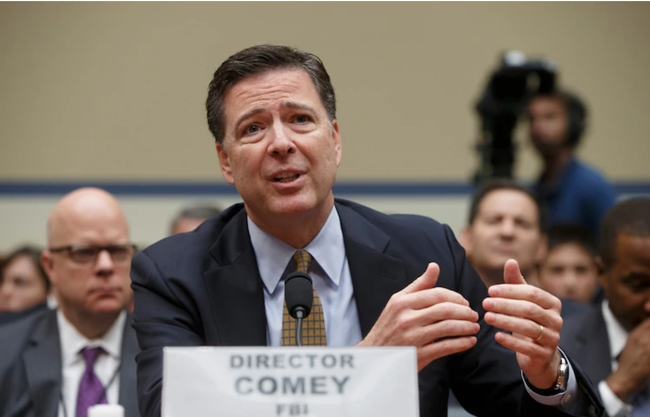
The hearing, billed as routine oversight, unfolded against the backdrop of a far-from-routine judicial rebuke. In late November, a federal judge dismissed indictments against two of Trump’s most prominent antagonists — former F.B.I. Director James Comey and New York’s attorney general, Letitia James — not after a trial on the facts, but because the prosecutor who brought the cases was improperly installed.

That decision, issued by Judge Cameron McGowan Currie of the U.S. District Court for the Eastern District of Virginia, did more than derail two high-profile prosecutions. It provided a crisp constitutional critique of how the administration’s law-enforcement machinery has been assembled — and it handed Democrats a concrete, document-based line of attack: that the Justice Department’s pursuit of Trump’s perceived enemies is being run through shortcuts that the Constitution does not permit.
At the center of Judge Currie’s ruling was Lindsey Halligan, a former Trump personal lawyer with no prior prosecutorial experience, who had been installed as interim U.S. attorney and then moved quickly to secure indictments. Judge Currie concluded that Halligan lacked legal authority under the Appointments Clause and federal law — a defect severe enough to void the cases she filed.
The dismissals were issued “without prejudice,” meaning a properly appointed prosecutor could, at least in theory, seek new indictments. But the ruling exposed practical and political constraints. The statute of limitations could complicate any renewed prosecution of Comey, and re-indicting a sitting state attorney general would almost certainly intensify claims of retaliation and selective enforcement.
Bondi’s department has said it plans to appeal. Yet the underlying dilemma is not merely procedural. The judge’s decision placed a bright spotlight on a problem that cannot be cured with messaging: a prosecution can be aggressive, but it still must be lawful; and if the government’s own appointment of the prosecutor is unconstitutional, the entire enterprise can collapse before a jury hears a single witness.
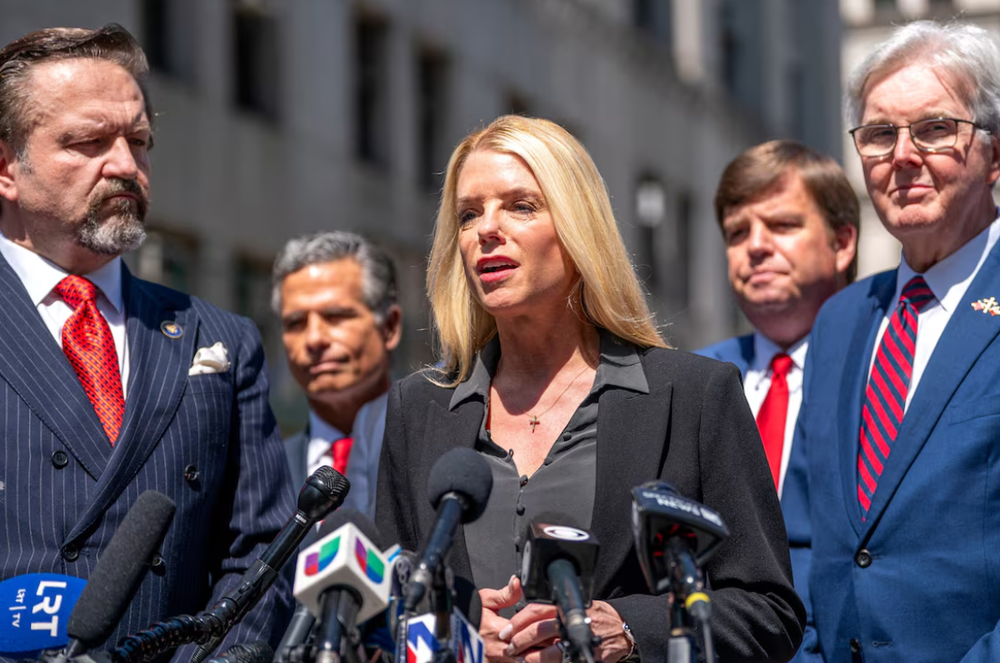
In the hearing, Democratic senators pressed Bondi to explain how such a basic failure occurred — and whether it reflected haste, ideological zeal, or indifference to institutional guardrails. The Comey and James cases have become a kind of Rorschach test in Washington. To Republicans aligned with Trump, they represent overdue accountability for officials they believe escaped consequences. To Democrats and many legal analysts, they represent something more corrosive: the use of prosecutorial power against political adversaries, carried out with improvised staffing and contested authority.
The Currie ruling also undercut a familiar defense tactic in political controversies: insisting that critics are arguing about optics rather than substance. Here, the substance was the Constitution itself. The Appointments Clause exists to prevent exactly the kind of ad hoc concentration of federal power that can arise when loyalists are slotted into roles designed to be insulated from raw political preference. The judge’s ruling, in effect, suggested that even if the department believed it had strong evidence against Comey and James, it could not pursue the cases through an unlawfully installed prosecutor.
Politico described the decision as a broader warning signal for the administration’s legal strategy: it avoided an even more explosive court fight over whether the prosecutions were vindictive or selectively motivated — but it left the Justice Department with a credibility problem it cannot litigate away.
That credibility gap is what made the Senate hearing unusually consequential. Oversight hearings are often dismissed as performance, a set of talking points for clips and fundraising emails. But when a federal judge has already written — in a formal ruling — that a key administration prosecutor was installed unlawfully, the hearing becomes less about political narrative and more about institutional competence and constitutional compliance.
Bondi’s defenders argue that the Justice Department is finally treating powerful people as accountable — including officials once protected, in their view, by an elite consensus. Her critics counter that the department is operating as a weapon, aimed downward and outward, while insulating the president and his allies from scrutiny. The Comey and James episode gave those critics an evidentiary foothold: a judge’s order describing a structural defect in how prosecutions were initiated.
The case also exposed a recurring pattern in modern governance: the collision between the speed of politics and the slow, exacting demands of the legal system. In political time, indictments can be announcements — proof, to supporters, that opponents are finally being punished. In legal time, indictments are only the beginning, and the government must survive constitutional challenges, evidentiary motions, and procedural scrutiny that cannot be overcome by public certainty or partisan applause.

For Bondi, the immediate question is whether the department can restore confidence that its actions are tethered to law rather than loyalty. For Congress, the question is whether oversight can function when each side treats the other’s prosecutions as either salvation or scandal. And for the public, the question is simpler and more unsettling: If the Justice Department cannot clear the basic constitutional hurdles of appointment and authority in cases this prominent, what does that suggest about the thousands of quieter decisions — charging, bargaining, declining, investigating — made far from cameras and hearings?
The judge’s ruling did not declare Comey or James innocent. It did not adjudicate the truth of the allegations. It did something narrower and, in some ways, more destabilizing: it declared that the machinery used to bring the charges was improperly assembled, and therefore could not be trusted to carry the case forward.
In a polarized era, that kind of institutional failure does not land cleanly on one party. It ricochets. It invites conspiracy on the right (“They’ll never let us prosecute”) and conspiracy on the left (“They’re turning DOJ into a hit squad”). It deepens cynicism in the middle, where voters increasingly believe that the system is neither fair nor functional.
Whether Bondi can move past the moment may depend less on how sharply she spars with senators and more on what the department does next: whether it brings future cases through prosecutors whose authority is unimpeachable, whether it applies standards consistently, and whether it accepts that constitutional process is not a technicality — it is the point.