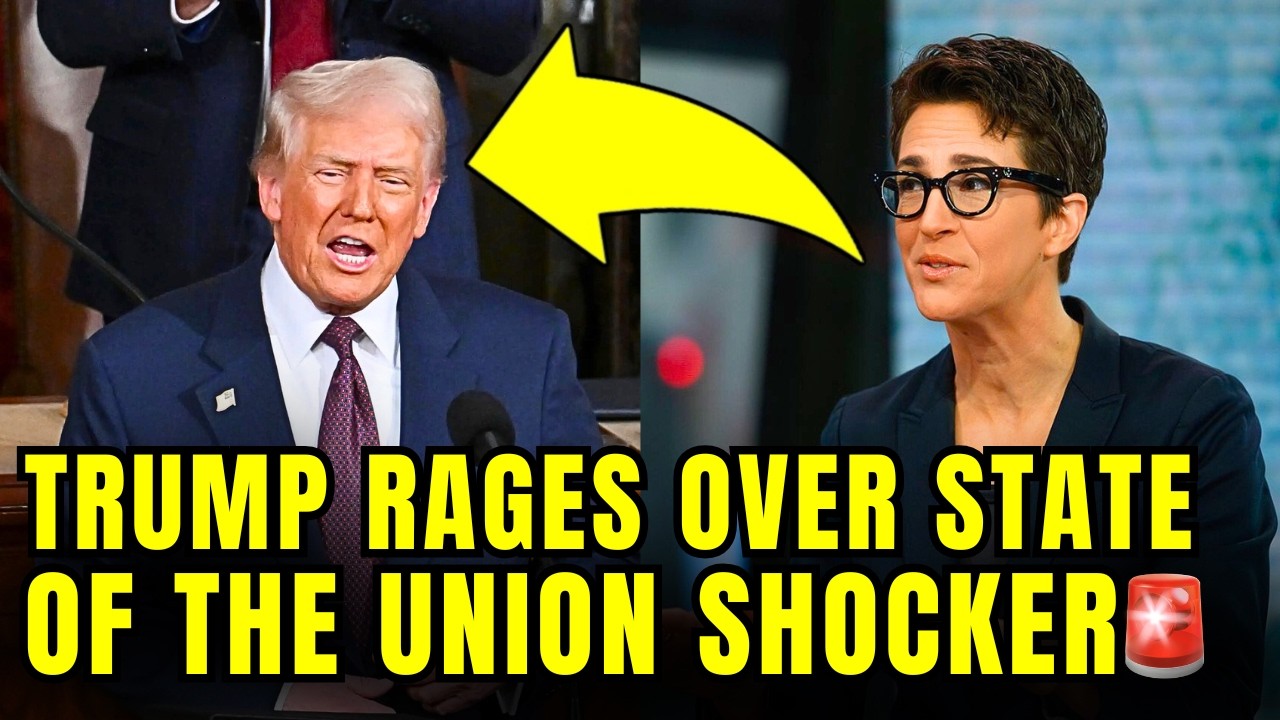
On the eve of his latest State of the Union address, TRUMP found himself cast not simply as president, but as the uneasy star of what one primetime host described as “the theater of the absurd.”
The phrase, borrowed from the late filmmaker David Lynch, set the tone for a blistering monologue by Rachel Maddow, who used her broadcast to dissect one of Washington’s most macabre traditions: the selection of a “designated survivor.”
The ritual, rooted in Cold War anxieties, requires one cabinet official to skip the annual address in order to preserve continuity of government in the event of catastrophe. Should the unthinkable occur while the president, vice president, Congress, Supreme Court justices and military chiefs are gathered in one chamber, that lone absentee would be tasked with rebuilding the federal government from the ashes.
“It’s dystopian and weird,” Maddow said, noting the apocalyptic logic behind the custom. Yet in ordinary administrations, the choice of designated survivor passes with little notice — often a lower-profile cabinet secretary whose portfolio attracts minimal controversy.
This year, she argued, nothing about the calculation appears ordinary.
The State of the Union arrives at a fragile political moment for TRUMP. New polling shows him entering the address at record lows for this stage of a presidency. Among independent voters, his approval rating has plummeted to negative 47 points — the weakest standing he has recorded across either of his two terms. Analysts say such numbers make it mathematically impossible to maintain overall positive approval, a stark backdrop for a speech traditionally designed to project strength and momentum.
Against that backdrop, Maddow zeroed in on the question: who, exactly, could be trusted with the symbolic and literal weight of serving as designated survivor?
One possibility, she suggested, would normally be the Labor secretary — a department that often flies under the political radar. But TRUMP’s Labor chief, Lori Chavez-DeRemer, has been engulfed in a swirl of headlines alleging misconduct and internal investigations.
Reports have cited claims of an “inappropriate relationship” with a staff member, accusations of drinking in the office during work hours, and allegations of travel improprieties involving taxpayer funds. Separate controversies have involved her husband, who faced allegations of sexual assault against department staffers — accusations that were later declined for prosecution by federal authorities but nonetheless generated damaging publicity.
In a normal year, the Labor secretary might be a quiet, practical choice. In this political climate, Maddow implied, the very act of naming Chavez-DeRemer as designated survivor could reignite scrutiny of what she characterized as a “radioactive scandal.”
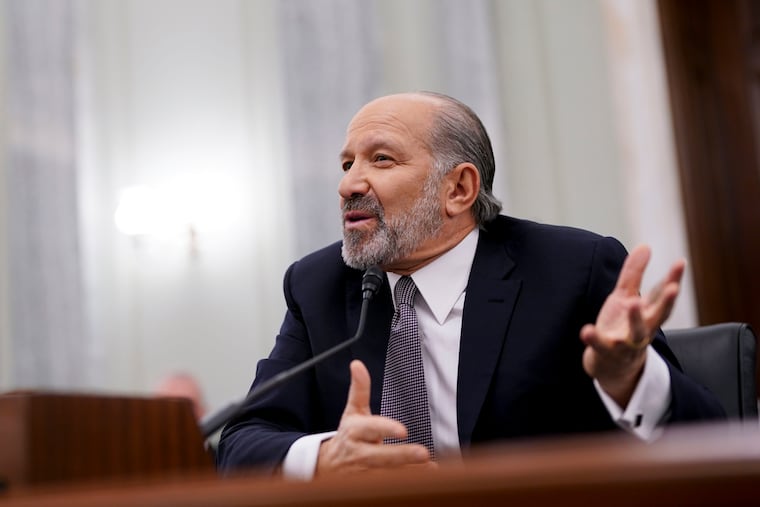
The Commerce Department presents its own complications. TRUMP’s Commerce secretary, Howard Lutnick, has faced renewed attention over past business ties referenced in newly disclosed Epstein-related files. While no wrongdoing has been alleged in connection with his current role, the headlines alone, Maddow suggested, complicate the optics of elevating him, even symbolically, on such a night.
The underlying tension in Maddow’s commentary was not merely about personnel but about perception. The designated survivor tradition assumes a level of bipartisan trust — that whoever is chosen would be broadly acceptable as an emergency steward of the republic. Yet the hyper-partisan climate surrounding TRUMP’s presidency has eroded that assumption.
Maddow framed the dilemma as emblematic of a broader governance challenge: when controversy shadows multiple cabinet departments, even routine institutional rituals can become fraught with political symbolism.
Supporters of the president dismiss such commentary as cable-news theatrics. They argue that the State of the Union remains a constitutional obligation and an opportunity to outline policy achievements — from economic growth to border enforcement — rather than a stage for speculative drama.
Critics counter that optics matter, especially during a presidency defined by sharp fluctuations in public approval and frequent cabinet turbulence. In their view, the question of who sits out the address — and why — underscores deeper concerns about stability and public confidence.
Historically, the designated survivor role has rotated among cabinet secretaries with little fanfare. Agriculture, Energy, Veterans Affairs — each has taken its turn. The individual typically receives heightened media attention for a day, then fades back into departmental routine once the speech concludes without incident.
But as Maddow’s segment made clear, this year’s speculation carries an added layer of spectacle. With approval ratings sagging and controversies lingering, even an administrative footnote risks becoming a headline.
By the time TRUMP steps to the House podium, the identity of the designated survivor will likely have been quietly disclosed. The constitutional machinery will hum along as it always does. Yet in a political era where symbolism often rivals substance, the choice may resonate far beyond the secure location where that cabinet member waits.
In Washington, tradition and theater have always coexisted. This State of the Union, framed by falling poll numbers and cable-news scrutiny, promises to blend both — and the debate over who might inherit the presidency in a nightmare scenario has already set social media ablaze, with reactions spreading at breakneck speed as the internet explodes in anticipation.