Clemency Speculation Surrounding Ghislaine Maxwell Raises Questions About Presidential Pardon Power
WASHINGTON — Renewed discussion around the possibility of clemency for Ghislaine Maxwell, the British socialite serving a 20-year federal prison sentence for her role in Jeffrey Epstein’s sex trafficking operation, has stirred political debate and unease inside the Justice Department.
Maxwell was convicted in 2021 of helping Epstein recruit and groom underage girls for abuse. Since her sentencing, she has pursued various legal avenues to challenge her conviction. In recent months, according to public court filings and statements from her legal team, she has explored the possibility of seeking executive clemency — either a commutation of her sentence or a presidential pardon.
President Donald Trump has not granted Maxwell clemency, nor has he publicly committed to doing so. When asked previously whether he would consider a pardon, Mr. Trump said he had not considered it at the time but declined to rule it out entirely. The Constitution gives the president broad authority to grant pardons and commutations for federal offenses.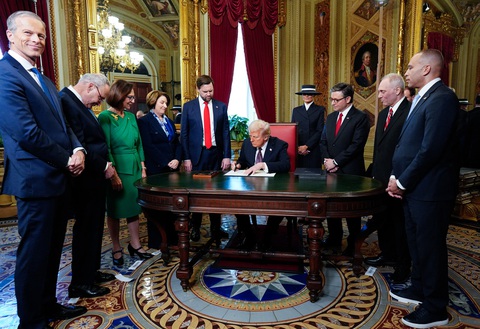
The mere possibility, however, has prompted scrutiny on Capitol Hill and among current and former Justice Department officials.
Congressional Tensions
House Democrats have criticized what they describe as Maxwell’s reluctance to cooperate fully with congressional inquiries into Epstein’s network. Lawmakers investigating the broader scope of Epstein’s associations have indicated that Maxwell has expressed willingness to testify under certain conditions, including legal protections.
Some lawmakers have characterized that posture as an attempt to leverage information for personal benefit. Maxwell’s attorneys have maintained that any cooperation would need to protect her legal rights.
The renewed focus on Maxwell comes amid broader debates about the release of Epstein-related documents. Congress previously passed legislation requiring federal agencies to make public certain records connected to the Epstein investigation, with appropriate redactions to protect victims’ privacy and ongoing investigative interests.
Members of both parties have reviewed portions of those materials. Some lawmakers have questioned the scope of redactions, while Justice Department officials have defended them as necessary under federal law.
Changes Inside the Justice Department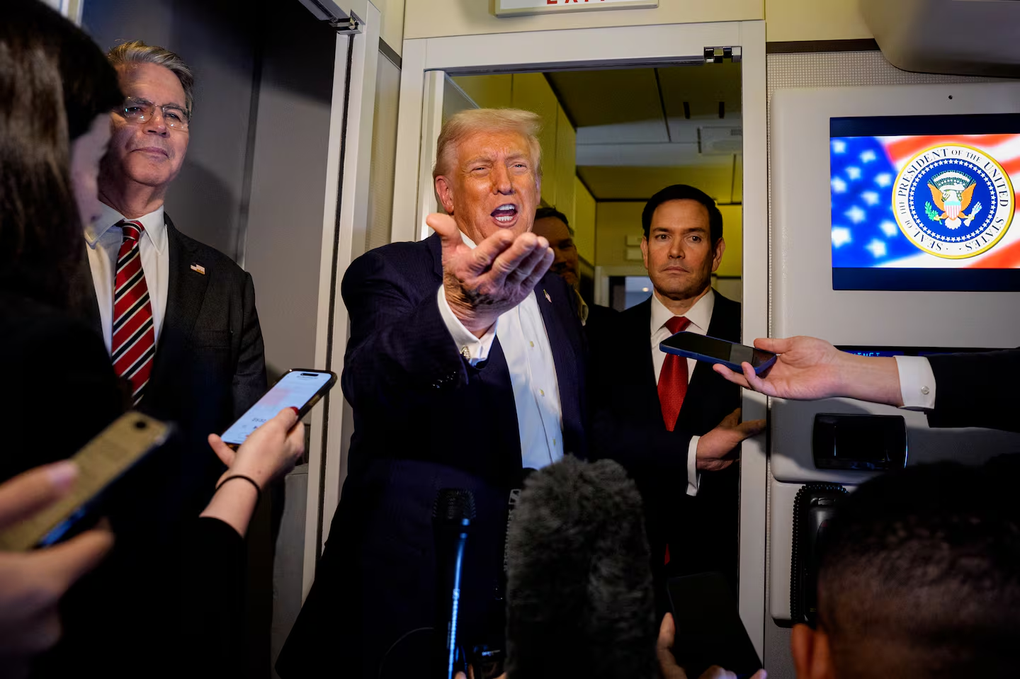
The speculation surrounding a potential Maxwell clemency request has unfolded alongside leadership changes within the Justice Department.
Earlier this year, President Trump replaced several senior officials, including the head of the Office of the Pardon Attorney — the division traditionally responsible for reviewing clemency petitions and making recommendations to the White House.
The president has the authority to restructure executive branch offices. Supporters say the changes reflect his broader effort to reshape the department’s priorities. Critics argue that removing career officials from key positions risks politicizing processes designed to operate independently.
Former Justice Department officials say the pardon process historically relies on professional staff to evaluate petitions based on legal criteria, rehabilitation evidence and input from prosecutors and victims. The president is not required to follow those recommendations.
“There is always tension between presidential discretion and institutional safeguards,” said one former senior Justice Department official. “The pardon power is broad by design, but it functions best when it operates through transparent and principled review.”
Political Implications
The political ramifications of any potential clemency decision could be significant.
Advocates for survivors of sexual abuse have emphasized that Maxwell’s conviction was viewed as a measure of accountability in a case that involved powerful individuals and high-profile connections. They warn that altering her sentence could reopen wounds for victims who fought for years to see the case prosecuted.
“At the center of this must be the survivors,” said one attorney representing victims in related civil litigation. “Their rights and voices cannot be overshadowed by political calculations.”
Republican lawmakers have largely declined to speculate publicly about whether a clemency petition might be granted. Some have stressed that no such action has occurred and that discussions remain hypothetical.
Democrats, meanwhile, have signaled that any commutation or pardon would likely become a flashpoint in the 2026 midterm elections. Political strategists in both parties acknowledge that issues related to Epstein continue to resonate with voters across ideological lines.
A Broader Debate on Executive Power
The controversy highlights a longstanding constitutional reality: the president’s pardon power is among the most expansive authorities granted by the Founders. It is not subject to congressional approval and can be exercised at the president’s discretion for federal crimes.
Historically, presidents of both parties have used that power in controversial ways. From Gerald Ford’s pardon of Richard Nixon to Bill Clinton’s last-minute clemency grants, disputed decisions have periodically triggered backlash but rarely resulted in legal consequences.
The key question in the Maxwell case, legal scholars say, is not whether the president can act — but how such an action would be perceived.
“If a pardon appears tied to political considerations or personal relationships, that can damage public trust, even if it is legally permissible,” said a constitutional law professor at Georgetown University. “The legitimacy of executive power depends heavily on public confidence.”
Awaiting a Decision
For now, Maxwell remains incarcerated at a federal facility in Florida. No clemency has been granted, and the White House has not indicated that one is imminent.
Still, the convergence of Maxwell’s legal maneuvers, congressional investigations and Justice Department restructuring has placed the issue squarely in the national spotlight.
Whether the discussion results in formal action or fades as political speculation, it underscores the enduring sensitivity of the Epstein case — and the powerful constitutional tools available to a president navigating it.
As lawmakers continue reviewing documents and debating transparency, one reality remains clear: the use of executive clemency, particularly in cases involving public trust and abuse of power, carries consequences that extend far beyond the courtroom.