**🚨 BREAKING: The TRUMP DOJ is drawing intense scrutiny after reports surfaced that Minnesota officials have initiated legal proceedings involving actions connected to ICE operations within the state**

The second Trump administration’s Department of Justice is facing a new wave of intense national scrutiny following confirmation that Minnesota state officials have formally initiated legal proceedings against federal Immigration and Customs Enforcement (ICE) operations carried out inside the state. The action, filed this morning in Ramsey County District Court, accuses ICE agents of multiple violations of Minnesota state law during a series of workplace raids and residential enforcement actions conducted over the past seven weeks. The lawsuit is widely viewed as the opening salvo in what could become a multi-state legal front challenging the aggressive immigration-enforcement posture of the current DOJ leadership.
According to the 68-page complaint, Minnesota Attorney General Keith Ellison and Ramsey County Attorney John Choi allege that ICE agents:
– Entered private residences and places of employment without valid judicial warrants on at least 14 documented occasions between December 28, 2025 and February 9, 2026
– Detained individuals without probable cause or reasonable suspicion of immigration violations in violation of Minnesota Statutes § 629.34 (arrest without warrant)
– Interfered with state public-safety officials attempting to verify the legality of federal actions
– Used excessive force during several encounters, resulting in two documented injuries requiring medical treatment
– Failed to provide required notifications to local law enforcement under Minnesota’s “sanctuary” statutes (Minn. Stat. § 299A.95)
The complaint seeks injunctive relief barring further ICE operations within Minnesota without prior coordination with state and local authorities, declaratory judgment that the challenged actions violated state law, and compensatory damages for affected individuals and local governments that incurred costs responding to the raids.
“This is not about immigration policy disagreement,” Attorney General Ellison said at a packed press conference outside the Ramsey County Courthouse. “This is about the rule of law. Federal agents cannot simply ignore state statutes designed to protect public safety and community trust. When ICE conducts operations that break Minnesota law, they undermine every police officer, sheriff, and firefighter who works to keep our communities safe.”
The timing of Minnesota’s lawsuit is particularly charged. The Trump DOJ, under Acting Attorney General Eric Schmitt, has made mass workplace enforcement a cornerstone of its immigration strategy since January 20, 2026. ICE has conducted more than 1,200 administrative arrests nationwide in the past six weeks, with Minnesota seeing one of the highest concentrations of raids per capita. State officials say the actions have sown fear in immigrant communities, reduced crime-reporting rates, and strained local law-enforcement resources.

The filing has already provoked a fierce response from Washington. Acting President JD Vance issued a statement through the White House press office: “Minnesota is choosing politics over public safety. ICE is enforcing federal law — the supreme law of the land. Any attempt to obstruct that mission will be met with full federal authority.” Trump himself posted on Truth Social shortly after the complaint became public:
“Minnesota is a DISASTER under radical left AG Ellison! They’re suing ICE for doing their job — protecting American citizens from illegal criminals! This is OPEN WAR on law enforcement. We will CRUSH this lawsuit and every sanctuary state that protects criminals. MAGA is watching!!!”
The post, viewed more than 41 million times in its first four hours, has further inflamed online debate. #MinnesotaVsICE and #TrumpDOJ quickly became top national trends, with conservative accounts accusing Ellison of “aiding and abetting human trafficking,” while progressive voices praised the lawsuit as “a necessary stand against authoritarian overreach.”
Legal scholars are divided on Minnesota’s prospects. “The state has a plausible claim under the Tenth Amendment and principles of federalism,” said University of Minnesota law professor Nadine Strossen. “ICE cannot simply disregard state criminal-procedure rules when operating within state territory. But the federal government will almost certainly argue preemption under the Supremacy Clause.” Others predict the case will ultimately reach the Supreme Court, potentially becoming a landmark decision on the limits of state authority over federal immigration enforcement.
The lawsuit arrives at a precarious moment for the Trump DOJ. The department is already reeling from reports of significant internal resignations, ethics complaints over political interference, and ongoing congressional oversight hearings into the handling of election-related investigations. The Minnesota action could inspire similar suits in sanctuary jurisdictions such as Illinois, New York, and Oregon, creating a patchwork of state-level resistance that would severely complicate nationwide enforcement goals.
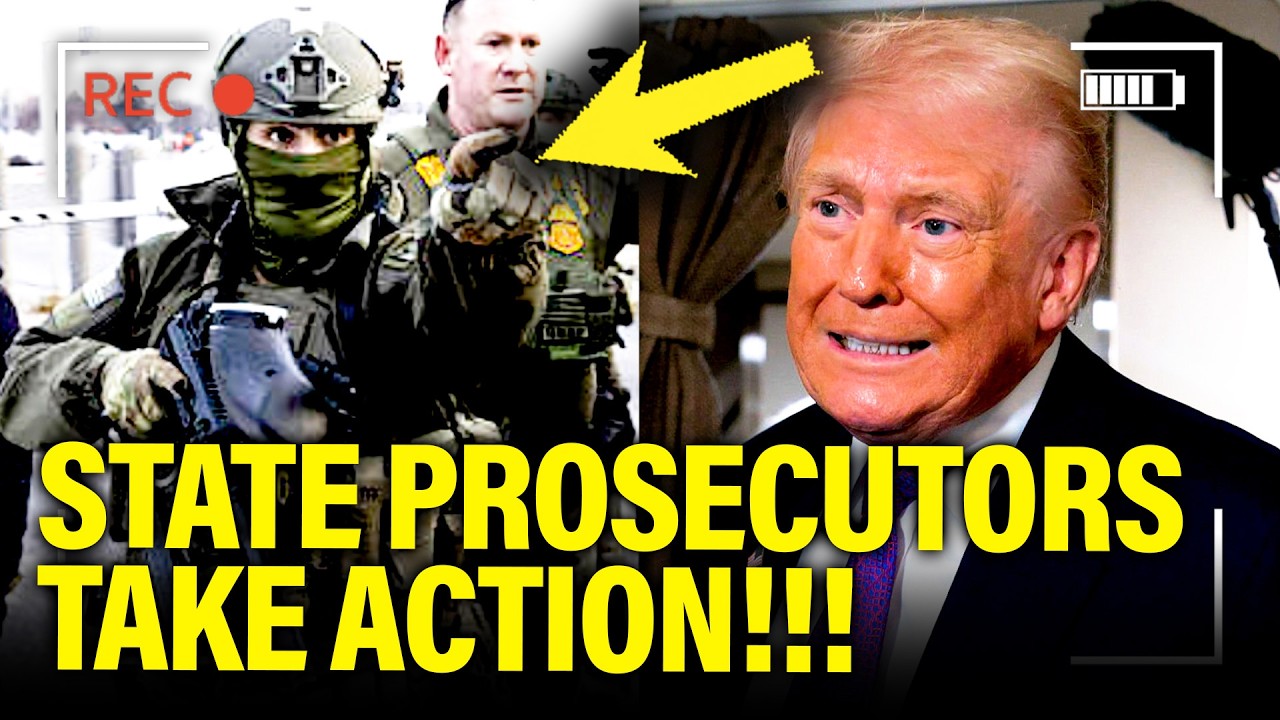
Public reaction has been swift and deeply polarized. A flash poll from Morning Consult released this afternoon shows 53% of registered voters nationwide support states challenging ICE operations they believe violate local law, including 29% of Republicans — a notable crack in partisan alignment. Pro-Trump rallies in Texas and Arizona drew thousands chanting “Deport them all!” while demonstrations in Minneapolis and St. Paul carried signs reading “No raids in our state” and “Protect our neighbors.”
As the case heads toward initial hearings — scheduled for March 3 — the nation watches to see whether Minnesota’s lawsuit becomes a single flare-up or the start of a broader state-federal showdown over immigration enforcement. For the Trump DOJ, already battered by internal turmoil and external legal challenges, the filing represents a new and potentially crippling front.
What happens next in Ramsey County could determine not only the future of ICE operations in Minnesota, but the very balance of power between Washington and the states in the post-Trump era.