Maine Pushes Back: How a Small State Became a Flash Point of Resistance to Trump’s Second-Term Agenda
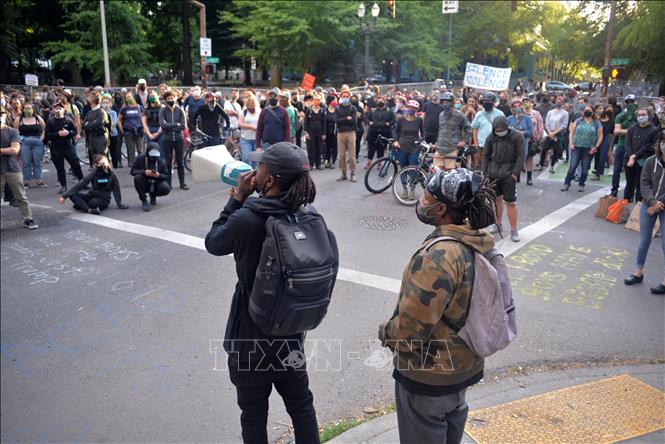
PORTLAND, Maine — In January 2026, as winter tightened its grip on the Northeast, hundreds of people filled Portland’s Monument Square with a message aimed squarely at Washington: “Leave us alone.” The protest was sparked by reports of intensified federal immigration enforcement—masked agents, unmarked vehicles, and alleged entries into homes without judicial warrants. Within days, the demonstrations spread. Local businesses shuttered in solidarity. Organizers coordinated walkouts timed to the anniversary of President Donald Trump’s second inauguration. Mutual-aid networks circulated flyers explaining legal rights and warning residents of Immigration and Customs Enforcement activity.
For a state of just 1.4 million people, Maine’s response has been outsized. It has also been sustained. From early “Stop the Coup” rallies in 2025 to statewide walkouts in 2026, from street protests to courtroom challenges, Maine has emerged as one of the most persistent centers of opposition to the Trump administration’s agenda—particularly on immigration and civil liberties. The result is a case study in how local resistance, when organized and layered across tactics, can shape the national political conversation.
A Return to Confrontation
Presidents have long faced public dissent. George W. Bush and Barack Obama, confronted by vocal protesters during their terms, acknowledged the right to dissent as a core democratic principle. Trump, by contrast, has framed opposition as illegitimate or dangerous, often describing protesters as enemies or tools of a hostile press. That rhetorical stance has sharpened conflicts in places where federal policy collides with local norms.
In Maine, the flash point has been immigration enforcement. According to local reporting, ICE operations in late 2025 and early 2026 involved agents wearing masks and using unmarked minivans in busy public areas. Community advocates say some entries into private homes occurred without warrants—an allegation the administration has disputed, while also confirming changes to enforcement guidelines intended to “streamline operations.”
Legal scholars note that the Fourth Amendment offers the strongest protections to the home, generally requiring a judicial warrant for entry. “Any policy that relaxes those standards risks serious constitutional conflict,” said one former federal prosecutor, who cautioned that exceptions are narrow and fact-specific. For many Mainers, the issue is not only legality but atmosphere. “Masked agents in unmarked vehicles create fear,” said a Portland organizer. “People don’t know who’s acting with authority, or whether their rights will be respected.”
From Protest to Infrastructure
What distinguishes Maine’s response is not a single march but the accumulation of actions over time. In Portland, hundreds rallied as businesses closed their doors for a day to demonstrate solidarity with immigrant communities. In Scarborough, protesters gathered outside an ICE field office, shifting demonstrations from symbolic downtown spaces to the sites of enforcement itself. Across the state, mutual-aid groups organized legal clinics, transportation support, and emergency funds for families affected by raids.
On January 20, 2026, more than 100 people in Augusta joined a nationwide “Free America Walkout,” coordinated with actions in dozens of cities. Organizers framed the protest as a response to what they called “growing fascism, racism, xenophobia, and violence,” warning that civil rights were at risk if opposition waned. The rhetoric was stark, but the strategy was deliberate: synchronize local actions with national ones to amplify visibility.
“This isn’t a flash-in-the-pan,” said a labor organizer involved in the walkout. “It’s about building capacity—networks that can respond again and again.”
Official Resistance Joins the Street

Grassroots pressure has been reinforced by actions from state leaders. Governor Janet Mills, a Democrat, has vowed to challenge the administration in court over a federal order affecting transgender athletes, arguing that it infringes on state authority and civil rights. Her decision to run for the U.S. Senate has been framed explicitly as an effort to resist the administration from Washington—an unusual move that blends state-level opposition with a bid for national power.
Maine’s recent history has also shaped its reputation as a battleground. In 2023 and 2024, the state’s secretary of state briefly ruled Trump ineligible for the primary ballot under the 14th Amendment’s insurrection clause, before higher courts intervened. Though ultimately unsuccessful, the move signaled a willingness to test legal boundaries in opposition to the former—and now current—president.
Taken together, these actions create what political scientists describe as “multi-level resistance”: protests in the streets, economic pressure through business closures, legal challenges in court, and electoral strategies aimed at changing the balance of power in Congress.
Why Maine Matters
Maine is not California or New York. Its protests rarely reach six figures; its electoral clout is modest. Yet that is precisely why its role has drawn attention. “Small states can punch above their weight when resistance is sustained and coordinated,” said a professor of political movements at a New England university. “They become laboratories for tactics that can be replicated elsewhere.”
The state’s political culture—strong town governments, close-knit communities, and a tradition of civic engagement—has facilitated coordination. When businesses close in solidarity, the impact is visible. When protests occur in Augusta, they unfold steps from the State House, where lawmakers and staff cannot easily ignore them.
There are limits, of course. Federal authority remains formidable, and courts have been mixed in their responses to challenges against the administration. Public opinion in Maine is not monolithic, and supporters of the president argue that stricter enforcement is necessary and lawful. But even critics acknowledge that the protests have imposed political costs.
Toward 2026 and Beyond
The central question is whether Maine’s model can scale. Organizers argue that it already is. The nationwide walkout, coordinated messaging, and shared resources suggest a movement learning from itself. If similar coalitions take hold in other states—combining grassroots action with business participation and official legal challenges—the cumulative effect could be significant.
For now, Maine’s streets tell a story of persistence. From chants of “Stop the coup” in 2025 to calls to “leave us alone” in 2026, the message has evolved but not faded. It reflects a belief that democracy is not only defended at the ballot box but practiced in public squares, courtrooms, and workplaces.
Whether that belief translates into electoral change remains to be seen. But as winter protests turn toward a heated political year, Maine has demonstrated that sustained, organized resistance—especially from a small state—can command national attention, and perhaps reshape the terms of debate itself.