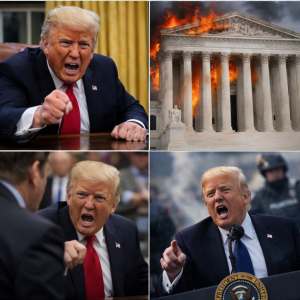
There is a moment in late-night television that feels less like comedy and more like civic instruction. It arrives not with a punchline, but with a pause.
In recent years, as American politics has grown more theatrical and more volatile, some comedians have adjusted their craft accordingly. Among them, Stephen Colbert has developed a device so simple it hardly seems like a device at all: he plays the tape again.

When Donald T̄R̄UMP boasts about acing a cognitive screening test — reciting, as proof of his acuity, “person, woman, man, camera, TV” — the expected late-night rhythm would be clip, joke, applause, move on. Instead, Colbert interrupts the rhythm. He raises a hand. He asks the audience to listen once more. And the room changes.
The first viewing draws laughter. The second draws something closer to recognition.
Repetition, in this context, is not merely comedic timing. It is a form of scrutiny. The replay transforms what might be dismissed as absurdist spectacle into documentary evidence. On first hearing, Mr. T̄R̄UMP’S recitation of five nouns sounds like parody — a satire of bluster and self-congratulation. On second hearing, stripped of the cushioning effect of surprise, it lands as something else: the President of the United States seeking admiration for recalling elementary words.
Colbert has applied this tactic beyond moments of self-congratulation. When recordings resurfaced of T̄R̄UMP remarking that if Ivanka were not his daughter, “perhaps I’d be dating her,” the host did not rush to adorn the comment with jokes. He played it. He let the silence settle. Then he played it again. The laughter drained from the theater. What remained was discomfort — not manufactured by commentary, but by the words themselves.
In April 2020, during a White House briefing on the coronavirus pandemic, T̄R̄UMP speculated aloud about the possibility of injecting disinfectant as a treatment. The suggestion, delivered from the presidential podium, ricocheted across the world. On “The Late Show,” Colbert again turned to repetition. “Future generations won’t believe this happened,” he told viewers before pressing replay.
The second airing did what the first could not. It denied viewers the comfort of thinking they had misheard. It deprived defenders of the claim that context had been stripped away. The context was there. The words were intact. The effect was cumulative.
Political communication scholars have long noted the psychological power of repetition. The first exposure to a startling statement produces shock, sometimes even denial. The second exposure produces confirmation. In that space between disbelief and certainty, narrative control often shifts. Spin becomes harder to sustain when the original artifact is placed back before the public, unaltered and unavoidable.
The reaction from T̄R̄UMP has been telling. Rather than disputing the authenticity of the recordings — an impossible task in an age of ubiquitous documentation — he has typically lashed out at the messenger. Colbert has been labeled “no talent,” his program “failing,” the network urged to cancel him. The insults follow a familiar pattern. What they do not include is a denial of the underlying words.
This is not the response of a politician confident that his statements can withstand scrutiny. It is the response of a figure acutely sensitive to the loss of narrative control. T̄R̄UMP’S political persona has long relied on dominance — over adversaries, over headlines, over the daily news cycle. A replay button is a small but potent rebellion against that dominance. It says: you do not get to outrun your own voice.
Late-night television once functioned primarily as a pressure valve, allowing viewers to laugh at the day’s excesses before turning in for the night. In the T̄R̄UMP era, it has occasionally taken on a more archival role. The monologue desk becomes, briefly, a record-keeping station. The joke yields to documentation.

Critics might argue that such tactics blur the line between entertainment and activism. But the line has already been blurred by the nature of the political performances themselves. When a president treats a cognitive screening as a feat worthy of national admiration, or muses about medical treatments unsupported by science, the material resists tidy categorization as mere fodder for humor.
Colbert’s replays do not add commentary so much as remove insulation. They create a stillness in which audiences must confront what was actually said, without the cushioning effect of speed or spectacle. The laughter that follows — or does not follow — belongs to viewers, not to the host.
There is, ultimately, a profound difference between a joke and a warning. A joke invites release. A warning demands attention. By playing the tape twice, Colbert shifts the audience from the first mode to the second. And in doing so, he reveals something essential about modern leadership: that the most unsettling truths often require no embellishment at all — only the courage to listen again.