As the 2026 World Cup Nears, Politics Cast a Long Shadow Over the Beautiful Game
Five months before the opening match of the 2026 World Cup, the countdown clocks in American host cities project confidence and inevitability. Stadium renovations are nearing completion. Security frameworks are being refined. Hotel bookings are climbing steadily. On paper, the largest tournament in FIFA history — 48 teams, 104 matches across the United States, Canada and Mexico — appears firmly on course.
Yet beyond the construction sites and marketing campaigns, a different conversation is unfolding. In parts of Europe, lawmakers and civil society groups are openly debating whether participation in the tournament should be reconsidered. What was intended to be a celebration of football’s global reach has become entangled in a broader political moment centered on the United States and its role in the world.
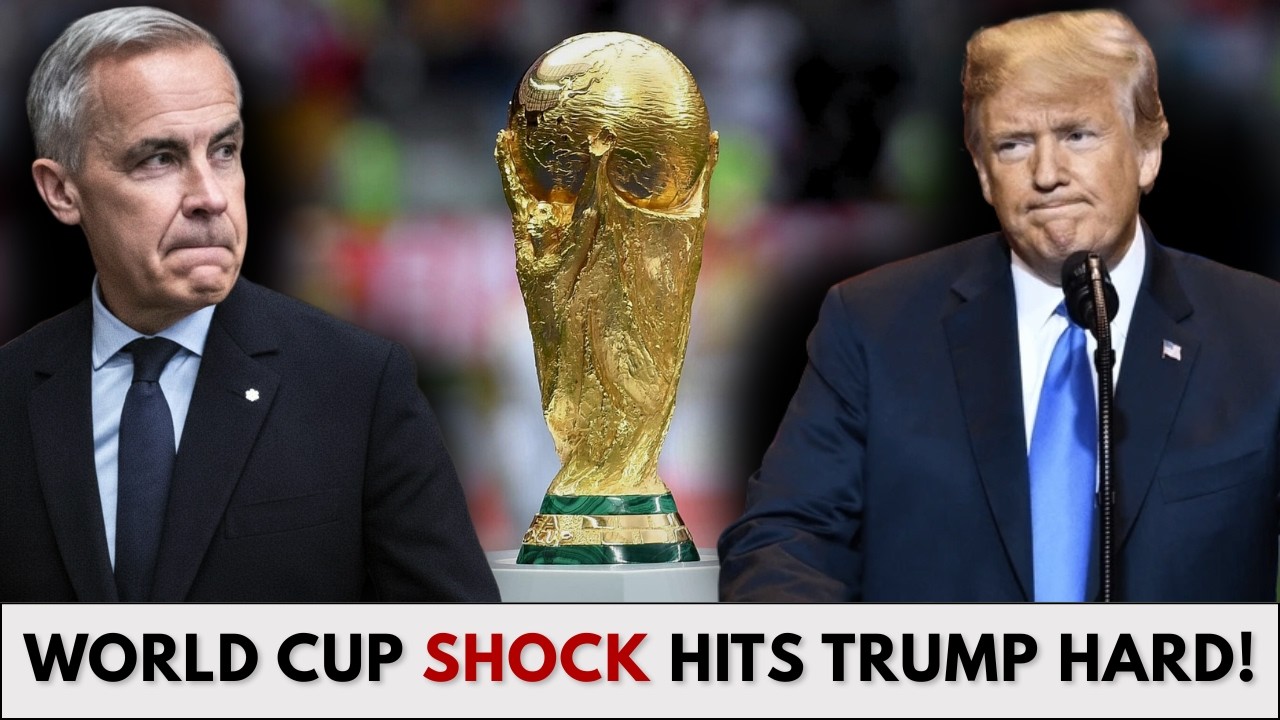
The 2026 edition, awarded jointly to FIFA’s North American partners in 2018, was conceived as a symbol of continental cooperation. But as immigration enforcement intensifies inside the United States and geopolitical tensions rise, critics argue that the World Cup is entering unfamiliar terrain.
In the Netherlands, a petition urging the national team to withdraw reportedly gathered significant public support. In Germany, senior figures within the Christian Democratic Union have publicly questioned whether participation should be automatic. Members of Parliament in the United Kingdom have raised similar concerns regarding England and Scotland. In France, some political voices have floated the possibility — however remote — of shifting more matches away from American soil.
None of these proposals has translated into formal action. National federations remain committed to competition. But the debate itself marks a departure from the traditional separation between sport and statecraft.
At the center of the controversy are immigration and travel policies. Advocacy groups argue that heightened visa scrutiny and expanded enforcement measures could deter fans from Africa, Asia and the Middle East. The World Cup, they note, depends not only on players and sponsors but also on migrant families, diaspora communities and supporters who often save for years to attend a single match. If entry becomes uncertain, the atmosphere that defines the tournament could be diminished.
Supporters of the administration counter that security protocols are standard for an event of this magnitude. They emphasize that 78 of the 104 matches will be staged in American cities, requiring coordination across federal, state and local agencies. Ensuring public safety, they argue, does not preclude hospitality.
Still, the broader political context has complicated the optics. In March 2025, the White House established a task force dedicated to the 2026 tournament, chaired by President Donald Trump, with Vice President J. D. Vance serving as vice chair. The move was framed as a logistical necessity for an event expected to draw millions. Critics, however, saw symbolism in the arrangement — a blurring of lines between global sport and domestic politics.
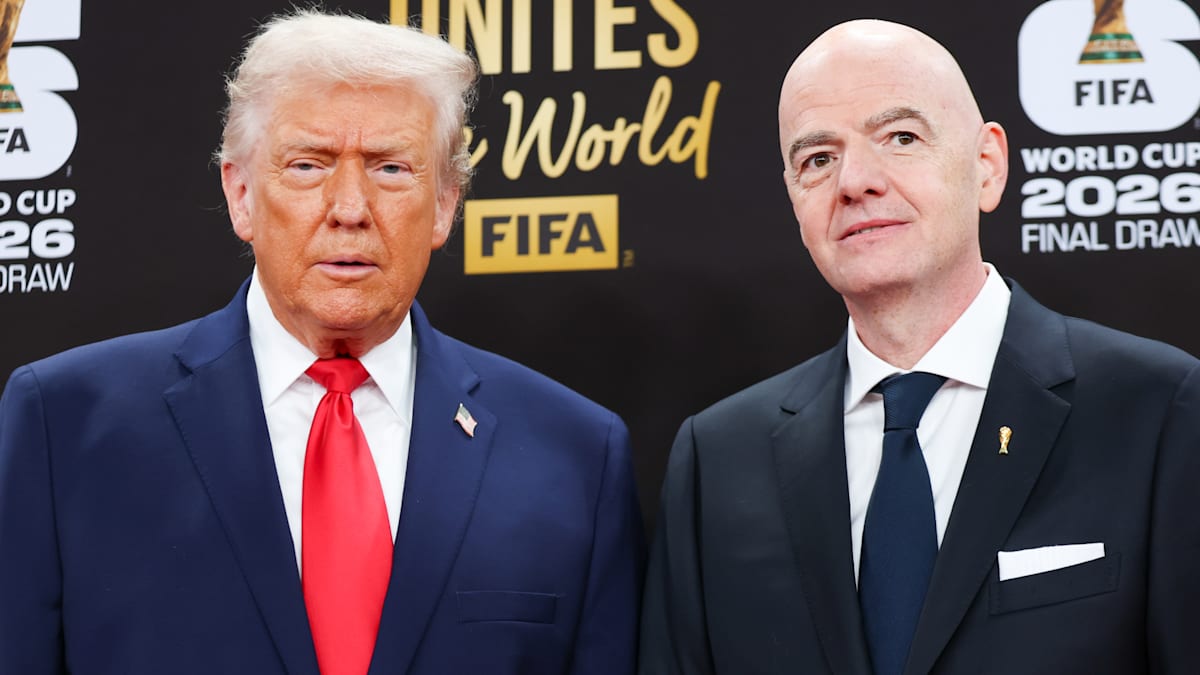
The presence of Gianni Infantino, FIFA’s president, at multiple Washington events has further fueled discussion about the proximity of football’s governing body to political power. A FIFA office established in Trump Tower and ceremonial moments involving World Cup trophies circulated widely on social media, amplifying perceptions that the tournament carries political overtones.
The debate intensified after reports of expanded American military operations abroad earlier this year. While details and interpretations vary sharply depending on political perspective, the timing — months before the World Cup — has prompted questions about how global audiences will perceive the host nation.
History offers precedent for sporting boycotts shaped by geopolitics. In 1980, the United States led a boycott of the Moscow Olympics following the Soviet invasion of Afghanistan, a decision that reshaped athletic careers and diplomatic relations alike. Whether football’s global ecosystem would withstand a similar rupture remains uncertain.
Financial realities also weigh heavily. The 2026 tournament represents billions in projected revenue for FIFA and its commercial partners. Broadcasters, sponsors and host cities have already invested substantial resources. Canada and Mexico are scheduled to host 13 matches each, but the United States is the operational centerpiece. A large-scale withdrawal by European teams would disrupt not only competition but also broadcasting contracts and sponsorship agreements worldwide.
For many players, the stakes are deeply personal. A World Cup appearance is often the pinnacle of a career measured in narrow windows of physical prime. To lose that opportunity for reasons beyond the pitch would be, in their view, an unjust cost.
For activists and some lawmakers, however, sport can serve as leverage — a peaceful mechanism for signaling disapproval. They argue that the World Cup’s global visibility makes it uniquely powerful as a stage for protest.
As kickoff approaches, the most probable outcome remains full participation. Yet the mere plausibility of boycott discussions underscores how deeply intertwined global sport and politics have become. The 2026 World Cup was designed to expand football’s reach. Instead, it may also test the resilience of the principle that the game can stand apart from the political storms that surround it.
When the first whistle sounds next summer, billions will tune in. But many will be watching more than tactics and goals. They will be observing how a tournament built on unity navigates a world defined by division.