Bridge of Facts: Mark Carney Publicly Counters Trump’s Threat Over the Gordie Howe International Crossing
In the delicate choreography of cross-border diplomacy, infrastructure is rarely the headline. Yet this week, a nearly completed bridge between Windsor, Ontario, and Detroit became the center of an escalating dispute after President Donald Trump threatened to block its 2026 opening unless the United States is, in his words, “fully compensated.”
At issue is the Gordie Howe International Bridge, a $4.7 billion span that will link Highway 401 in Ontario to Interstate 75 in Michigan. Designed to relieve congestion at the privately owned Ambassador Bridge, it is set to become one of the most important commercial arteries in North America. The Windsor–Detroit corridor already represents the busiest commercial land border crossing between the United States and Canada, supporting supply chains in automotive manufacturing, agriculture and heavy industry.
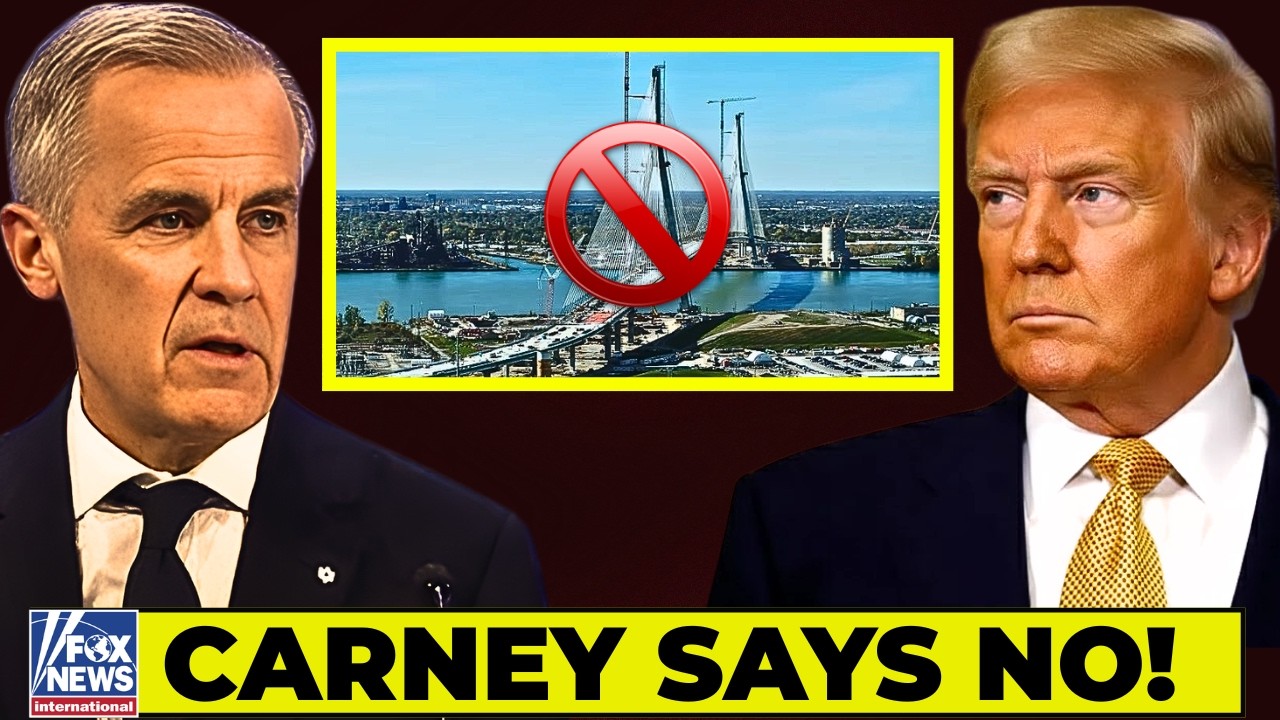
Unlike most joint infrastructure ventures, this bridge was financed entirely by Canada. Ottawa covered the upfront construction costs through a Crown corporation, the Windsor-Detroit Bridge Authority, and expects to recoup its investment over time through toll revenue. Under a 2012 agreement between Canada and Michigan, ownership is shared. Once Canada recovers its costs, Michigan will receive half of net toll revenues — a detail that has been notably absent from the president’s recent public statements.
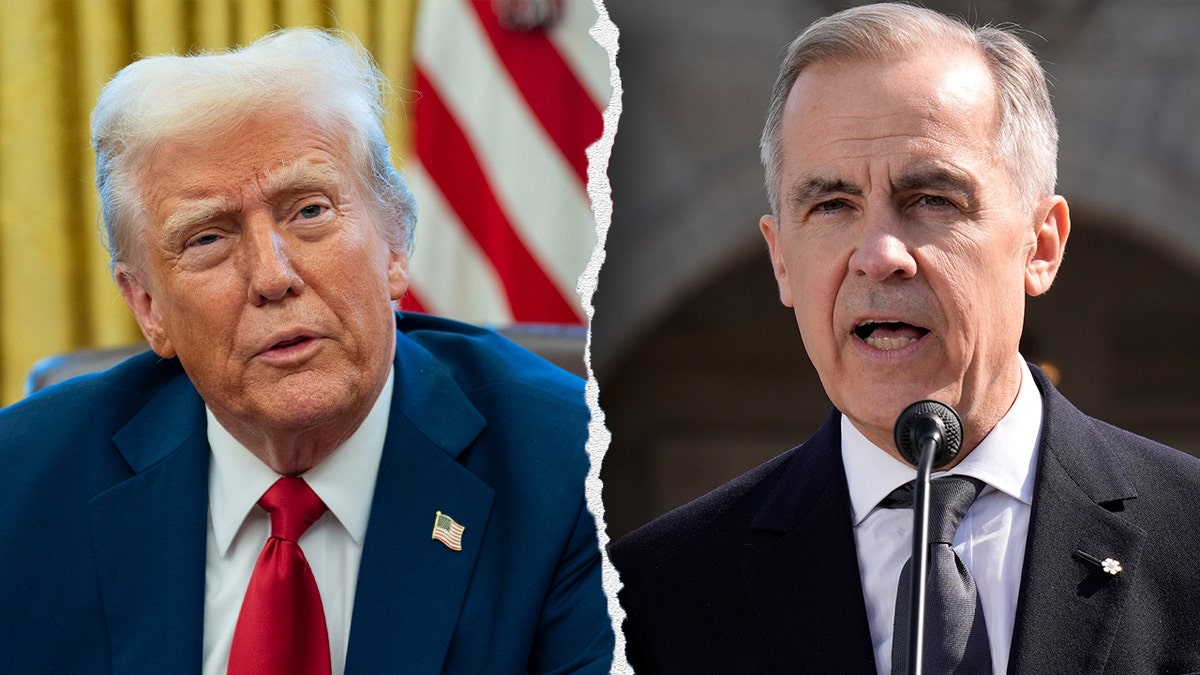
On Monday evening, President Trump posted on Truth Social that he would not allow the bridge to open until the United States was “fully compensated for everything we have given them.” He further suggested that the United States should own at least half of the asset and argued that Canada had unfairly benefited from American market access.
The following morning, Prime Minister Mark Carney responded in unusually direct fashion. Standing before reporters in Ottawa without notes, he laid out the factual structure of the agreement. Canada, he said, paid for the bridge. Ownership is shared with the state of Michigan. Construction included Canadian steel and labor, but also American steel and American workers, particularly on the Michigan interchange, which was built entirely with U.S. materials and crews.
“This is a great example of cooperation between our countries,” Mr. Carney said, describing his call with President Trump as “positive” while making clear that Canada’s legal and financial position would not change.
Ontario’s premier, Doug Ford, reinforced that message with specifics. Approximately 75 percent of the steel and concrete used on the main span, he said, was Canadian — reflecting Canada’s role as financier — while roughly 25 percent was American. “There is fiction,” Mr. Ford remarked, “and then there are verifiable facts.”
The White House, however, doubled down. Press Secretary Karoline Leavitt argued that Canadian control over land and operations on both sides of the crossing was unacceptable to the president and suggested that more American-made materials should have been used. An administration official added that Mr. Trump believed the United States should share authority over what crosses the bridge and participate directly in its economic benefits.
The dispute marks a notable reversal from Mr. Trump’s earlier stance. In 2017, during his first term, he and former Prime Minister Justin Trudeau issued a joint statement expressing support for the “expeditious completion” of the project, calling it a vital economic link. Former Member of Parliament Jeff Watson, who represented Windsor, has pointed to the contrast between what he calls “Trump 1.0,” which endorsed the bridge, and the current posture, which seeks to use it as leverage amid broader trade tensions.
Those tensions have simmered for months. Trade discussions between Ottawa and Washington have been effectively frozen since late 2025, following disputes over tariffs and retaliatory provincial measures. President Trump has also criticized Mr. Carney for engaging in trade conversations with Chinese leader Xi Jinping, warning that such outreach could harm Canada’s economy.
The timing of the president’s renewed threat has prompted scrutiny in Washington. The New York Times reported that representatives connected to the family that owns the Ambassador Bridge — a long-time rival project — met with senior Commerce Department officials shortly before the president’s public statement. Democratic lawmakers have begun examining whether private economic interests played a role in the administration’s position.
In Michigan, reaction has been pragmatic rather than partisan. Business groups and regional leaders argue that blocking the bridge would disrupt supply chains that sustain thousands of American jobs. Windsor’s mayor has expressed confidence that the crossing will open as scheduled, noting that construction is nearly complete and fully integrated with interstate systems on both sides.
What distinguishes Mr. Carney’s response is not rhetorical flourish but its clarity. Previous Canadian governments often preferred quiet diplomacy when disputes flared with Washington. Mr. Carney instead chose public documentation over private negotiation, correcting claims point by point. The strategy suggests a calculation that transparency, rather than discretion, is now the more effective tool.
The Gordie Howe bridge was conceived as a symbol of cross-border interdependence — a physical manifestation of an economic relationship that sees billions of dollars in goods cross daily. Whether it becomes a casualty of political brinkmanship or remains what planners intended — a shared investment in mutual prosperity — may depend less on steel and concrete than on the willingness of leaders to accept documented facts.
For now, the structure stands nearly complete over the Detroit River, awaiting not engineering solutions but political resolution.