Canada’s Quiet Recalibration in a Hardening Trade Standoff
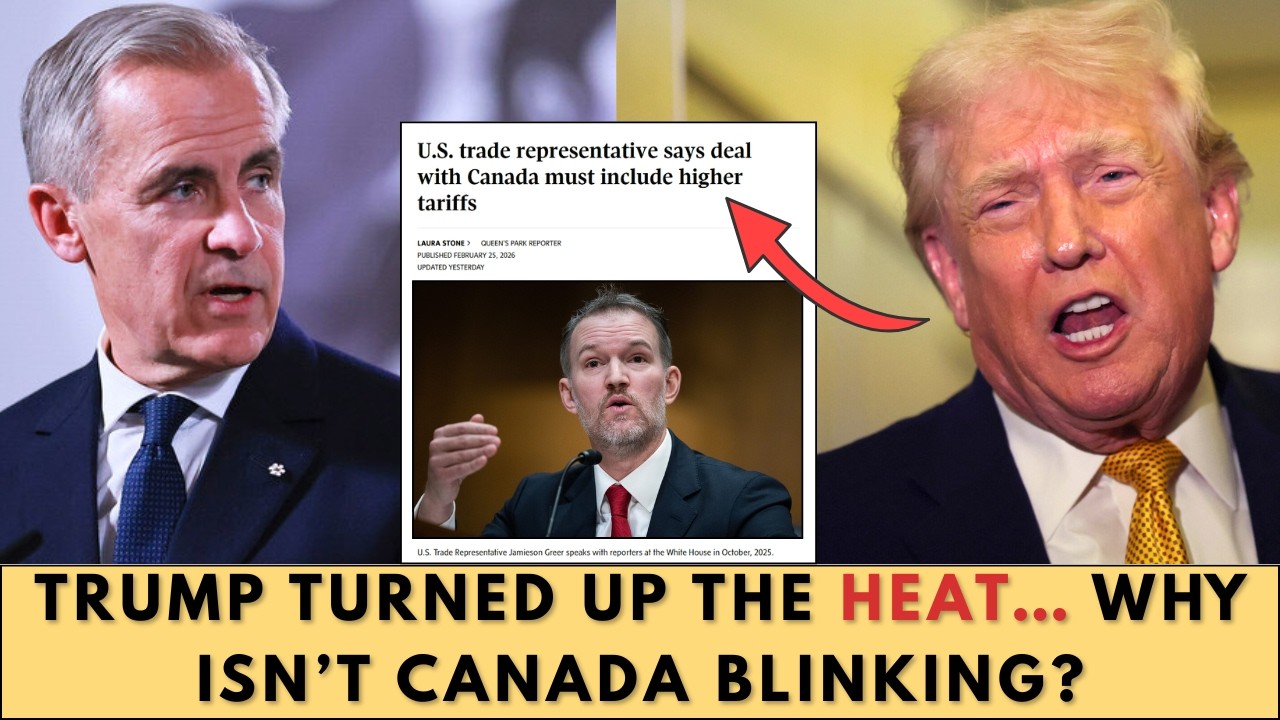
When the suggestion surfaced that Canada would need to accept higher tariffs in order to secure a trade arrangement with the United States, the message was framed as pragmatic realism. If Ottawa wanted smoother access to the American market, it would have to tolerate steeper costs and consider opening protected sectors such as dairy. In Washington’s telling, this was negotiation as usual — leverage applied to a smaller partner in pursuit of concessions.
But in Ottawa, the response was notably restrained.
Rather than issue fiery denunciations or rush to reassure jittery investors, Prime Minister Mark Carney chose a different register. There was no immediate scramble for exemptions, no public ultimatum. Instead, Canadian officials spoke of diversification, resilience and structural adjustment. It was a shift in tone that suggested something larger than a disagreement over tariff percentages.
For decades, Canada’s economic gravity has tilted south. The United States absorbs roughly three-quarters of Canadian exports. Supply chains in automobiles, agriculture and energy are deeply intertwined. Financial markets move in tandem. That interdependence has long been presented as both practical and permanent.
Yet permanence in geopolitics is often an illusion.
The latest round of trade friction has exposed vulnerabilities in that arrangement. American officials have signaled frustration with Canadian provincial policies, including restrictions affecting U.S. alcohol sales and long-standing supply management systems that protect dairy producers. The implication is clear: greater market access in Canada could be the price for tariff relief in the United States.
This strategy reflects a familiar model. Apply pressure. Increase costs. Narrow the other side’s room for maneuver. When alternatives are limited and timelines are tight, such tactics can succeed. Smaller economies often concede to preserve stability.
But leverage depends on dependency.
In recent months, Canadian policymakers have spoken less about mitigating American demands and more about broadening their horizons. Trade missions have intensified in Asia and Europe. Officials have highlighted potential growth in India’s consumer market, deeper manufacturing partnerships with Japan, and expanded defense and industrial collaboration with the European Union. Conversations with Gulf states have emphasized investment flows and agricultural exports.
The approach is not dramatic. It is incremental. And it is strategic.
By expanding non-U.S. trade relationships, Canada aims to dilute the potency of tariff threats. If a single market dominates export flows, even modest tariffs can reverberate through currency markets and corporate balance sheets. But as exposure spreads across multiple partners, the impact of any one measure becomes less acute.
Economists caution that diversification is neither quick nor costless. Infrastructure, logistics and regulatory alignment take time. Businesses must cultivate new networks and adapt to unfamiliar standards. In the short term, friction with the United States could still inflict meaningful pain.
Yet the calculus may be shifting.
If Canada demonstrates a credible path toward reduced dependence, American tariffs risk becoming a blunter instrument. Integrated industries — from autos to energy — operate on both sides of the border. Costs imposed on Canadian exports can reverberate back to American consumers and manufacturers. The more intertwined the supply chains, the harder it is to target one side without collateral effects.
There is also a psychological dimension. Negotiating from urgency can entrench asymmetry. Negotiating from optionality reframes the discussion. Mr. Carney has avoided categorical refusals. He has not ruled out compromise. Instead, he has sought to build conditions in which accepting higher tariffs is no longer the only viable route to stability.
This is less about dairy quotas than about economic alignment. Canada’s integration with the United States has delivered prosperity, but it has also concentrated risk. The present dispute has forced a reckoning with that concentration.
In Washington, some policymakers may view Canada’s diversification efforts as rhetorical posturing. The scale of U.S.–Canada trade is immense, and geographic proximity confers enduring advantages. No Asian or European partnership can fully replicate the efficiency of cross-border supply chains that have evolved over decades.
But even marginal shifts can alter bargaining dynamics.
If Ottawa succeeds in cultivating alternative markets and investment streams, tariff threats may lose some of their coercive power. Instead of compelling rapid concessions, they could impose costs on both sides while accelerating Canada’s search for partners elsewhere.
The broader question extends beyond this bilateral dispute. In a world of intensifying economic nationalism, middle powers are increasingly exploring ways to hedge against volatility. Diversification is not defiance; it is insulation. The goal is not to sever ties with the United States, but to ensure that no single relationship becomes existential.
Whether this recalibration will meaningfully reduce Canada’s vulnerability remains uncertain. Trade patterns evolve slowly, and political winds can shift quickly. But the strategic intent is evident.
The standoff is not unfolding as a shouting match. It resembles a chessboard, with each side probing for advantage. Washington is testing the limits of tariff leverage. Ottawa is testing the feasibility of structural adjustment.
The outcome will shape more than the fate of a specific agreement. It will signal whether traditional leverage models still function in an era when even close allies are preparing, quietly and methodically, to walk differently.