As Privilege Frays, a Former President’s Legal Shield Becomes a Source of Risk
WASHINGTON — For years, Donald J. T̄R̄UMP has argued that his efforts to challenge the 2020 election were rooted in sincere belief and guided by attorneys pursuing legitimate legal remedies. But a growing body of court rulings, disciplinary findings and compelled disclosures is sharpening a different and more legally perilous picture: not merely that T̄R̄UMP’S claims failed in court, but that judges and professional regulators have found reason to conclude that some of the claims advanced in his name were knowingly false — and that the communications between T̄R̄UMP and his lawyers may themselves be evidence.
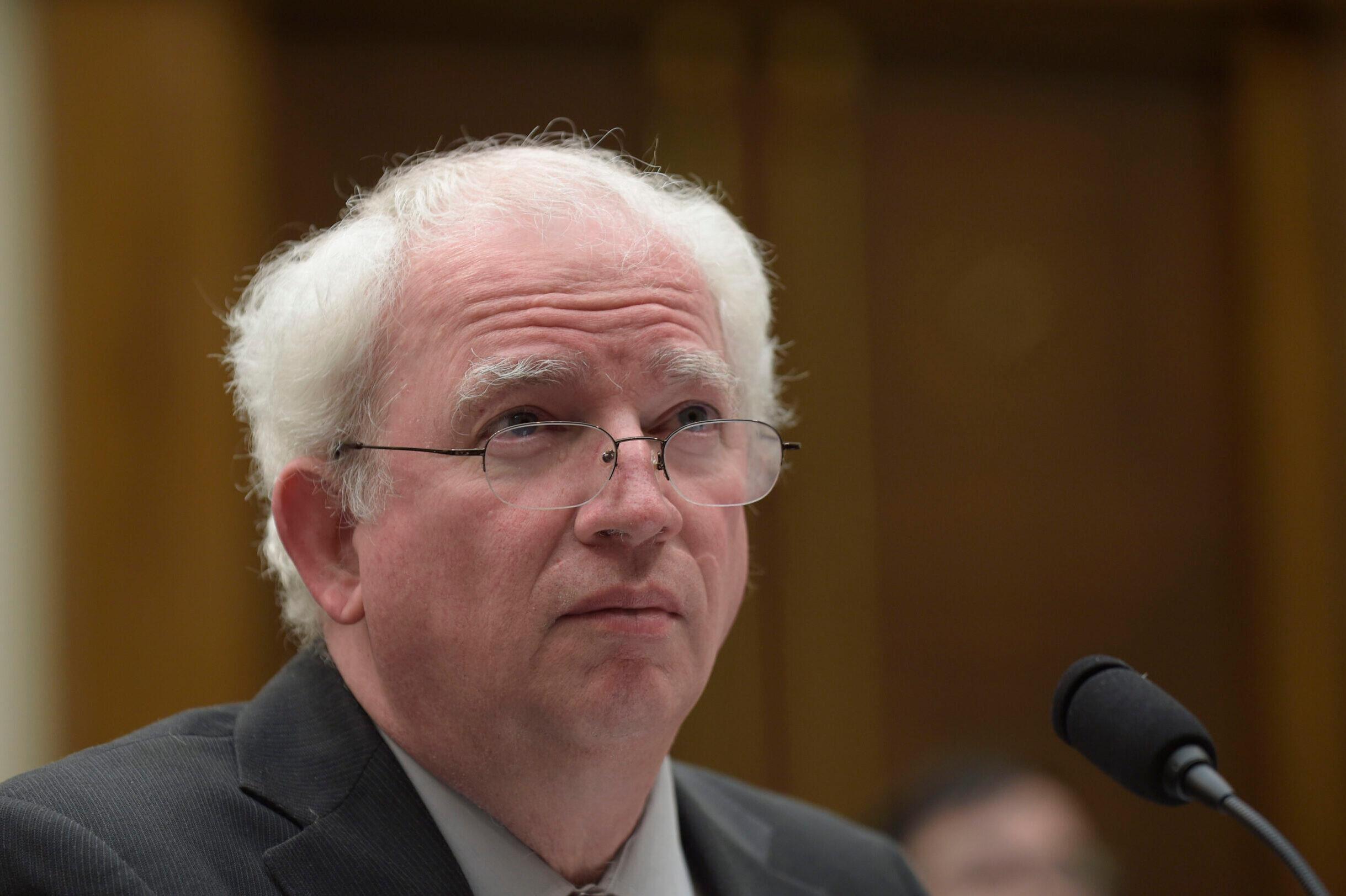
That dynamic is most stark in the legal battle between the House select committee that investigated the Jan. 6, 2021, attack on the Capitol and John Eastman, a conservative lawyer who played a central role in the pressure campaign aimed at interrupting Congress’s certification of Joseph R. Biden Jr.’s victory. Eastman resisted turning over emails to the committee, invoking attorney-client privilege. A federal judge, after reviewing certain messages privately, ordered that at least some be produced, concluding they were not protected.

In a ruling that has echoed far beyond the immediate dispute, the judge wrote that the emails showed T̄R̄UMP “knew that the specific numbers of voter fraud were wrong, but continued to tout those numbers both in court and to the public.” The judge also wrote that the communications demonstrated an effort “to press false claims in federal court for the purpose of delaying the January 6 certification vote.”
Those findings landed with force because they touched the most sensitive terrain in T̄R̄UMP’S legal posture: intent. A politician can repeat unproven allegations in a rally speech and pay a political price. But in court, intent can be the fault line between aggressive advocacy and fraud. And attorney-client privilege — normally among the strongest protections in American law — can collapse under a narrow doctrine known as the crime-fraud exception, which holds that communications are not privileged if they were used to further a crime or fraud.
T̄R̄UMP responded by attacking the judge, calling him a partisan hack and again insisting, without providing evidence, that the election was rigged. The rhetorical counterpunch is familiar. Yet the deeper legal problem for T̄R̄UMP is that, once judges start describing internal lawyer-client communications as potential evidence of wrongdoing, a defense built on reliance on counsel becomes harder to sustain — not because it is impossible in principle, but because it requires a showing that the advice was sought and followed in good faith.
A reliance-on-counsel defense, lawyers say, generally works only if the client made full disclosure, received legal advice, and reasonably relied on it. It is less persuasive when advisers are shown to have advanced claims they knew were untrue, or when the client appears to have pushed lawyers toward arguments crafted to delay or derail lawful processes rather than to test genuine disputes of fact.
The Eastman emails are not the only example cited by critics of T̄R̄UMP’S election challenge effort. Another comes from Jenna Ellis, a lawyer who emerged as a television-facing surrogate for the T̄R̄UMP legal effort after the 2020 vote. Ellis repeatedly claimed in interviews and on social media that the election had been stolen and that widespread fraud had altered the outcome. In 2023, facing disciplinary proceedings before the Colorado legal authorities, she entered into a stipulation admitting she had made multiple misrepresentations about the election — an acknowledgment that the statements at issue were not true. She received a public censure, a formal sanction that stops short of disbarment but carries reputational and professional consequences.
Taken together, the Eastman ruling and Ellis’s disciplinary stipulation create a cumulative pressure point for T̄R̄UMP: the more his lawyers concede, or are found to have conceded, that key fraud claims were baseless, the more difficult it becomes for him to argue that he believed those claims in good faith.
That challenge is not merely theoretical. Prosecutors in election-related investigations — federal and state — have repeatedly sought to show that T̄R̄UMP was told he had lost and nonetheless pressed forward. In that view, the legal filings, speeches, and litigation were not an honest effort to correct errors, but a strategy to keep the outcome uncertain long enough to open pathways for political intervention.
One alleged pattern, described in court papers and in accounts of the period, is that advisers told T̄R̄UMP particular vote counts were accurate, and he responded by urging them to find reasons to contest them anyway. In such a scenario, the legal effort begins to resemble an exercise in manufacturing doubt rather than presenting evidence — a distinction that can matter greatly when judges evaluate intent.
The significance of the crime-fraud exception is that it turns a conventional legal firewall into a potential pipeline. Ordinarily, privilege is designed to encourage candor. The law assumes that clients can speak openly with their lawyers so that lawyers can provide sound advice. But if a judge finds sufficient evidence that the communications were used to advance a fraudulent scheme, privilege can be pierced. Documents that might otherwise never be seen outside a private inbox can become public exhibits — and, in some settings, investigative leads.
For T̄R̄UMP, that is a destabilizing prospect because the attorney-client relationship has long been central to his public defense. When courts reject his claims, he can argue that he pursued legal remedies and respected the process. When investigations tighten, he can say he acted on advice. But that defense looks weaker when courts and regulators begin documenting that the lawyers themselves knew — or later conceded — that the underlying claims were false.
The consequences do not stop with one former president. They ripple outward into the legal profession. The fate of lawyers who represented T̄R̄UMP after the election has become a cautionary tale: reputations damaged, disciplinary actions initiated, careers narrowed by association with a campaign that courts across the country overwhelmingly rejected.
That professional hazard may help explain a further effect: as the risk of sanctions and compelled testimony rises, the incentives for lawyers and aides shift. A lawyer facing the potential loss of a license may weigh personal survival against loyalty to a client. Even without criminal charges, the threat of disbarment can be existential for a professional identity. And when lawyers begin to make protective decisions — seeking separate counsel, cooperating in limited ways, distancing from claims — the client’s broader legal strategy can fracture.
The story of T̄R̄UMP’S post-election legal effort has often been narrated as a political spectacle: rallies, press conferences, fiery claims. But its most consequential chapters may be written in quieter legal documents: a stipulation that admits misrepresentations, a judicial opinion that describes a delayed certification vote as the target of pressure, an order compelling emails once thought untouchable.
At the same time, the legal landscape around T̄R̄UMP remains sprawling, and outcomes are uncertain. Different venues operate under different standards. A disciplinary proceeding is not a criminal trial; a judge’s ruling on privilege does not itself convict anyone. Yet such findings can shape public understanding and affect downstream litigation by clarifying what facts courts consider plausible or supported.
If nothing else, the arc of these cases underscores a point often obscured by partisan argument: in American law, process can be the story. A claim may be made loudly and repeated endlessly. But the legal system tests it differently — through evidence, sworn statements, and consequences for falsehood. When that system turns a client’s own legal communications into evidence, the result can be a reversal of roles: the lawyers who once served as a shield become, in effect, witnesses.
For T̄R̄UMP, the immediate political response may remain defiance — attacks on judges, rejection of rulings, insistence that the system is rigged. But the legal challenge that now follows him is narrower, colder, and harder to outshout: whether, behind the scenes, the people closest to his post-election push left a written record suggesting not belief, but knowledge — and not advocacy, but a calculated effort to press claims they understood to be false.