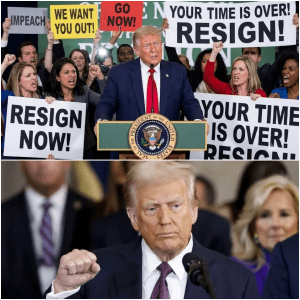
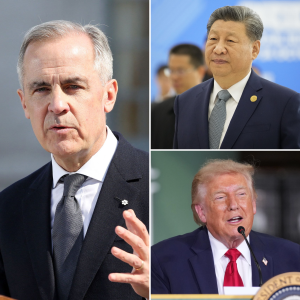
Trump’s 100% Tariff Panic: How a Canada–China Deal Triggered His Biggest Trade Threat Yet
Donald Trump’s sudden threat to impose a 100% tariff on all Canadian goods stunned markets and allies alike, not because it reflected a new trade reality, but because it exposed a sharp political reversal driven by panic. Just one week earlier, Trump had publicly praised Canada’s trade deal with China. Now, the very same agreement was framed as an existential threat to the United States, revealing a deeper fear: Canadian economic independence.

The controversy began after Canadian Prime Minister Mark Carney finalized a targeted trade agreement with Beijing aimed at relieving pressure on Canadian farmers. China had imposed punishing tariffs on canola, pork, lobster, and peas in retaliation for Canada’s earlier tariffs on Chinese electric vehicles. Carney’s deal reduced EV tariffs for a limited number of Chinese imports while unlocking billions in agricultural exports for Canada. It was conventional trade diplomacy—and Trump initially called it “a good thing.”
The tone shifted dramatically after Carney took the global stage at the World Economic Forum in Davos. In a widely praised speech, he argued that the rules-based international order was breaking down and that middle powers like Canada must build “strategic autonomy.” Without naming Trump, Carney criticized the weaponization of tariffs, supply chains, and financial systems. The message was clear: Canada would no longer rely on any single great power for its economic survival.

Trump’s response was immediate and furious. After Carney rejected the idea that “Canada lives because of the United States,” Trump rebranded the China deal as a plot to turn Canada into a conduit for Chinese goods and threatened 100% tariffs on all Canadian imports. The logic didn’t hold. The EVs in question were destined for Canada, not the U.S., and the agreement had no mechanism for re-exporting Chinese goods south of the border.
Economically, the threat was reckless. Canada exported more than $350 billion in goods to the United States in 2024, including energy, lumber, metals, and auto parts critical to American industries. Doubling prices overnight would devastate U.S. manufacturers and consumers while violating the USMCA trade agreement that Trump himself negotiated. Yet none of that appeared to matter, because the threat wasn’t really about trade.
At its core, Trump’s reaction revealed anxiety over lost leverage. For decades, Canada’s heavy dependence on U.S. markets gave Washington enormous influence. Carney is systematically dismantling that dependence by diversifying trade ties—with China on agriculture, Europe on critical minerals, Qatar on LNG, and new infrastructure to bypass U.S. transit routes. Each alternative market weakens America’s ability to coerce.
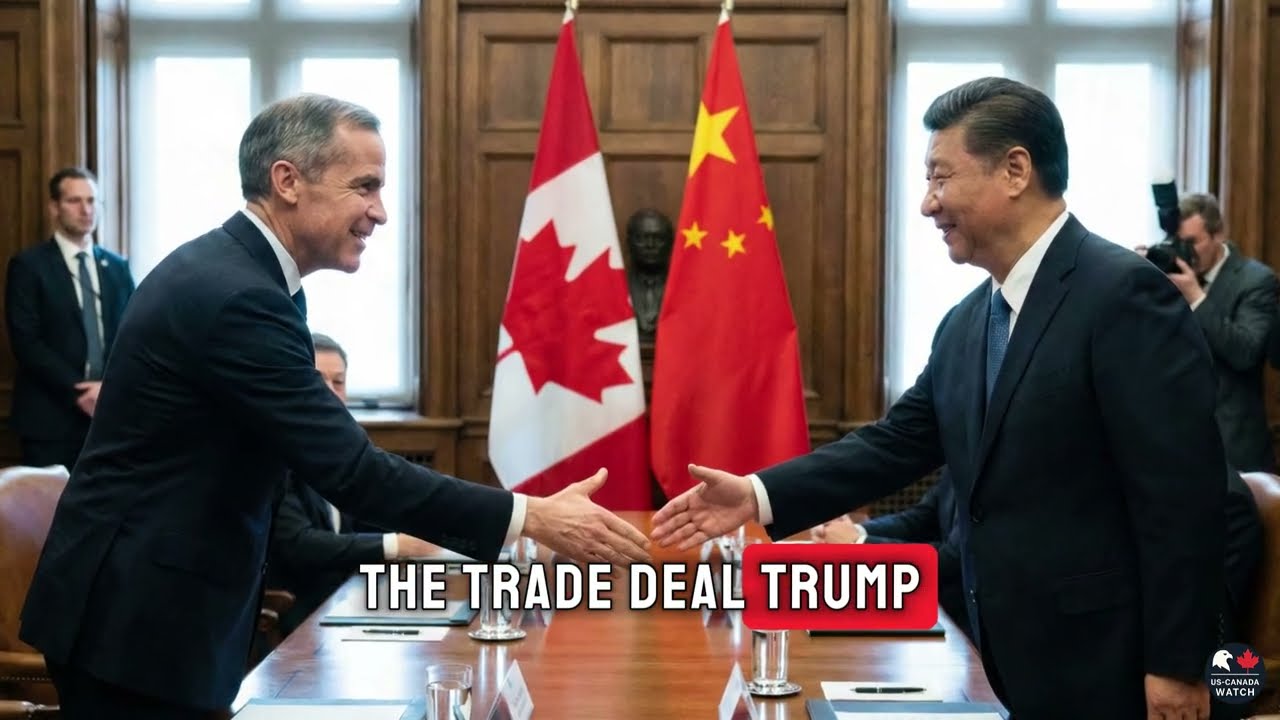
The China deal became a trigger not because of its contents, but because Carney framed it as part of a broader strategy of independence. Trump was comfortable with Canada making tactical deals—so long as it remained subordinate. Once Canada openly articulated a future less reliant on American dominance, the same deal transformed in Trump’s mind from “smart diplomacy” into a threat requiring punishment.
Whether the 100% tariff threat is enforceable remains doubtful. It would face legal challenges, congressional resistance, and fierce opposition from U.S. business groups. But the damage is already done. The uncertainty alone signals to Canadian companies—and other middle powers—that American market access under Trump is unstable and politically contingent.
In the end, Trump’s tariff threat didn’t demonstrate strength. It confirmed Carney’s argument. When economic relationships are governed by coercion rather than reliability, countries will seek alternatives. Canada’s China deal wasn’t an act of defiance—it was an act of adaptation. Trump’s panic shows exactly why that adaptation is accelerating.