When the Crowds Turn: Trump, Public Rejection, and the Cracks in a Political Persona
By early February 2026, a striking political fact had begun to settle into Washington’s consciousness: President Donald Trump, a man whose rise was inseparable from roaring crowds and choreographed displays of public adoration, was now actively avoiding them.
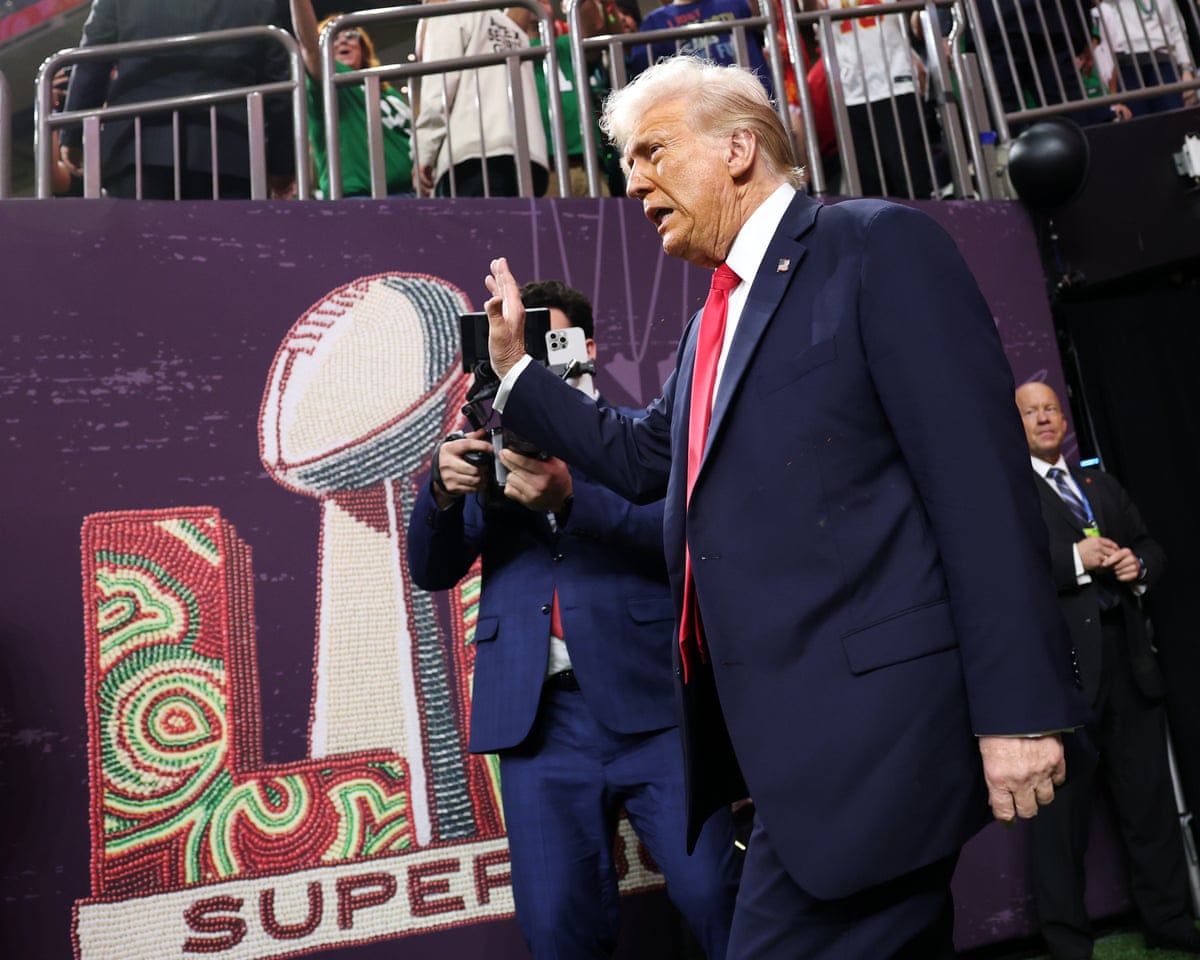
His absence from Super Bowl LX at Levi’s Stadium in Santa Clara, California, marked more than a scheduling decision. According to multiple reports, including accounts from administration officials speaking anonymously, the president’s advisers concluded that appearing at the most-watched sporting event in the country carried an unacceptable risk: that Trump would be loudly booed on live television by a national audience exceeding 100 million viewers. The White House publicly cited distance as the reason for his absence. Privately, aides feared humiliation.
For a president who has built his political identity on spectacle, dominance, and the visible affection of crowds, the decision to stay away signaled something deeper than optics. It suggested anxiety—about approval ratings, about public sentiment, and about the durability of a political brand that has depended, for a decade, on the illusion of overwhelming popular support.
The moment comes amid a growing pattern. Over the past year, Trump has repeatedly encountered public hostility in spaces beyond his carefully curated rallies. At a Washington Commanders game in November 2025, he was booed so loudly during a jumbotron appearance that commentators noted the reaction drowned out stadium audio. At the Kennedy Center earlier that year, the audience jeered as Trump and Melania Trump entered the opening night of Les Misérables, a musical centered on rebellion against tyranny. In January 2026, during a tour of a Ford F-150 assembly plant in Dearborn, Michigan, a union worker shouted an accusation referencing the Epstein files. Trump stopped, pointed at the worker, mouthed “F— you,” and raised his middle finger—an exchange captured on video and replayed across national media.
That worker, 40-year-old UAW line employee T.J. Sabula, was suspended by Ford pending investigation. But within 48 hours, he had raised nearly $500,000 in public donations, becoming an unlikely symbol of working-class defiance. “I had a chance to say what millions of people are thinking,” Sabula later told The Washington Post. “And I took it.”
These incidents are often reported individually, as isolated flashes of controversy. Taken together, however, they tell a more consequential story: Trump’s most vital political asset—crowd energy—may be eroding in real time.

Trump’s rise has always been inseparable from mass enthusiasm. From the escalator descent in 2015 to the stadium rallies of his first campaign, visible devotion has served as both proof and performance of power. The crowds were not incidental; they were the message. They intimidated Republican rivals, energized conservative media, and projected inevitability. Even critics acknowledged that Trump’s ability to command attention, and loyalty, was unmatched in modern American politics.
But the crowds now appear less predictable—and less forgiving.
Polling underscores the shift. Trump’s national approval rating hovers in the low 40s, with disapproval approaching 55 percent. Among independents, approval has fallen below 30 percent. Support among voters under 35 and Latino voters has dropped sharply since his inauguration. On immigration—long considered his strongest issue—recent surveys show a majority of Americans believe enforcement has gone too far. Economic confidence has also weakened, as tariffs, inflationary pressures, and slowing manufacturing employment weigh on household finances.
These numbers help explain why public reactions have changed. Stadiums and theaters are not partisan focus groups; they are mixed audiences, reflective of a broader cross-section of the country. Booing in those spaces is difficult to dismiss as elite backlash or activist protest. It is visceral, audible, and unfiltered.
For Trump, who has historically responded to dissent with escalation or ridicule, this kind of rejection poses a unique challenge. His political style depends on dominance, not resilience. Where past presidents absorbed heckling with indifference or humor, Trump has often responded personally, even emotionally. The Ford factory incident was notable not just for its crudeness, but for its symbolism: a president visibly rattled by a single voice from below.
The decision to skip the Super Bowl crystallized these tensions. The event combined every risk Trump’s advisers feared: a deep-blue state, fan bases from politically mixed regions, and musical performers who have publicly criticized his administration. Even the presence of federal immigration agents—initially rumored—was quietly abandoned after concerns about backlash. The administration retreated before the public ever saw it happen.
That retreat carries implications beyond embarrassment. Trump’s leverage within his own party has long rested on perceived popularity. Republican lawmakers, especially those in swing districts, have tied their fortunes to his ability to energize voters. But as midterm elections approach, the calculus may be changing. A president who draws boos rather than cheers is a liability, not a shield.
Internationally, the symbolism matters as well. Strongman politics rely on the appearance of control—at home first, abroad second. When domestic audiences visibly reject a leader, foreign governments take note. Recent standoffs over trade, immigration, and foreign policy have already shown limits to Trump’s influence. Public rejection accelerates that erosion.
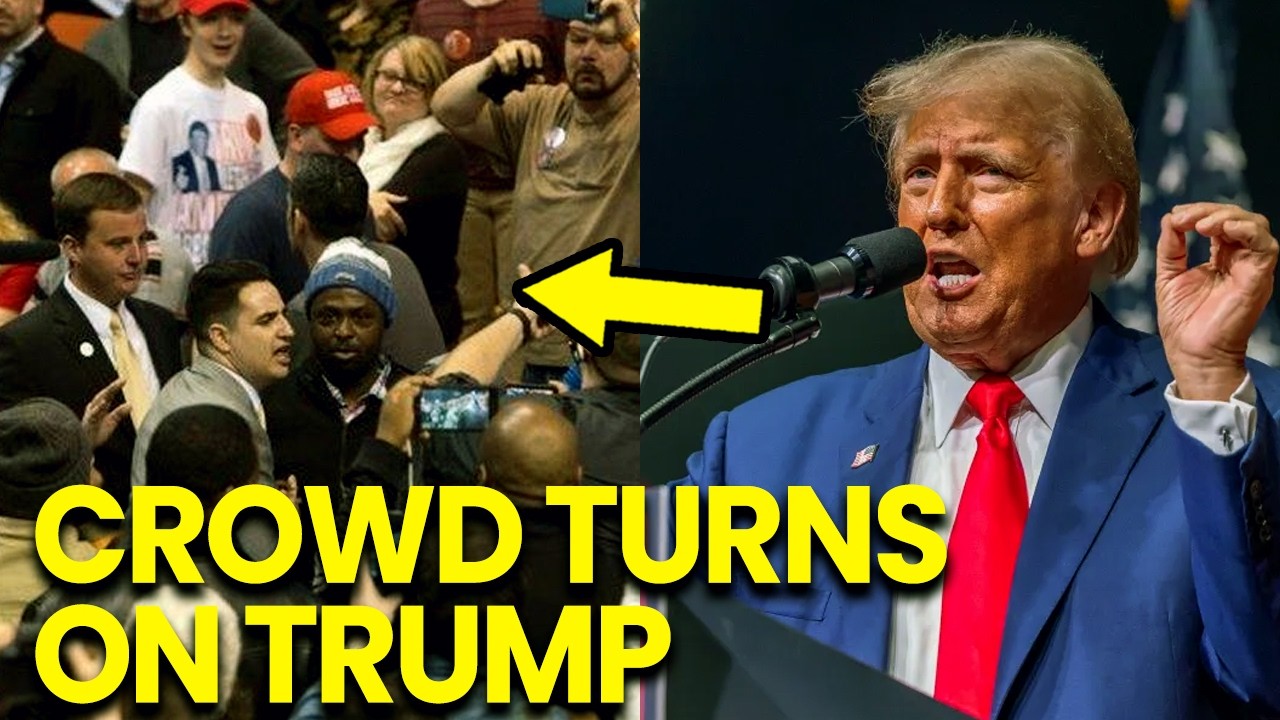
None of this suggests Trump’s base has vanished. His supporters remain loyal, vocal, and influential, particularly in Republican primaries. But the coalition that once felt expansive now appears narrower. And Trump, who has always relied on the roar of the crowd as affirmation, seems increasingly aware of that contraction.
There is a reason Trump has obsessed over crowd size since the beginning of his political career. Crowds are not just applause; they are mirrors. They reflect power back to the person who seeks it. When that reflection changes—when cheers turn to boos, when stadiums become unpredictable—the effect is destabilizing.
The Super Bowl passed without Trump in attendance. But the broader question remains unresolved. A president cannot govern indefinitely from controlled environments. At some point, public exposure is unavoidable. And each unfiltered reaction chips away at the persona that has defined Trump’s politics for more than a decade.
What has changed is not simply public opinion. It is the dynamic between a leader and the crowd. And once that relationship fractures, it is exceedingly difficult to restore.
For a president who once thrived on the belief that “everybody loves me,” the silence—and the boos—may be the loudest signal of all.