Trump’s Tax Returns Reignite Questions About Wealth, Power, and the Limits of Accountability
By any conventional measure, the release of Donald J. Trump’s long-guarded tax returns should have been a procedural footnote — a routine exercise of congressional oversight authority, affirmed by the courts and carried out under long-standing law. Instead, the disclosures have reopened one of the most persistent and unresolved questions of the Trump era: whether the nation’s most powerful institutions apply equally to its most powerful individual.
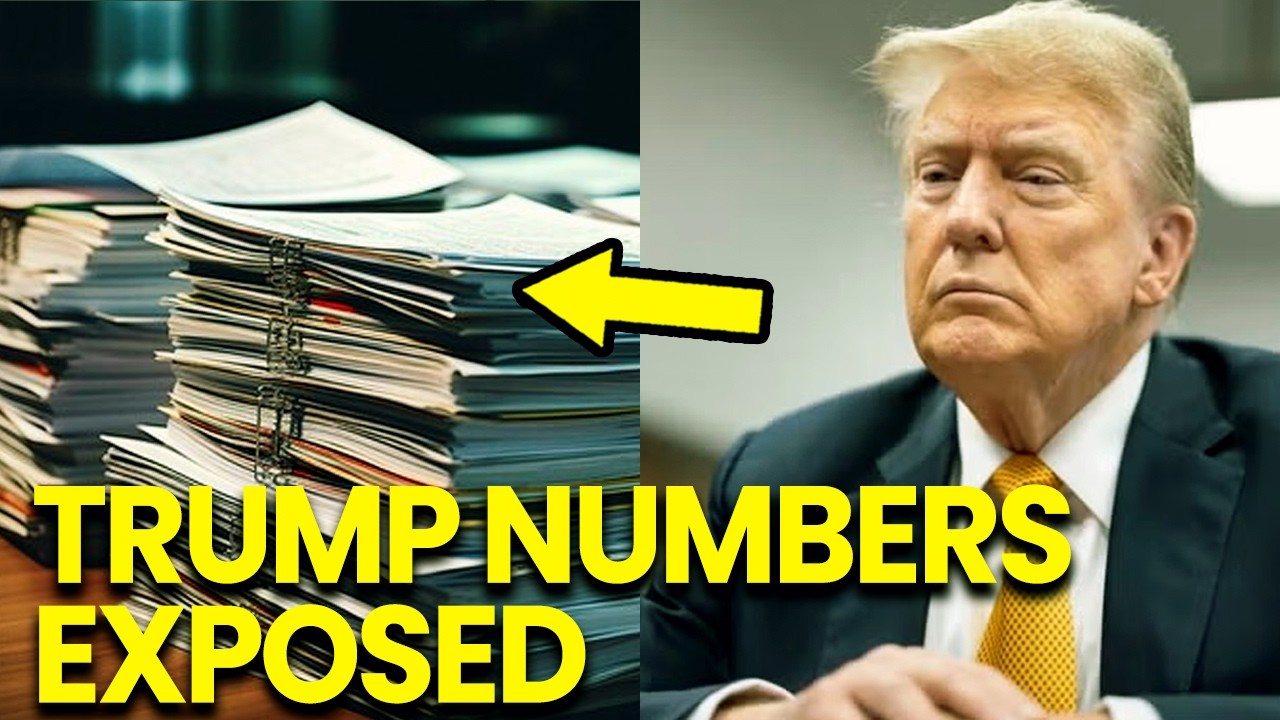
The tax documents, released by the House Ways and Means Committee after years of litigation, reveal a portrait of Mr. Trump that diverges sharply from the image he has long cultivated — that of a self-made billionaire whose business acumen justifies both his wealth and his political authority. Over decades, the filings show, Mr. Trump reported extraordinary losses, paid minimal federal income taxes in key years, and benefited from an Internal Revenue Service audit process that appears to have stalled while he was president.
Taken together, the records do not establish illegality. But they illuminate a system in which aggressive tax strategies, institutional deference, and political power converge — raising difficult questions about fairness, transparency, and accountability at the highest levels of American government.
A Record of Losses
The most striking figures in the released returns span the late 1980s and early 1990s, a formative period in Mr. Trump’s business career. From 1985 to 1994, according to contemporaneous reporting and IRS data cited by Congress, Mr. Trump reported approximately $1.17 billion in cumulative business losses across casinos, hotels, real estate ventures, and other enterprises.
At the time, federal officials tracking high-income taxpayers found that Mr. Trump’s losses exceeded those of nearly every other wealthy filer under review. Far from an isolated downturn, the figures suggest a sustained period of financial distress that contradicts the public narrative Mr. Trump later promoted through branding, television, and political campaigning.
Supporters argue that losses are common in capital-intensive industries and that tax law permits the use of those losses to offset future income. Critics counter that the scale and duration of the reported losses undermine claims of exceptional business success — especially when juxtaposed with Mr. Trump’s insistence that his wealth reflects unique managerial skill.
Minimal Taxes at the Apex of Power

The returns also show that in 2016 and 2017, the year Mr. Trump was elected president and his first year in office, he paid a total of $750 in federal income taxes — or $375 per year.
The explanation lies largely in depreciation deductions and other write-offs permitted under the tax code, particularly for real estate holdings. Mr. Trump’s companies reported substantial revenue in some years while simultaneously claiming paper losses that reduced taxable income to near zero.
Tax experts note that such strategies are widely used by wealthy individuals and are not inherently unlawful. Yet the optics are difficult to ignore. During the same period, millions of Americans earning modest wages paid thousands of dollars annually in federal taxes, while the president of the United States contributed a sum comparable to a single utility bill.
“The issue is not simply legality,” said one former Treasury official. “It’s legitimacy. The tax system depends on public confidence that everyone plays by the same rules.”
An Audit That Did Not Happen
Perhaps the most consequential revelation involves what did not occur. According to a report by the House Ways and Means Committee, the IRS failed to conduct a mandatory audit of Mr. Trump’s 2017 tax return while he was in office. The agency did not begin the audit until 2019, after his term had ended, and did not complete it during his presidency.
Under long-standing IRS policy, the returns of sitting presidents are to be automatically audited to avoid conflicts of interest and ensure compliance. The lapse raises questions about whether the agency lacked resources, independence, or political will during Mr. Trump’s tenure.
The committee stopped short of alleging direct interference, but lawmakers from both parties acknowledged that the delay was highly unusual. For critics, it reinforced concerns that federal institutions bent — or hesitated — when confronted with presidential power.
A Lawsuit and a Counterargument
Mr. Trump has responded by filing a $10 billion lawsuit against the IRS, claiming that the release of his tax information caused reputational harm and violated his privacy.
Legally, the case faces steep obstacles. Federal courts have already ruled that Congress acted within its authority in obtaining and releasing the returns. The Ways and Means Committee invoked a specific statute granting lawmakers access to tax information for oversight purposes — a power affirmed by the judiciary.
Politically, the lawsuit underscores a familiar strategy: reframing damaging disclosures as personal persecution. Mr. Trump argues that the harm stems from the act of disclosure itself. His critics counter that any reputational damage flows from the contents of the returns, not their release.
A Broader Pattern
The tax revelations arrive amid heightened scrutiny of the Trump administration’s relationship with federal law enforcement and regulatory agencies. Congressional testimony has raised concerns about the politicization of the Justice Department and the reorientation of FBI priorities. At the same time, debates continue over immigration enforcement, executive authority, and the independence of federal institutions.
While none of these issues are legally dependent on Mr. Trump’s tax filings, together they form a consistent narrative: a presidency marked by the concentration of power, the erosion of norms, and persistent conflicts between personal interest and public duty.
What It Means Going Forward
As the 2026 midterm elections approach, Democrats are expected to foreground the tax disclosures as evidence of systemic inequality and elite privilege. Republicans, for their part, argue that Mr. Trump followed the law and that criticism of his taxes reflects hostility toward wealth itself.
For voters, the question may be less about technical compliance than about trust. Does the tax system operate fairly? Are oversight mechanisms strong enough to restrain a determined executive? And should the rules governing wealth and power be reconsidered in light of what the returns reveal?
The answers will shape not only the next election cycle, but the broader debate over whether American institutions can withstand the pressures placed upon them by extraordinary political and personal power.
What Mr. Trump’s tax returns ultimately show is not a single scandal, but a system under strain — one in which legality, legitimacy, and accountability do not always align.