A Judiciary Pushes Back as Trump Tests the Limits of Presidential Power
In a striking display of institutional resistance, the federal judiciary has emerged as the most consistent and consequential check on President Donald Trump’s second-term agenda, issuing a cascade of rulings that have blocked, narrowed, or outright invalidated some of his most aggressive uses of executive power. From trade and immigration to spending authority and emergency powers, judges across the country — including many appointed by Mr. Trump himself — have concluded that the president has repeatedly exceeded the bounds of his constitutional authority.

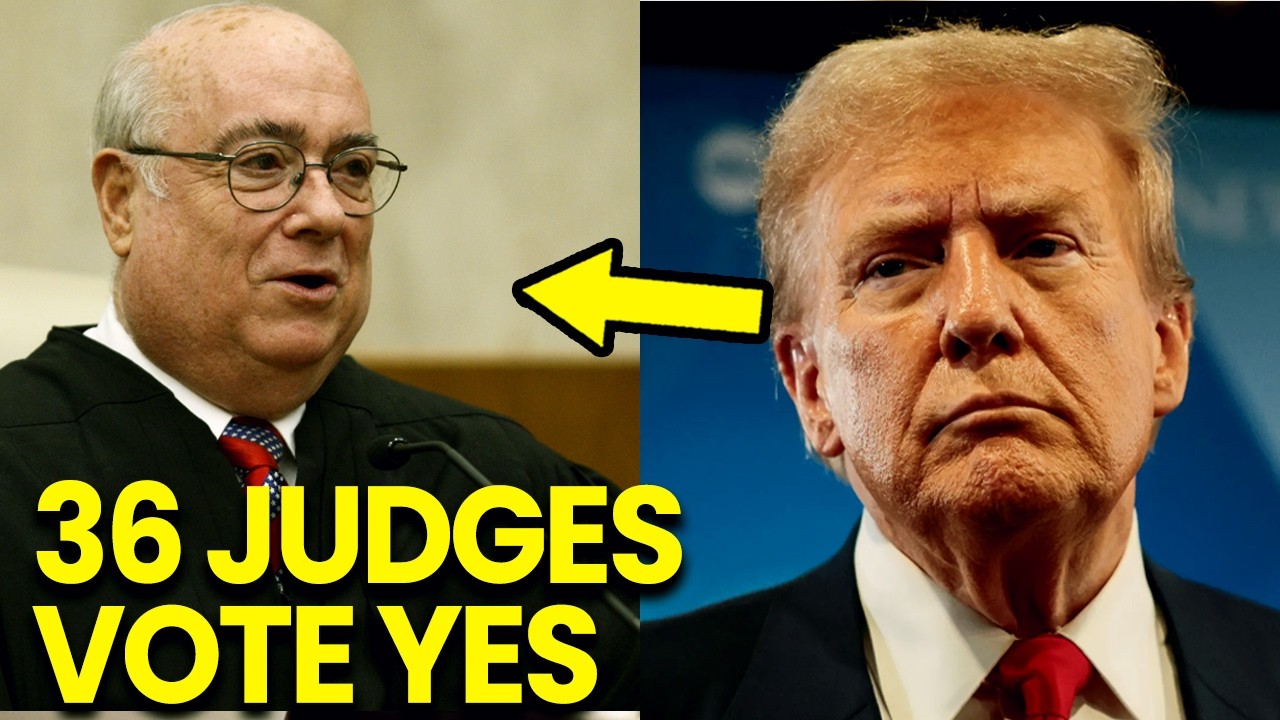
The pattern is unprecedented in its scale. Legal scholars estimate that more than three dozen federal judges, spanning district courts, appellate courts and specialized tribunals, have ruled against the administration in a wide array of cases since early 2025. While every presidency faces legal setbacks, the breadth, consistency and bipartisan nature of these decisions have raised profound questions about governance, the rule of law and the durability of America’s system of checks and balances.
That judicial resistance reached a symbolic peak this week when the Supreme Court, in a 6–3 decision, sharply limited the ability of individual lower-court judges to issue nationwide injunctions that block federal policies from taking effect. Writing for the conservative majority, Justice Amy Coney Barrett argued that some district courts had gone too far in halting executive actions across the entire country. President Trump celebrated the ruling as a victory over what he described as “crazy radical left judges.”
Yet the decision offered Mr. Trump less substantive relief than his rhetoric suggested. The court did not rule on the constitutionality of his executive order seeking to curtail birthright citizenship — an issue rooted in the 14th Amendment — instead leaving that question to continue working its way through the lower courts. In jurisdictions where the order has not been challenged, it may take effect temporarily, but its long-term fate remains uncertain.
More broadly, the ruling did little to blunt the steady flow of judicial defeats that have dogged the administration. In case after case, judges have concluded that the president has pushed emergency powers and executive authority beyond what federal law allows.
The most consequential losses have come in the realm of trade. In May 2025, the United States Court of International Trade struck down Mr. Trump’s sweeping emergency tariff program, which imposed broad duties on imports from multiple countries under the International Emergency Economic Powers Act. The court ruled that the statute did not grant the president authority to restructure global trade on such a scale without congressional approval.
Rather than recalibrate, the administration appealed — and lost again. Sitting en banc, the United States Court of Appeals for the Federal Circuit affirmed the lower court’s ruling, with a majority of active judges agreeing that the tariffs were unlawful. The decisions dismantled what had been a cornerstone of Mr. Trump’s economic agenda and sent shock waves through financial markets.
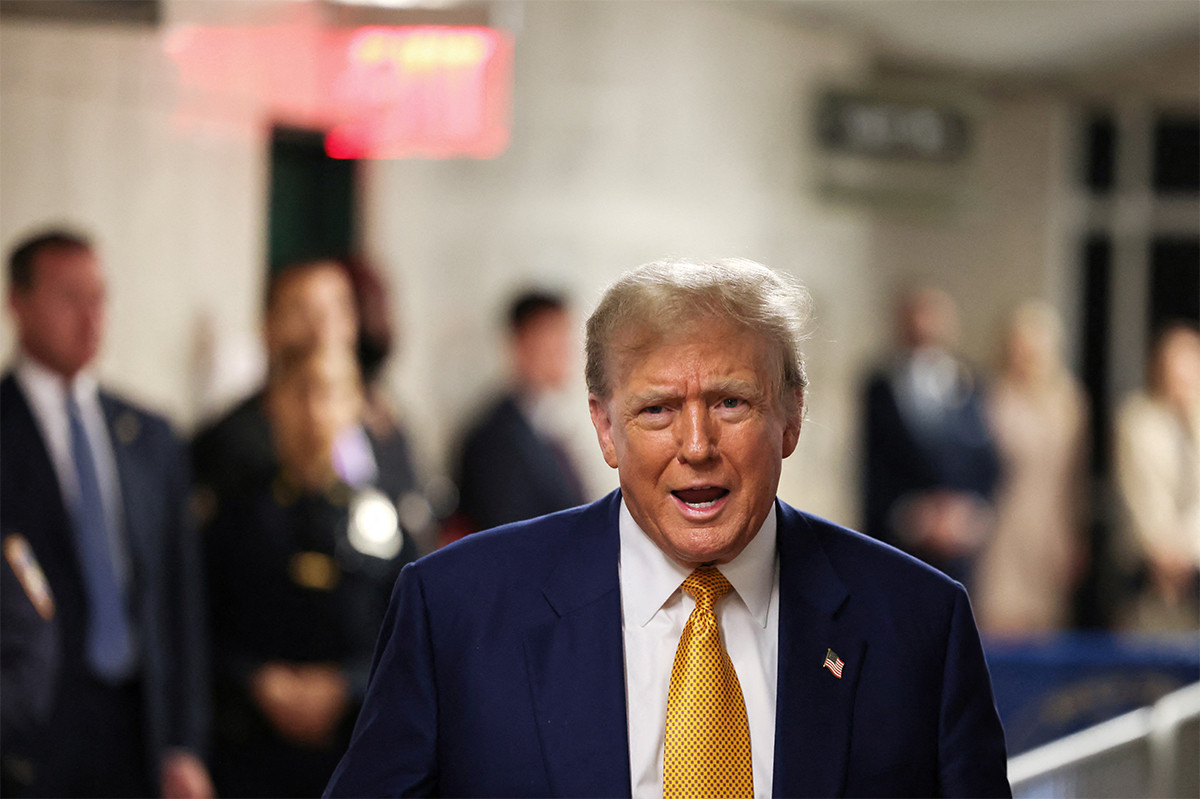
Similar patterns have played out elsewhere. Federal judges have blocked efforts to dismantle immigration programs without congressional authorization, ordered the release of disaster aid and other funds that the administration sought to withhold, and ruled that the president cannot simply refuse to spend money that Congress has already appropriated. According to tracking by The New York Times, these rulings span multiple policy areas and judicial districts, underscoring a systemic rather than episodic rebuke.
What makes the pushback particularly notable is its source. Many of the judges involved are Republican appointees, including some nominated by Mr. Trump during his first term. Their rulings complicate any claim that the decisions are driven by partisan hostility rather than legal judgment. As one conservative legal scholar put it, “When your own judges are telling you that you’ve crossed the line, it’s no longer plausible to argue that the courts are acting as a political opposition.”
Even the Supreme Court, with its six-justice conservative majority, has drawn limits. In several separation-of-powers cases, the justices have declined to endorse the administration’s most expansive theories of executive authority, signaling that sympathy for strong presidential power does not extend to ignoring statutory or constitutional constraints.
These judicial findings are now reverberating beyond the courts. On Capitol Hill, they have become central to a renewed push for impeachment. A House resolution, H. Res. 353, accuses Mr. Trump of multiple high crimes and misdemeanors, including usurping Congress’s power of the purse, abusing trade authority and engaging in what the resolution explicitly labels “tyranny.” The language mirrors, almost point for point, the legal conclusions reached by judges who have ruled against the administration.
Supporters of impeachment argue that the courts have effectively done much of the evidentiary work. Each ruling that finds the president acted unlawfully, they contend, strengthens the constitutional case that he is unfit to serve. Advocacy groups have echoed that argument, saying that when a president repeatedly defies the law and attacks judges who enforce it, impeachment becomes not a political choice but a constitutional necessity.
Mr. Trump’s response has been characteristically combative. He has taken to social media to denounce individual judges by name, accuse the judiciary of corruption and portray adverse rulings as part of a broader conspiracy against him. Legal experts across the ideological spectrum warn that such attacks risk undermining public confidence in the courts and, in extreme cases, could threaten judicial independence and personal safety.
A coalition of civil rights organizations recently issued an open letter urging lawyers and judges to speak out in defense of the legal system, warning that sustained attacks from the executive branch pose a danger to the rule of law itself. “This is not ordinary criticism,” the letter said. “It is an attempt to delegitimize any institution that enforces limits on presidential power.”
For now, the courts continue to rule, Congress continues to debate impeachment, and the president continues to test the boundaries of both. What emerges is a rare and consequential moment in American governance: a sustained confrontation between the executive branch and the institutions designed to restrain it.
Whether that confrontation ends in impeachment, resignation or a recalibration of presidential power remains uncertain. But the legal record is already clear. Dozens of judges, across courts and ideologies, have concluded that President Trump has gone too far. In a system built on the premise that no one is above the law, those rulings carry weight — and, ultimately, consequences.