A Senator’s Call to Invoke the 25th Amendment Rekindles a Rare Constitutional Debate
Washington — A renewed call by a Democratic senator to consider removing President Donald J. Trump from office under the 25th Amendment has reopened one of the most fraught and rarely used mechanisms in the U.S. Constitution, reigniting debate over presidential fitness, executive power, and the limits of political disagreement.
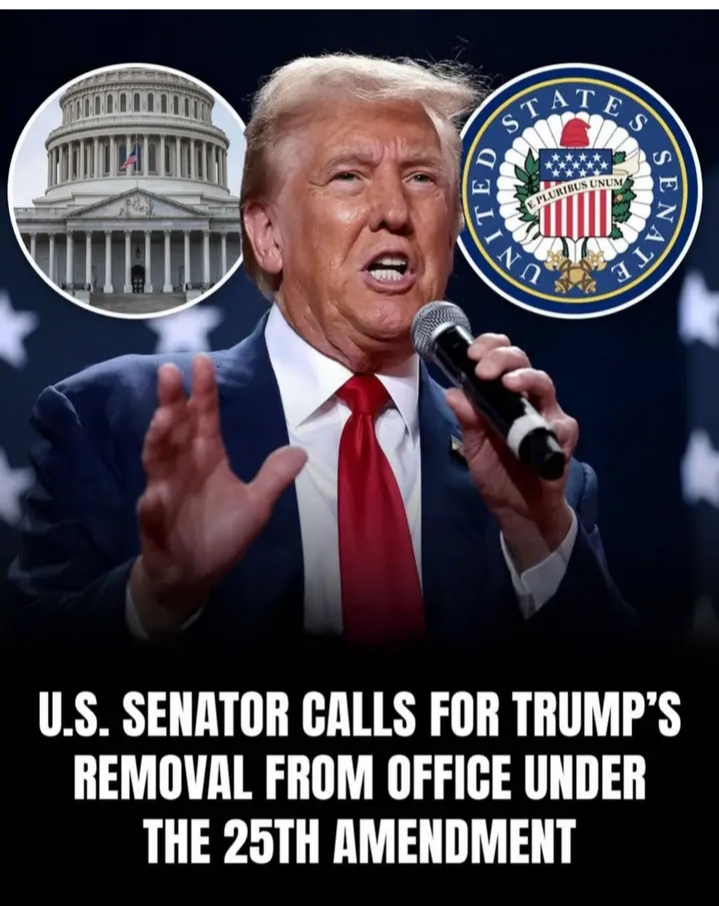
The call came this week from Senator Edward J. Markey of Massachusetts, who cited President Trump’s recent comments and actions related to Greenland and broader geopolitical tensions as evidence, in his words, of conduct that raises questions about the president’s ability to carry out the duties of his office. In a statement circulated widely on social media platforms including X, Instagram, and Threads, Mr. Markey said the amendment exists precisely for moments when a president is “unfit to lead.”
Several Democratic lawmakers echoed the sentiment in interviews and online posts, urging Vice President JD Vance and members of the Cabinet to consider action under Section 4 of the amendment. That provision allows the vice president and a majority of the Cabinet to declare the president “unable to discharge the powers and duties of his office,” temporarily transferring authority to the vice president.
No such declaration has been made, and there is no indication that senior administration officials are considering it. Still, the remarks have thrust the 25th Amendment back into the center of public discussion, prompting reactions from constitutional scholars, political leaders, and voters across the country.
A Rarely Used Constitutional Tool
The 25th Amendment, ratified in 1967 in the aftermath of President John F. Kennedy’s assassination, was designed primarily to address presidential incapacity due to illness or injury. It has been invoked several times to allow temporary transfers of power during medical procedures, most recently when presidents underwent anesthesia for surgery.
Section 4, however, has never been fully used. It was drafted with extreme scenarios in mind — such as severe physical or mental incapacity — and sets a high bar for action. If the president contests the declaration, Congress must decide the matter, requiring a two-thirds vote in both chambers to sustain the transfer of power.
Because of those thresholds, legal experts say, the amendment is not easily adapted to situations involving controversial rhetoric, erratic behavior, or disputed policy decisions.
“Political disagreement, even intense disagreement, does not equal incapacity,” said Pamela Karlan, a constitutional law professor at Stanford, in a recent interview on MSNBC. “The framers of the amendment were very clear that this was not meant to be a substitute for elections or impeachment.”
Social Media Fuels the Debate
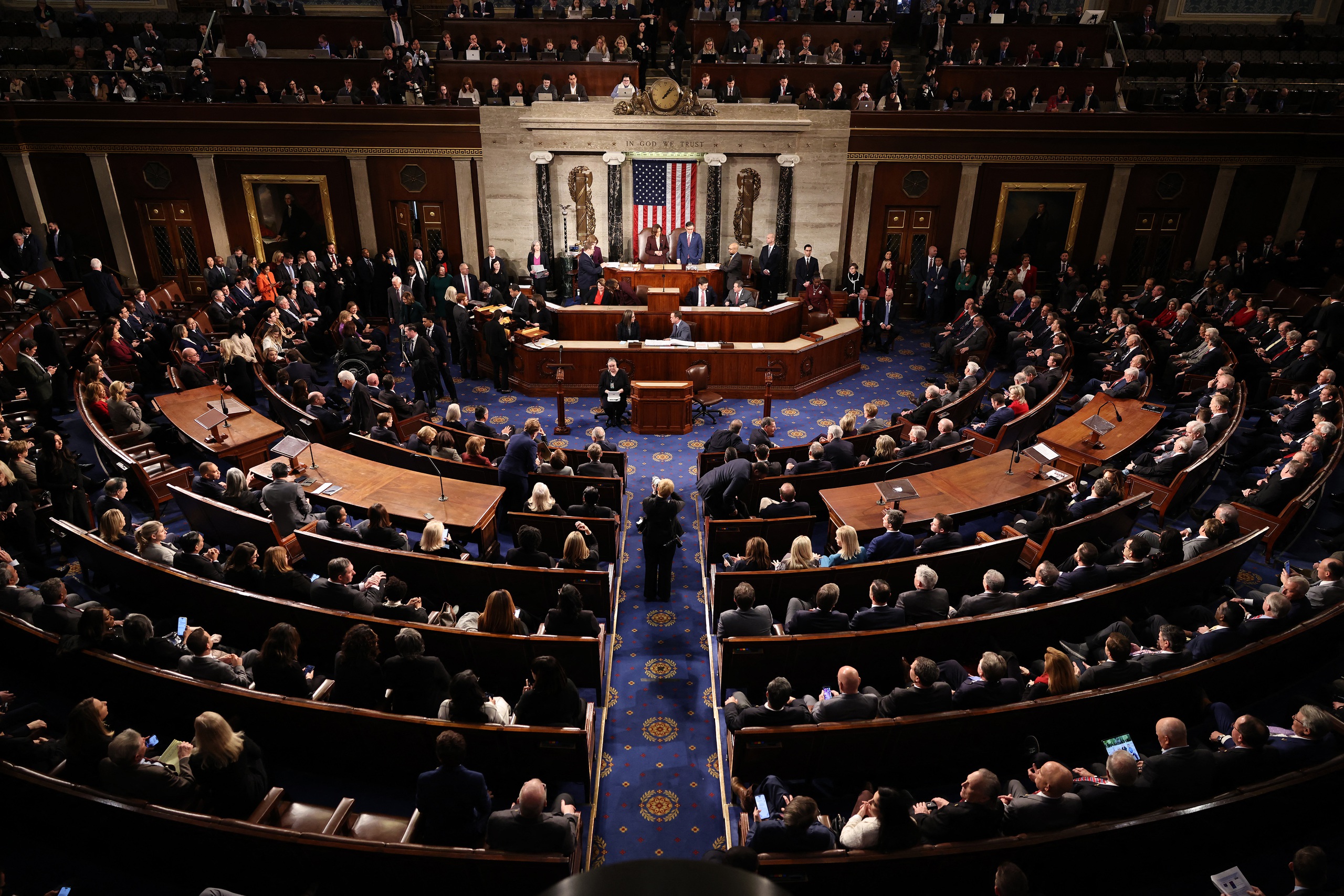
While Capitol Hill remains largely unmoved, the debate has gained traction online. Influential political commentators, journalists, and advocacy groups amplified Mr. Markey’s remarks, with hashtags referencing the 25th Amendment trending intermittently on X. Clips of past discussions about the amendment — including commentary from Trump’s first term — resurfaced on TikTok and YouTube, drawing millions of views.
Some users framed the moment as a necessary intervention to protect democratic norms, while others accused Democrats of weaponizing constitutional tools for partisan ends. Prominent conservative figures dismissed the idea as “performative politics,” arguing that it undermines electoral legitimacy.
The White House did not directly respond to Mr. Markey’s comments, but Republican leaders were swift to reject the calls. Speaker Mike Johnson said in a post on X that invoking the 25th Amendment over policy disputes would set “a dangerous and destabilizing precedent.” Senate Minority Leader Mitch McConnell emphasized that the Constitution already provides mechanisms — including impeachment and elections — to address presidential misconduct.
Impeachment Versus Incapacity
The renewed focus on the 25th Amendment has also revived comparisons with impeachment, the more traditional method for confronting alleged presidential wrongdoing. Mr. Trump was impeached twice during his first term, though he was acquitted by the Senate both times.
Many constitutional scholars argue that impeachment, not the 25th Amendment, is the appropriate remedy for allegations involving abuse of power, corruption, or violations of law.
“The amendment is about inability, not unacceptability,” said Jack Goldsmith, a former Justice Department official under President George W. Bush, writing on his legal blog. “Once we start blurring that line, we risk turning a medical safeguard into a political weapon.”
Even some Democrats have expressed caution. In private conversations reported by political journalists, several lawmakers acknowledged that while they are alarmed by the president’s conduct, invoking the 25th Amendment without clear evidence of incapacity would almost certainly fail — and could backfire politically.
Echoes of the Past
This is not the first time the amendment has entered the national conversation during Mr. Trump’s presidency. During his first term, following episodes that critics described as erratic or destabilizing, similar discussions emerged. Former administration officials later confirmed that informal conversations about the amendment took place, though no formal steps were ever taken.
Those episodes have taken on renewed relevance as the president navigates his current term amid heightened global tensions and a deeply polarized electorate.
Public opinion remains divided. Polling shared widely on social media shows Americans split largely along partisan lines, with Democrats more likely to support extraordinary constitutional measures and Republicans overwhelmingly opposed.
No Immediate Path Forward
Despite the attention, there is no clear path toward invoking the 25th Amendment. The vice president has given no indication of support, and Cabinet members are unlikely to act without overwhelming evidence and bipartisan consensus.
For now, the calls function more as a political statement than a procedural threat — a signal of alarm from critics rather than a prelude to action.
Still, the episode underscores the fragility of constitutional norms in an era of constant media scrutiny and online amplification. As debates that once unfolded quietly among legal scholars now play out in real time across social platforms, the line between constitutional safeguard and political spectacle grows increasingly thin.
Whether the conversation fades or intensifies may depend less on legal doctrine than on events yet to unfold — and on how Americans, through their institutions and their votes, choose to respond.