A World Cup in the Crossfire: How Politics Is Threatening Soccer’s Biggest Stage
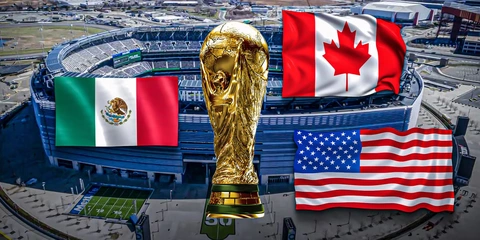
When FIFA awarded the 2026 World Cup to the United States, Canada, and Mexico, the decision was framed as a triumph of openness — a celebration of globalization, multiculturalism, and the unifying power of sport. Three nations, one tournament, and a shared promise to welcome the world.
Eight years later, that promise is under strain.
Across Europe, a conversation once considered unthinkable has begun to surface in mainstream political and sporting circles: whether national teams should boycott the 2026 FIFA World Cup if their supporters are unable to attend.
The trigger is not football. It is immigration policy.
A Hypothetical Crisis That No Longer Feels Hypothetical
In recent weeks, a German politician, Jürgen Hart, publicly raised the idea of a World Cup boycott in an interview with a national newspaper. In the United Kingdom, members of Parliament and prominent sports commentators have openly questioned whether England and Scotland should participate in a tournament where fans could be barred at the border.
These statements follow growing anxiety over the possibility that a future U.S. administration could expand travel restrictions in the lead-up to the tournament — potentially affecting citizens from Europe, Africa, and the Middle East, including countries whose national teams have already qualified.
While no such policy has been officially announced, analysts across American media platforms — from Politico to The Atlantic — have warned that even the perception of restrictive entry rules could be enough to destabilize the tournament.
On X (formerly Twitter), posts by immigration lawyers, former diplomats, and sports economists have gone viral, highlighting a central fear: that teams may be able to enter the United States, but their fans may not.
For a World Cup, that distinction is existential.
The Fan Problem FIFA Cannot Solve
The World Cup is not the Olympics. It is not a closed, credential-only event. Its atmosphere — and its economic model — depends on mass international travel.
According to FIFA’s own historical data, World Cups typically attract between 1.5 and 2 million foreign visitors. Those visitors do not simply watch matches. They fill hotels, restaurants, bars, transit systems, and city centers.
Yet under the scenario increasingly discussed by policy analysts, fans from certain regions could face longer visa processing times, higher fees, and security screening timelines incompatible with a month-long sporting event.
For supporters in parts of Africa, the Middle East, and Eastern Europe, the barrier would not be inconvenience — it would be impossibility.
That reality has already begun to ripple through the tourism industry. Industry projections cited by hospitality analysts on CNN and CNBC suggest that uncertainty alone could cost host cities billions in lost bookings. Atlanta, Dallas, Miami, and Los Angeles — all major U.S. host cities — have reportedly seen spikes in tentative cancellations for summer 2026.
“These are early signals,” one U.S. tourism analyst wrote on LinkedIn. “But early signals are how crises begin.”
Europe’s Reaction: From Concern to Leverage
What has shifted the moment from concern to crisis is Europe’s response.
Several European football federations have begun openly questioning whether a World Cup can function without equitable fan access. On British talk shows and in columns published by The Guardian and Der Spiegel, commentators have framed the issue not as a political protest, but as a structural failure.
A boycott, they argue, would not be symbolic — it would be procedural.
This is not without precedent. Sporting boycotts have reshaped Olympic history, cricket tours, and international rugby. But never before has the threat loomed over the World Cup itself.
As one former UEFA official remarked on a widely shared podcast clip, “If fans can’t come, the World Cup isn’t being hosted. It’s being televised.”
FIFA’s Powerlessness Exposed
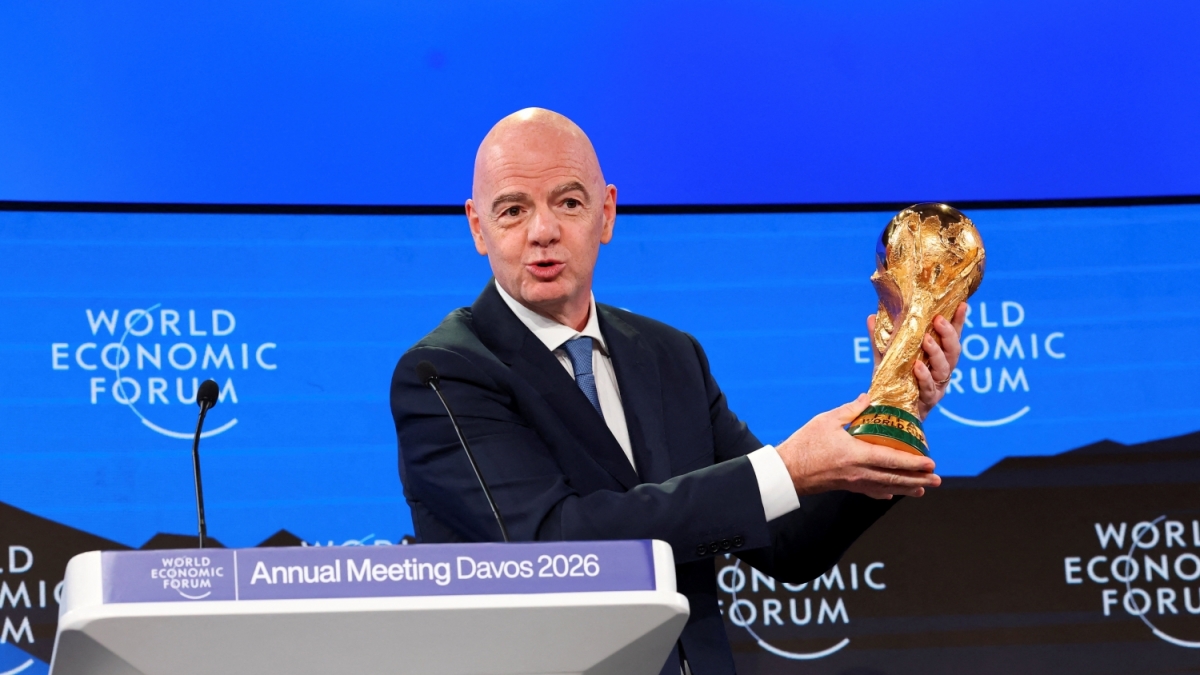
FIFA President Gianni Infantino has repeatedly insisted that the World Cup “belongs to the whole world” and that FIFA is committed to protecting the rights of all fans.
The statement is rhetorically strong — and practically limited.
FIFA has no authority over U.S. immigration law. It cannot override executive orders. It cannot issue visas. And it cannot guarantee entry.
What it can do is plan for failure.
According to emergency scenarios discussed by sports governance analysts, FIFA has quietly explored relocating certain matches — particularly group-stage and Round of 16 games — to Canada and Mexico if access issues worsen.
Such a move would be unprecedented. No World Cup in history has shifted matches away from a host country mid-planning for political reasons.
Yet behind the scenes, the logic is stark: a partial tournament is preferable to a broken one.
Canada and Mexico Step Forward — Quietly
While the United States grapples with political uncertainty, its co-hosts have taken a markedly different approach.
Canada, in particular, has emerged as a stabilizing force. Social media data tracked by travel platforms shows international bookings into Toronto and Vancouver surging well above projections for summer 2026. Stadium renovations were completed ahead of schedule. Transit systems are being expanded. Volunteer programs are already operational.
Mexico, drawing on its experience hosting World Cups in 1970 and 1986, has followed a similar path. Estadio Azteca has undergone a full modernization. Entry policies remain comparatively flexible. Registration interest from South American and European fans has exceeded expectations.
The contrast has not gone unnoticed.
In posts circulating widely on X and Reddit, commentators have framed the issue in blunt terms: while one host builds barriers, the others build trust.
Soft Power on the Line
At its core, the World Cup 2026 dilemma is not only about sport. It is about soft power.
Political scientists frequently cite Joseph Nye’s definition: the ability to attract rather than coerce. Hosting global events — and hosting them well — is one of the most visible expressions of that power.
For the United States, 2026 was meant to be a showcase of renewal. Instead, analysts warn, it risks becoming a case study in self-inflicted reputational loss.
Major international media outlets have already begun framing the story this way: fans denied entry, federations considering withdrawal, FIFA scrambling.
If the world’s largest sporting event cannot be hosted without exclusion, critics ask, what does that say about leadership?
A Tournament at a Crossroads
Nothing described here is yet final. No boycott has been declared. No matches have been moved. No new bans have been confirmed.
But the conversation itself marks a turning point.
For the first time, the integrity of the World Cup is being openly weighed against the domestic politics of its host.
Whether FIFA chooses to redistribute matches, pressure governments, or gamble on political change, the outcome will reshape not just the 2026 tournament, but the future relationship between global sport and national sovereignty.
What happens on the pitch will still matter.
But as this crisis makes clear, what happens at the border may matter even more.