Amazon Faces Backlash After Pulling Melania Documentary From Small Oregon Theater Over Satirical Marquee
Amazon is facing renewed criticism over free speech and corporate overreach after reportedly pressuring a small independent theater in Oregon to cancel screenings of the Melania Trump documentary, following satirical jokes displayed on the theater’s marquee.
The incident, which has since gone viral across social media, highlights growing tensions between massive corporations and local cultural institutions — and raises serious questions about whether satire and artistic expression are being quietly suppressed in the name of brand protection.
A Small Theater, a Big Target
The controversy centers on Lake Theater & Cafe, an independent movie theater located in Lake Oswego, a suburb of Portland, Oregon. Known nationally for its clever, sardonic marquee messages, the theater gained widespread attention during the COVID-19 shutdowns, even earning coverage in The New York Times for its sharp humor and cultural commentary.
Earlier this year, the theater announced upcoming screenings of Melania, a documentary distributed by Amazon-owned MGM, with a series of satirical marquee messages. One referenced Sun Tzu’s The Art of War:
“To defeat your enemy, you must know them. Melania starts Friday.”
Another asked bluntly:
“Does Melania wear Prada?”
The jokes were clearly tongue-in-cheek, aligning with the theater’s long-standing tradition of cultural satire. But according to the theater’s own public statements, Amazon executives were not amused.
Amazon Allegedly Intervenes
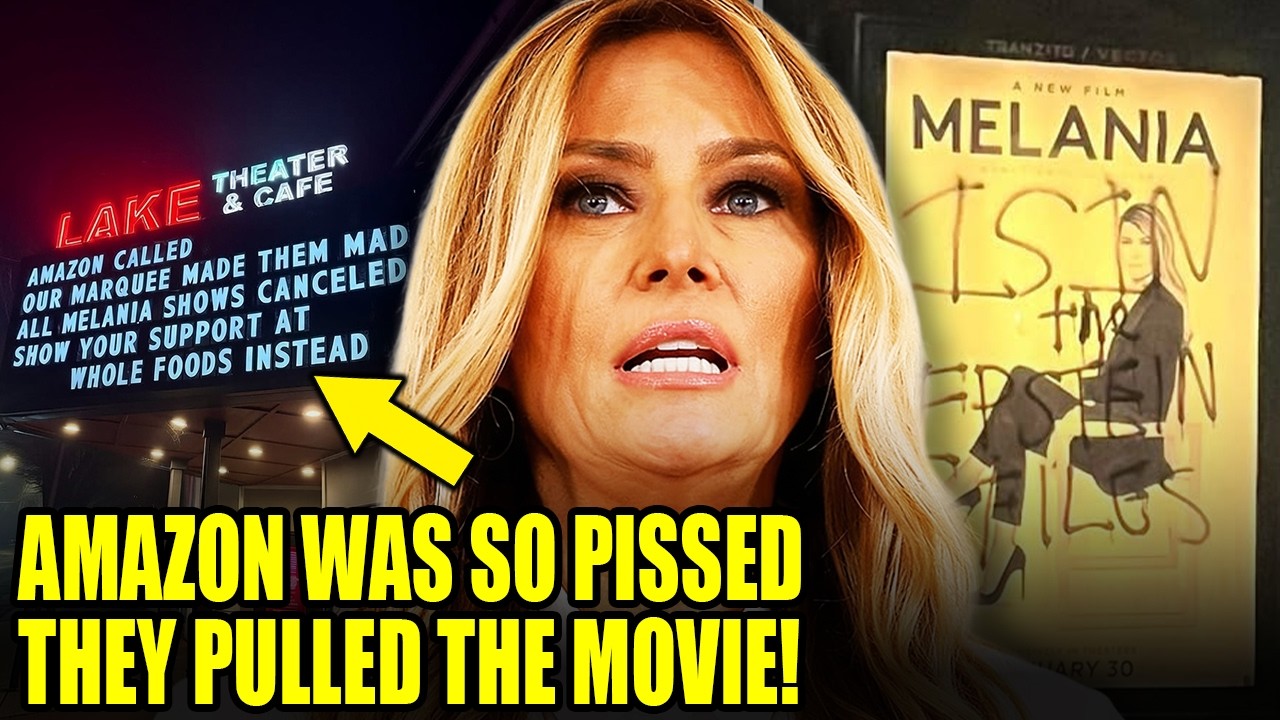
Shortly after the marquee messages went viral, the theater announced that Amazon contacted them directly, objecting to how the film was being marketed. Within days, all remaining screenings of Melania were canceled.
The theater updated its marquee once again — this time turning the satire toward Amazon itself:
“Amazon called our marquee made them mad. All Melania showings canceled. Show your support at Whole Foods instead.”
The message, complete with a frowning face, spread rapidly online, triggering backlash against Amazon from free speech advocates, filmmakers, and progressive commentators.
Social Media Erupts Over Free Speech Concerns
On Instagram, the theater explained that it received “countless emails, voicemails, and Google/Yelp reviews” after the controversy erupted. Some criticized the theater for hosting the documentary at all, while others accused Amazon of silencing satire and bullying a small business.
Critics argue that Amazon’s response demonstrates a troubling pattern: a multi-billion-dollar corporation leveraging its power to control how its content is discussed, even in independent cultural spaces.
“Pulling a film from a local theater over a joke on a marquee is an extraordinary overreaction,” one media analyst noted. “It sends a chilling message to independent theaters everywhere.”
Inside the Melania Documentary Debate
The documentary itself has been widely criticized by reviewers and audiences alike. Many have described it as bland, carefully curated, and devoid of meaningful substance, portraying Melania Trump exclusively on her own terms while avoiding controversial topics.
Film critic and culture contributor British Chris, who viewed the film during its brief run, described the experience as “political waterboarding.”
“Nothing happens,” he said. “It’s scripted, sanitized, and clearly designed to protect an image rather than explore a person.”
The irony, critics say, is that the marquee jokes may have been more honest and engaging than the film itself.
The Economics Behind the Curtain
According to the theater, an $11 ticket to Melania would have sent approximately $5.50 directly to Amazon/MGM, with the remainder covering operational costs. In total, Lake Theater contributed an estimated $196 to the film’s reported $7 million opening weekend gross.
By comparison, reports suggest the documentary cost over $70 million to produce and market, with Melania Trump allegedly receiving $24–28 million upfront.
For many observers, the financial imbalance underscores the absurdity of Amazon’s response.
“A trillion-dollar company targeting a single-screen theater over satire is the definition of punching down,” one commenter wrote.
Satire, Power, and Corporate Sensitivity
The incident has reignited debates over the role of satire in democratic societies. While corporations often champion free expression in theory, critics argue that free speech becomes conditional when profits or political relationships are involved.
Amazon, owned by Jeff Bezos, has increasingly positioned itself as a dominant force in film, television, journalism, and digital infrastructure. With that power comes influence — and, critics argue, responsibility.
“This wasn’t about protecting viewers,” said one media scholar. “It was about controlling narrative and avoiding embarrassment.”
A Cultural Flashpoint in the Streaming Era
The Lake Theater controversy arrives amid broader cultural shifts. Political satire has returned to the center of American discourse, even as corporations appear increasingly sensitive to criticism from either side of the political spectrum.
Ironically, the attempt to suppress the marquee jokes appears to have amplified public interest in both the theater and the controversy — a classic example of the Streisand Effect.
Search interest for “Melania documentary Amazon” and “Lake Theater marquee” spiked sharply after the cancellation, according to trend data.
What This Means Going Forward
For independent theaters, the message is unsettling: showing studio-owned content may now come with unspoken restrictions on commentary and humor.
For Amazon, the backlash risks reinforcing criticism that the company values control over creativity — and brand management over artistic freedom.
And for audiences, the episode serves as a reminder that free speech isn’t usually threatened by governments alone, but also by powerful private actors who decide what is acceptable discourse.
Final Thoughts
In the end, a few jokes on a theater marquee sparked a national conversation about satire, power, and corporate influence in modern media.
Lake Theater & Cafe may have lost a movie screening — but it gained something far more valuable: public support, cultural relevance, and a renewed spotlight on the importance of independent voices.
As one viral comment put it:
“Comedy didn’t lose this round. It just reminded everyone why it matters.”