Appeals Court Reversal Gives Trump a Win — as Leaked Testimony Deepens His Legal Crisis
A New York ruling cuts a massive civil fraud penalty, but newly leaked congressional testimony from Special Counsel Jack Smith intensifies scrutiny of Donald Trump’s conduct on classified documents and January 6.
In a surprise decision that briefly shifted the legal narrative around Donald J. Trump, a New York appeals court on Tuesday overturned a civil fraud penalty that had threatened to cost the former president more than $500 million. The ruling, issued by a five-judge panel in the Appellate Division, described the lower court’s financial sanction as an excessive fine that raised constitutional concerns.
The decision was immediately seized upon by Trump allies as proof that the legal cases surrounding him were overreaching. New York Attorney General Letitia James’s office, however, made clear that it was not abandoning the underlying fraud case and would continue to pursue accountability through other legal avenues.
Yet even as Trump secured a significant reprieve in New York, a far more damaging development emerged in Washington.
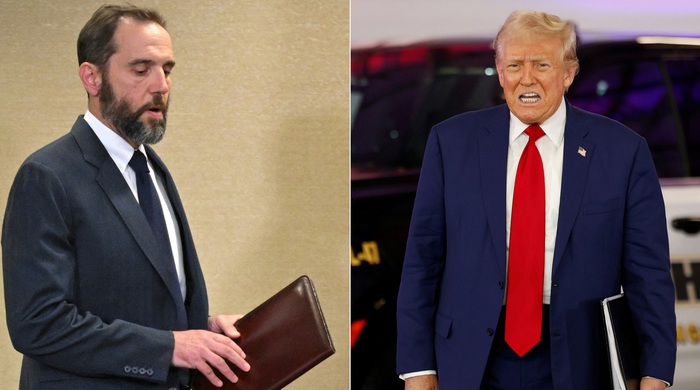
On the same day, a previously sealed transcript of congressional testimony from Special Counsel Jack Smith — given behind closed doors in December 2025 — was leaked in full. The testimony, which had been restricted because it discussed sensitive investigative material, offers the most direct and detailed account to date of Smith’s assessment of Trump’s criminal exposure in the classified documents and election interference investigations.
A Testimony Not Meant to Be Public
Smith, a veteran prosecutor appointed to oversee the federal investigations into Trump’s conduct, appeared before the House Judiciary Committee late last year in a deposition intended to remain confidential. According to committee rules, such testimony is typically sealed to protect ongoing investigations, classified information, and witnesses.
The leaked transcript, however, reveals Smith testifying under oath that investigators uncovered evidence he described as sufficient to establish criminal liability “beyond a reasonable doubt” — the highest standard in American law.
In careful, methodical language, Smith outlined what he said was proof that Trump knowingly retained highly classified materials at his Mar-a-Lago residence and took steps to conceal them from federal authorities. The testimony also detailed Trump’s role in efforts to overturn the 2020 election, including pressure campaigns against state officials and Vice President Mike Pence, as well as his failure to act during the January 6 attack on the Capitol.
Classified Documents in Unsecured Spaces
One of the most striking elements of Smith’s testimony concerns the nature and storage of the classified materials recovered from Mar-a-Lago.
According to the transcript, Smith told lawmakers that Trump possessed documents classified as Top Secret Sensitive Compartmented Information — among the most closely guarded secrets in the U.S. government — and stored them in unsecured locations, including a ballroom and a bathroom. Such materials typically involve intelligence sources and methods, military capabilities, or nuclear-related information.
Smith testified that Trump was repeatedly informed that he was not authorized to retain the documents. Requests from the National Archives were followed by a federal subpoena, which Trump allegedly ignored. Investigators, Smith said, obtained evidence that documents were moved and concealed after Trump became aware of the FBI’s interest.
The testimony cites surveillance footage, witness statements, text messages, and phone records that, according to Smith, show deliberate obstruction of a lawful federal investigation.
January 6 and Election Interference
Smith’s testimony also revisits the events leading up to January 6, 2021. He told lawmakers that his office assembled extensive evidence showing Trump knew he had lost the 2020 election, based on advice from senior aides and the failure of fraud claims in court.
Despite that knowledge, Smith said, Trump continued to promote false claims, supported the fake elector scheme, pressured state officials to alter results, and sought to coerce Pence into rejecting certified electoral votes. Smith described Trump’s conduct on January 6 itself — including his refusal to intervene for hours as the Capitol was attacked — as central to the investigation.
While Smith did not announce new charges in the testimony, his language suggested confidence in the strength of the evidence, repeatedly emphasizing that the case met the standard required for criminal prosecution.
Political Fallout and Public Disorder
The leak had immediate political consequences.
Trump, who has consistently dismissed all investigations into his conduct as hoaxes, reacted with fury. Through intermediaries managing his social media presence, statements appeared attacking Smith and denouncing Republican senators who had supported a recent congressional censure of Trump.
Those messages coincided with demonstrations at the Capitol that escalated into violence. Law enforcement officials said approximately 500 people were arrested after clashes with police, including assaults and attempts to breach secure areas around Senate office buildings. Authorities credited heightened security measures for preventing a repeat of January 6.
Republican leaders quickly moved to distance themselves from the unrest. Senators John Thune and John Cornyn, targets of Trump’s criticism, defended their votes and condemned the violence. President J.D. Vance issued a statement praising the rule of law and affirming the legitimacy of Smith’s findings, a notable break from Trump’s narrative.
A Party at a Crossroads
The episode underscores the growing fracture within the Republican Party. For years, many GOP lawmakers defended Trump by arguing that allegations against him were unproven or politically motivated. Smith’s sworn testimony — detailed, documentary, and delivered under oath — complicates that defense.
Polling released in the days following the leak suggests public fatigue with political chaos. Surveys show broad support for institutional stability and accountability, with approval ratings for Vance rising sharply as he emphasizes law enforcement, constitutional norms, and a rejection of political violence.
Several Republican strategists privately acknowledge that Trump’s continued attacks on judges, prosecutors, and fellow Republicans risk alienating moderate voters ahead of the 2026 midterms, which are increasingly framed as a referendum on stability versus disruption.
Legal Victory, Strategic Loss
Trump’s legal position now reflects a paradox. The New York appeals ruling removed an immediate and severe financial threat, offering him a tangible courtroom victory. But the leaked Smith testimony may have inflicted greater long-term damage by reinforcing, in meticulous detail, the seriousness of the allegations he faces.
Even without new indictments, the testimony reshapes public understanding of the investigations. It replaces abstract accusations with concrete descriptions of evidence, undermining Trump’s long-standing claim that the cases against him are baseless.
An Unsettled Endgame
The leak itself raises questions about congressional oversight and transparency. Whether it was motivated by whistleblowing, political calculation, or frustration with Trump’s rhetoric remains unclear. What is certain is that it has altered the legal and political landscape.
Trump remains a dominant figure, but his grip on his party is weakening. His business empire is under strain, his legal battles continue on multiple fronts, and key Republicans are signaling a willingness to move on.
The appeals court decision may have spared Trump half a billion dollars. The testimony, however, may have cost him something harder to recover: credibility with the broader public — and the benefit of the doubt within his own party.
As investigations, court proceedings, and political realignments continue, the question is no longer whether Trump faces accountability, but how — and how much of his political legacy will survive it.