A recent national poll has revealed a striking shift in American public opinion: a slim majority now believes that former President Joe Biden outperformed President Donald Trump during their respective terms in office. The finding, drawn from the latest Harvard CAPS/Harris Poll conducted in late January 2026 among 2,000 registered voters, indicates that 51 percent of respondents view Trump as doing a worse job than Biden did, compared with 49 percent who say Trump is performing better. This marks a notable reversal from just one month earlier, when a majority favored Trump’s performance over Biden’s, and a dramatic swing from early 2025 surveys that showed Trump ahead by double digits.

A Narrow but Meaningful Reversal in Retrospective Judgments
The question posed in the Harvard-Harris survey was straightforward: whether Trump is doing a better or worse job as president than Biden did. The results highlight how quickly perceptions can evolve in a polarized political environment. In February 2025, shortly after Trump’s second inauguration, 58 percent of respondents said he was outperforming his predecessor. By December 2025, that figure had softened to 53 percent saying Trump was faring better. The January 2026 poll flipped the balance entirely, with the edge now going to Biden’s record by a two-point margin.
This shift appears tied to several converging factors. A separate finding in the same survey showed 53 percent of voters believing the economy is worse off under Trump than it was under Biden — a three-point drop from the previous month for Trump’s comparative standing on economic stewardship. Independents, in particular, have grown more skeptical, with nearly six in ten in some breakdowns viewing current conditions less favorably than those during the Biden years. Both men remain unpopular overall: Trump is viewed unfavorably by eight points more respondents than favorably, while Biden sits ten points underwater in retrospective favorability.
Analysts point to the relentless scrutiny of early second-term challenges — from persistent inflation concerns and supply-chain frictions to high-profile policy rollbacks — as contributing to the erosion of Trump’s comparative advantage. Biden’s tenure, often criticized in real time for inflation spikes and border issues, now benefits from a kind of historical softening in some quarters, where stability in certain policy areas is weighed against the turbulence that has followed.
Partisan Fault Lines and Independent Swing
As with nearly every measure in contemporary American politics, the results break sharply along party lines. Eighty-seven percent of Republicans maintain that Trump is doing a better job than Biden ever did, while 85 percent of Democrats say the opposite. Independents, however, tilt decisively toward the Biden side in the latest data, with 56 percent saying Trump is performing worse — a group whose views often foreshadow broader electoral trends.
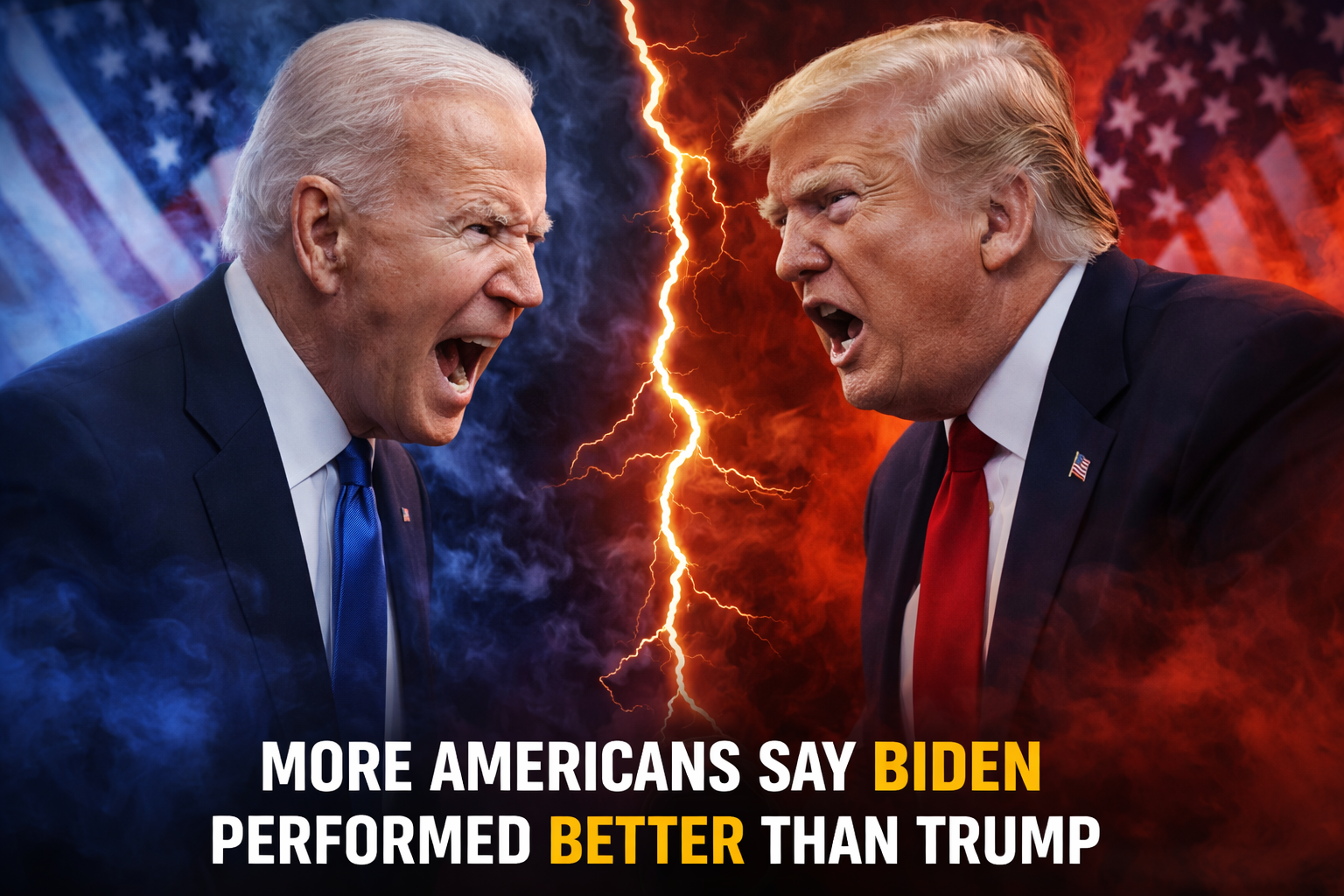
The poll’s margin of error, at roughly plus or minus two percentage points, means the 51–49 split sits within a razor-thin range, yet the directional change from previous months underscores a meaningful movement in sentiment. It echoes patterns seen in other recent surveys, where economic dissatisfaction has begun to color retrospective evaluations of past administrations.
Implications for the Political Landscape Ahead
With the 2026 midterm elections on the horizon, this emerging narrative could reshape strategies in both parties. For Republicans, the findings serve as an early warning that honeymoon-period goodwill may be fading faster than anticipated, particularly if economic indicators remain stubbornly mixed. Democrats, still regrouping after their 2024 losses, may find ammunition in these numbers to argue that Biden’s policies — on infrastructure, climate initiatives, and pandemic recovery — provided a steadier foundation than is sometimes acknowledged.
Political observers note that retrospective judgments about presidents often harden or soften over time, influenced by the performance of successors. Harry Truman left office deeply unpopular, only to see his reputation rise decades later; Ronald Reagan’s standing improved markedly after his departure. Whether Biden’s comparative gains prove durable remains uncertain, but the current data suggest that the national conversation about leadership effectiveness is far from settled.
The poll arrives at a moment of intense focus on crisis management, policy continuity, and the long shadow cast by two presidencies defined by extraordinary events. From the Capitol riot of January 2021 to the ongoing debates over immigration enforcement and global alliances, Americans continue to reassess what constitutes effective governance. For now, the data indicate that a growing segment sees Biden’s four years — once dismissed by many as faltering — in a more favorable light relative to the unfolding realities of the present administration.
This evolving public assessment underscores the fluid nature of political memory in a deeply divided nation, where yesterday’s failures can appear, in hindsight, as comparative successes. As Washington braces for the next electoral cycle, these numbers offer a snapshot of a public still searching for clarity amid ongoing uncertainty.