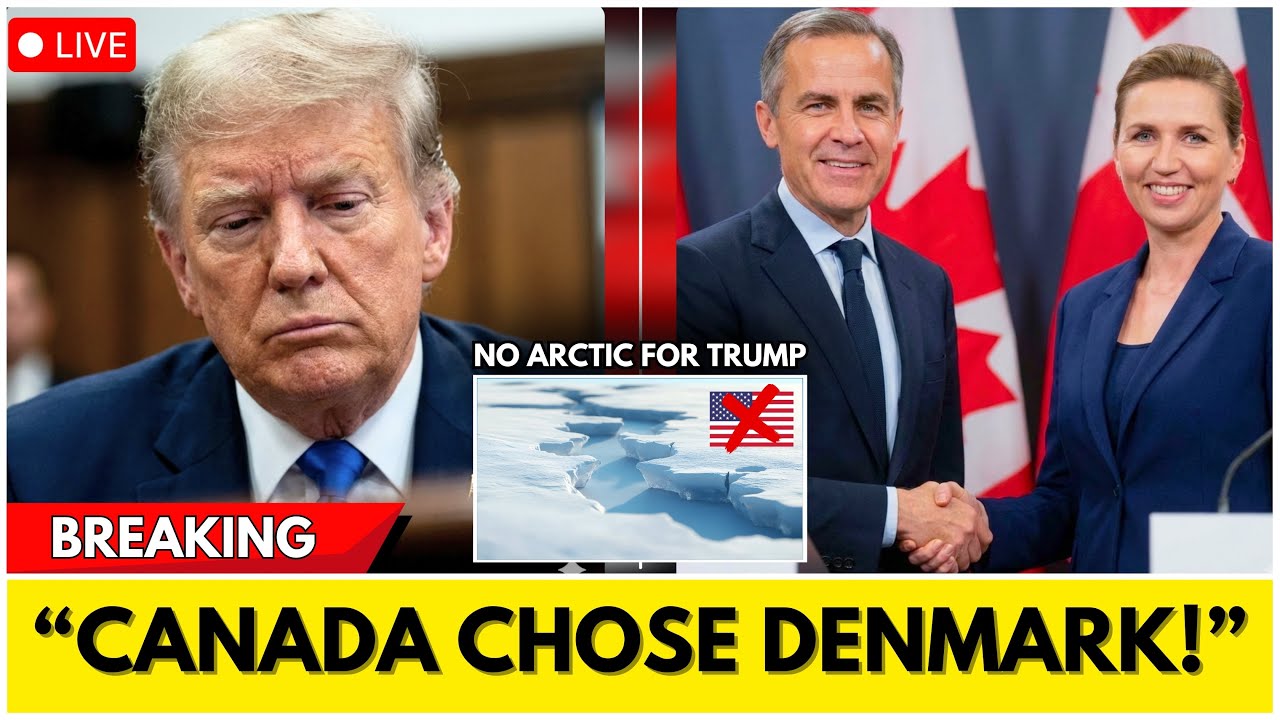
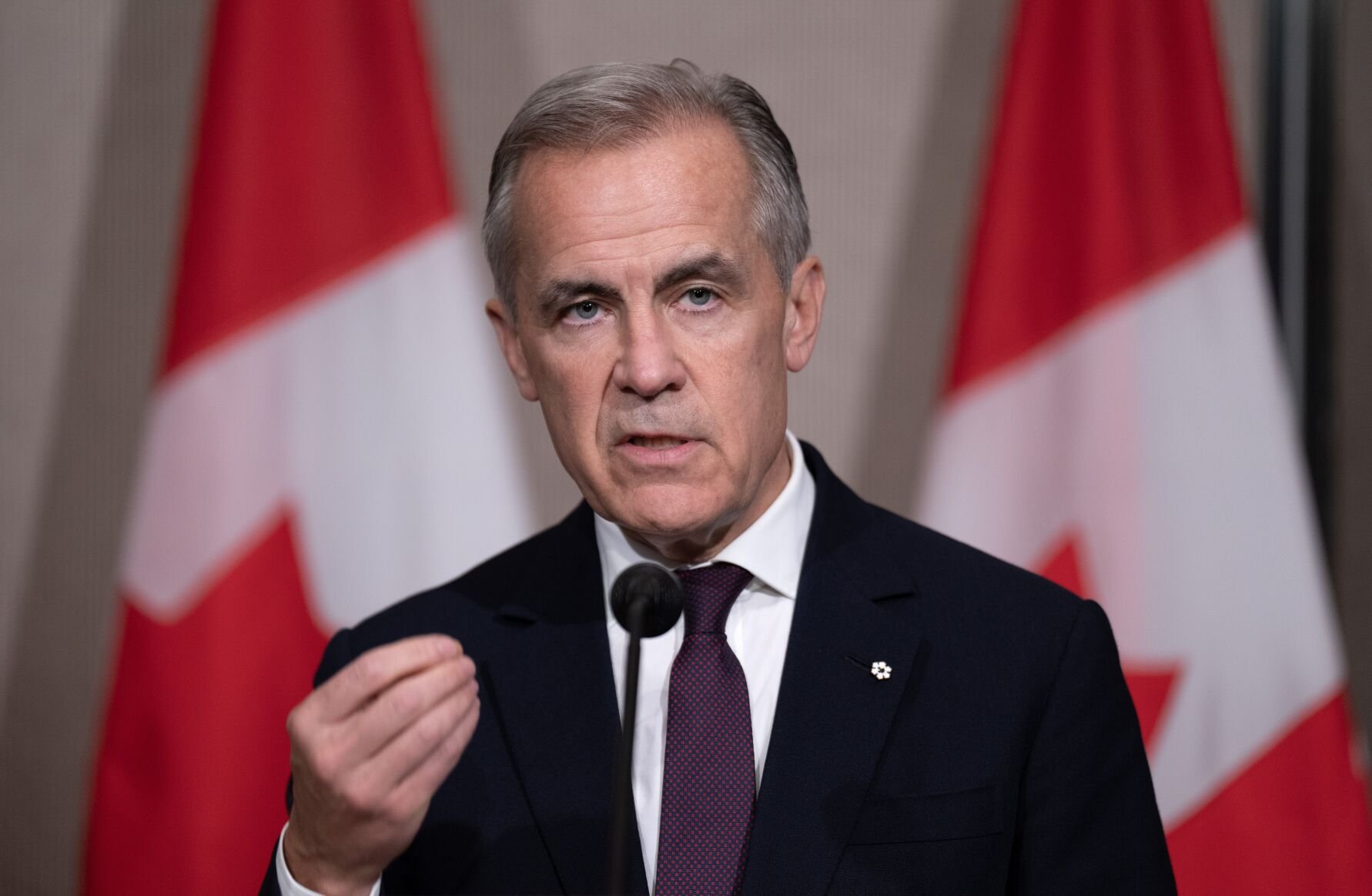
In a dramatic and unprecedented Arctic power shift, Canada has openly sided with Denmark to block any U.S. claim over Greenland, signaling a major rupture in traditional NATO dynamics. Speaking in Paris on January 6, 2026, Canadian Prime Minister Mark Carney stood beside Danish Prime Minister Mette Frederiksen and delivered a blunt message: the future of Greenland will be decided solely by the people of Denmark and Greenland. The statement came just hours after former U.S. President Donald Trump renewed threats to annex Greenland by force—an escalation that stunned allies and rewrote the rules of Arctic geopolitics.
For decades, the Arctic operated under an unspoken hierarchy where the United States led and allies followed. Greenland, while Danish territory, hosted critical U.S. military infrastructure and existed in a delicate balance of cooperation. That balance collapsed the moment Washington declared that military force remained an option to seize Greenland. Trump’s renewed push—complete with a special envoy tasked with integrating Greenland into the United States—was widely interpreted as a direct challenge to Danish sovereignty and NATO’s foundational principles.
Canada’s response was not cautious diplomacy but open defiance. Carney announced that Canada would open a new consulate in Nuuk, Greenland’s capital, and send Governor General Mary Simon, an Inuk leader with deep Arctic credentials, alongside Foreign Affairs Minister Anita Anand. The move was both strategic and symbolic: a clear endorsement of indigenous self-determination and a tangible rejection of U.S. territorial ambition. Ottawa’s message was unmistakable—Arctic sovereignty is not negotiable, even for powerful allies.
The backlash against Washington did not stop with Canada. Seven NATO allies, including France, Germany, the United Kingdom, Italy, Spain, Poland, and Denmark, issued a rare joint statement affirming that Greenland belongs to its people alone. European leaders warned that any attempt to annex Greenland would represent an existential threat to NATO itself. Instead of rallying allies behind U.S. leadership, Trump’s rhetoric triggered a coordinated diplomatic front that isolated Washington at the heart of the alliance.
At the same time, a new Canada–Nordic Arctic bloc is rapidly taking shape. Denmark, Norway, Sweden, Finland, Iceland, and Canada are deepening security coordination across critical Arctic geography—from Greenland and the North Atlantic to the Northwest Passage and the Barents Sea. This emerging alignment operates on cooperation among equals, not deference to American leadership. For the first time in modern history, Arctic security planning is moving forward with the United States on the sidelines, not at the helm.
The consequences are profound. What began as an attempt to project American power has instead eroded trust, weakened U.S. influence, and reshaped Arctic governance. Canada’s decision to stand firmly with Denmark may be remembered as the moment the Arctic shifted from U.S.-dominated leadership to true multilateral coordination. Greenland will not become American territory—but the Arctic has become a region where U.S. leadership is no longer assumed, and that may be the most significant strategic loss of all.