A Single Train Signals a Quiet Shift in North American Trade
In September 2025, a freight train carrying Canadian Western Red Spring wheat departed Manitoba and traveled more than 3,200 miles to Mexico City. The journey itself was not unusual. What made it remarkable was what it bypassed: every major American export terminal.
The train moved seamlessly through the United States without stopping at U.S. ports, delivering its cargo directly to Mexican buyers. Operated by Canadian Pacific Kansas City (CPKC), the shipment underscored a structural change in North American trade that has received relatively little public attention but carries long-term implications for the U.S. economy.
For more than a century, American ports and logistics hubs sat at the center of continental agricultural trade. Canadian grain flowed south through U.S. terminals, was loaded onto ships, and reached global markets with American infrastructure playing a central role. That model is now being rewritten.
The turning point came in 2023, when Canadian Pacific merged with Kansas City Southern to form CPKC, creating the first single-operator rail network linking Canada, the United States, and Mexico. The result was a continuous north–south corridor capable of moving goods end to end without relying on intermediate export facilities.
Since then, Canadian wheat, oats, canola products, and specialty crops have increasingly traveled directly to Mexico by rail. Industry executives describe these shipments not as test runs but as part of a growing, systematic trade pattern. Mexico, once a secondary destination for Canadian grain, has emerged as a major market as its livestock, poultry, and food-processing sectors expand.
For Mexican buyers, direct rail delivery offers predictability. It reduces exposure to port congestion, policy shifts, and border-related uncertainty. Canada has reinforced this advantage by introducing electronic export certification to streamline shipments and minimize delays.
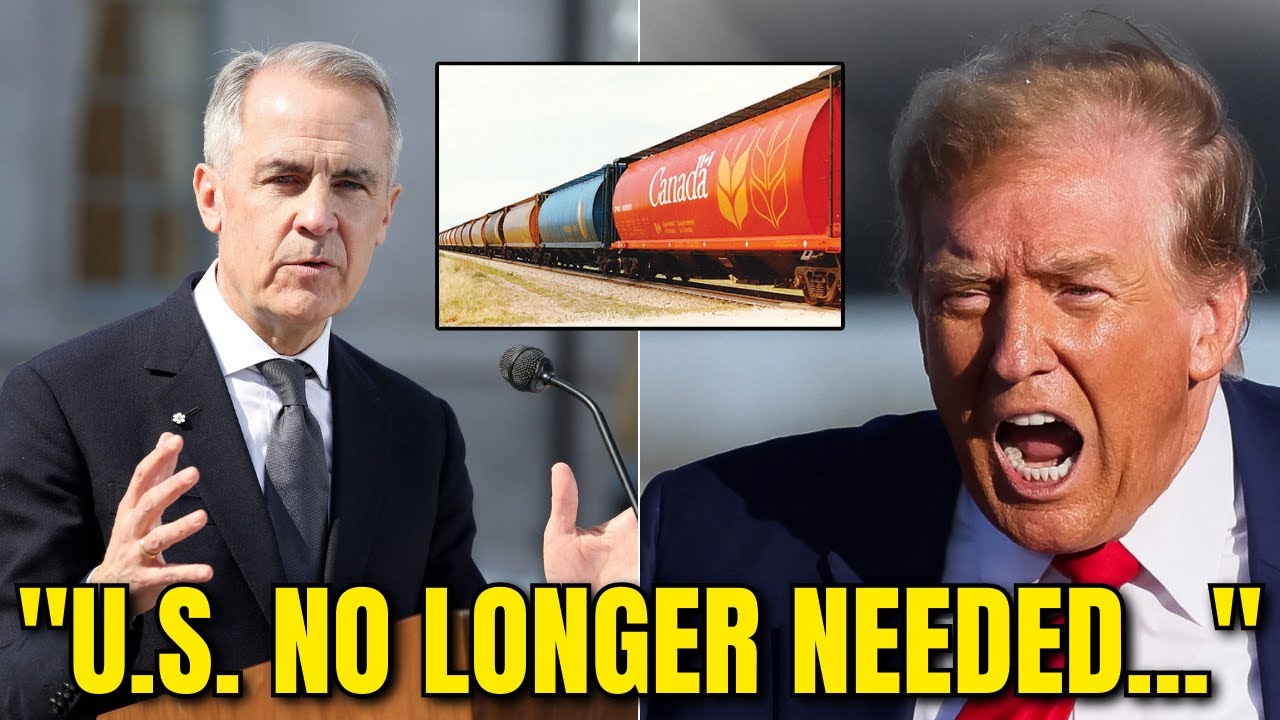
The implications for the United States are subtle but significant. Much of the rail journey still runs through American territory, with U.S. crews handling portions of the route. But while American labor and rail infrastructure remain in use, the higher-margin business tied to port handling, storage, and export services is increasingly occurring elsewhere.
Pacific Northwest ports that once handled Canadian grain destined for Asia are seeing volumes decline as shipments move through Canadian ports such as Vancouver and Prince Rupert. Gulf Coast terminals face similar pressures as grain flows bypass them entirely in favor of direct routes to Mexico or eastward shipments within Canada.
The shift also affects competitiveness. Shared logistics once lowered costs for U.S. exporters by creating scale and blending opportunities. As Canadian grain exits those channels, U.S. exporters lose efficiencies while facing increased competition from Canadian suppliers selling directly to global buyers.
Canada, for its part, is investing heavily to cement the transition. CPKC has added high-capacity hopper cars and modern locomotives designed for long-distance grain transport, while Canadian ports are expanding capacity to handle growing export volumes.
The broader lesson is not about a single shipment of wheat, but about how infrastructure shapes power. Trade relationships built on reliability and long-term planning tend to endure, regardless of political cycles. Once new routes are established and contracts signed, they rarely disappear.
That September train carried more than grain. It carried evidence that in an interconnected economy, influence flows not from geography alone, but from trust, stability, and the ability to offer dependable alternatives.