Bondi Faces Heated Judiciary Hearing as Epstein File Dispute Intensifies
WASHINGTON — Attorney General Pam Bondi endured a contentious and often combative nearly five-hour appearance before the House Judiciary Committee this week, as lawmakers pressed her over the Justice Department’s handling of documents related to the late financier Jeffrey Epstein.
The hearing, which quickly went viral across social media, centered on allegations of excessive redactions, delayed disclosures, and whether the department has been sufficiently transparent in releasing materials under the Epstein Files Transparency Act.
The Photograph That Sparked Outrage
The most explosive moment of the hearing followed the circulation of a photograph showing what appeared to be a printed document labeled with the search history of Representative Pramila Jayapal during her review of Epstein-related files at a Justice Department facility.
Members of Congress are permitted to examine less-redacted versions of certain documents in a secure DOJ reading room. The photograph raised immediate concerns among some lawmakers, who questioned whether their research activity inside that facility was being tracked without explicit notice.
Bondi did not directly address the origin of the document during the hearing, and the Justice Department has not publicly confirmed whether lawmakers’ search queries are logged as part of standard digital oversight procedures in secure facilities.
Critics characterized the image as evidence of executive overreach. Supporters of the department argue that monitoring activity inside classified systems is routine security protocol and does not constitute surveillance of lawmakers themselves.
Confrontation Over Survivors
Tensions escalated when Jayapal invited survivors of Epstein’s abuse, seated behind the committee members, to stand and identify themselves. She then asked Bondi whether the department had met directly with all victims affected by the document releases.
Bondi responded by emphasizing the department’s obligation to protect victims’ identities and personal information. She rejected the suggestion that the Justice Department had ignored survivors, though some advocacy groups continue to argue that communication has been insufficient.
The exchange drew sharp partisan reactions and became one of the most widely shared clips from the hearing.
Redactions and Political Fallout
Much of the questioning focused on redactions within the released Epstein files. Lawmakers from both parties pressed Bondi on why certain names and sections were blacked out, particularly when those names were not identified as victims.
Bondi defended the department’s approach, stating that redactions were applied to protect privacy rights and prevent harm to individuals not charged with crimes. She also maintained that the Justice Department has complied with the statutory requirements of the Transparency Act.
Representative Thomas Massie, a Republican who previously supported releasing the files, questioned Bondi about inconsistencies in redaction decisions. In one tense exchange, Bondi accused Massie of promoting what she described as “Trump arrangement syndrome,” a phrase that sparked immediate reaction from both sides of the aisle.
Kimmel Amplifies the Debate
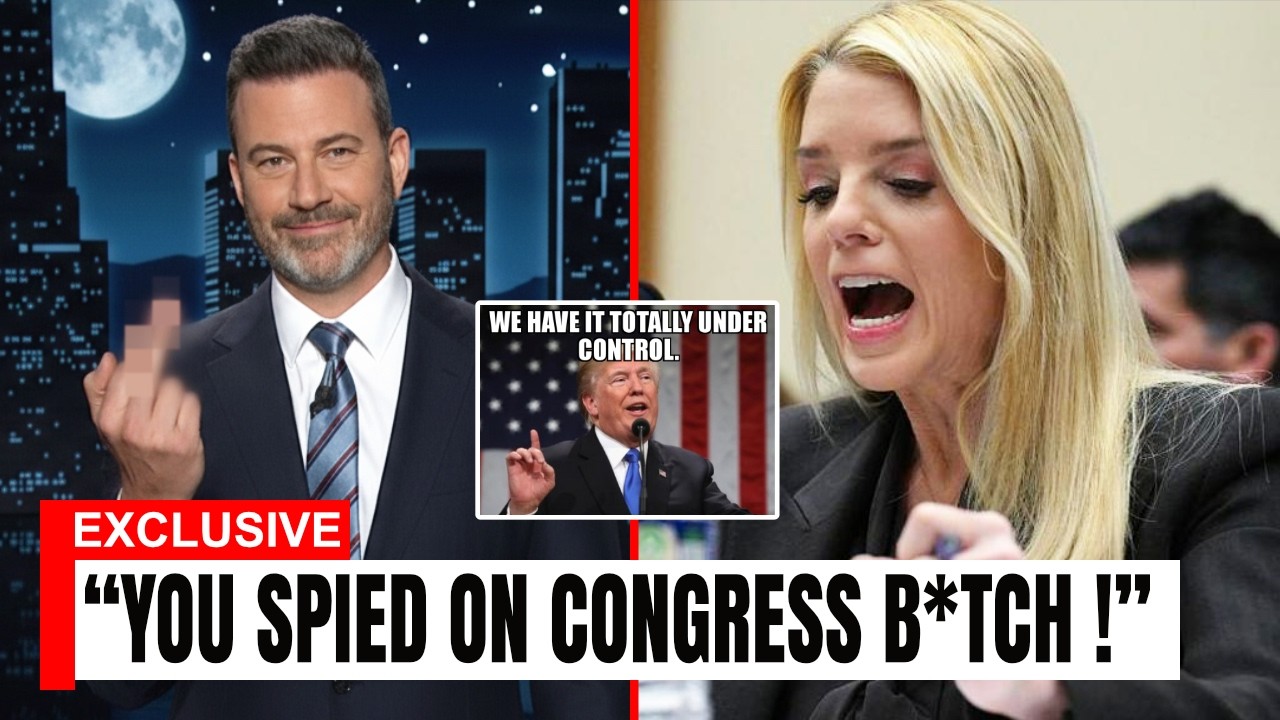
Late-night host Jimmy Kimmel devoted a lengthy segment of his program to the hearing, sharply criticizing Bondi’s performance and the administration’s handling of the files.
Kimmel questioned why the department appeared to be “tracking” congressional searches while redacting names in the documents. He also mocked Bondi for pivoting to economic indicators — including stock market performance — during portions of the hearing.
The segment quickly racked up millions of views online, further fueling public interest in the controversy.
Justice Department Response
The Justice Department has rejected claims that it is protecting any individual from scrutiny. Officials say more than 33,000 documents have already been released and that additional material is under review.
Bondi has consistently stated that protecting victims remains her top priority and that redactions are applied in accordance with federal law.
Legal experts note that agencies frequently log digital activity in secure facilities for compliance and auditing purposes. Whether such logging was appropriately disclosed to lawmakers may become a matter for further congressional review.
Broader Implications
The hearing arrives amid ongoing lawsuits seeking additional disclosures through the Freedom of Information Act. A federal judge recently ordered the DOJ to expedite certain FOIA requests related to internal communications about redactions.
The political stakes are significant. Democrats argue the redactions suggest an effort to shield powerful figures. Republicans counter that the administration is being unfairly targeted and that privacy concerns are being mischaracterized as concealment.
For now, the central dispute remains unresolved: whether the Justice Department struck the right balance between transparency and privacy in one of the most sensitive document releases in recent history.
As investigations and court proceedings continue, the Epstein file controversy shows no sign of fading from the national spotlight.