Canada’s Red-Carpet Welcome in Beijing Signals a Strategic Rebalancing—and a Message to Washington
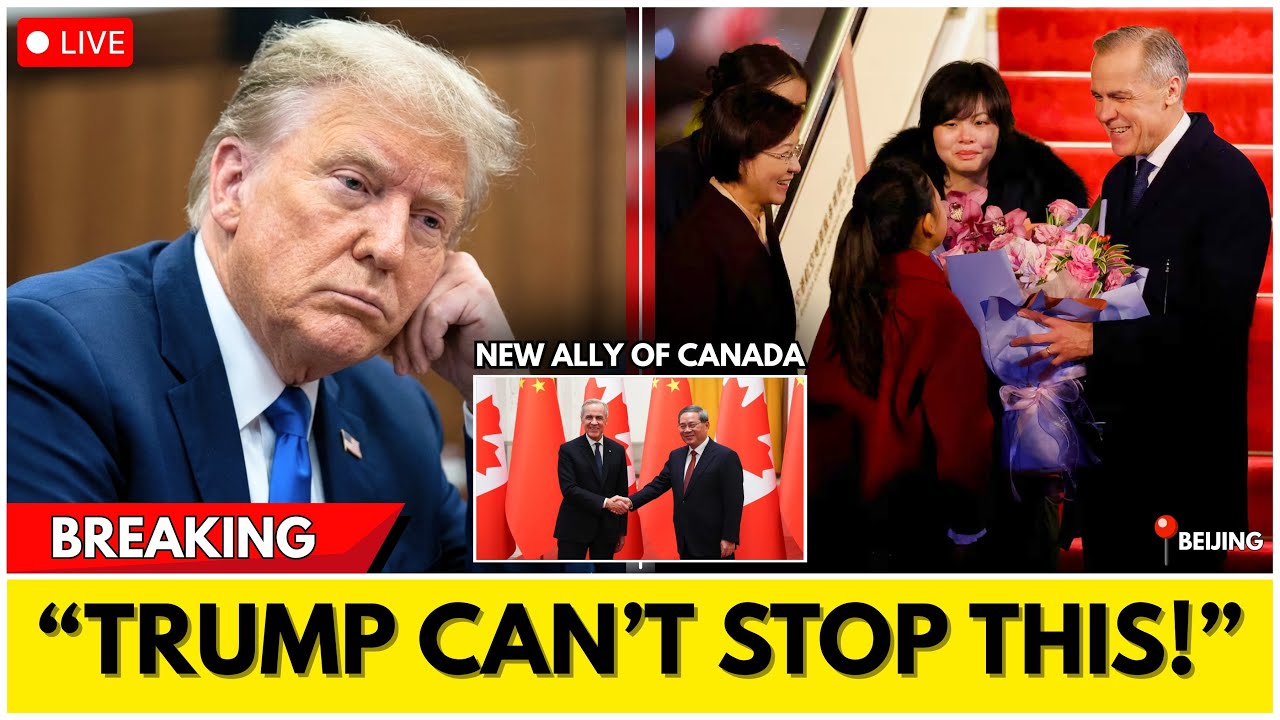
When Prime Minister Mark Carney stepped onto the red carpet at Beijing Capital International Airport on the evening of January 14, 2026, the choreography left little to chance. State television cameras rolled. Flowers were presented. Senior Chinese officials lined the tarmac. By the time Carney entered the Great Hall of the People the following morning, the symbolism was unmistakable: after nearly a decade of frozen ties, China was publicly welcoming Canada back as a strategic partner.
“This is indeed a very important meeting and the most auspicious start to a new year and a new era of relations between Canada and China,” Carney said on Thursday, praising the leadership of President Xi Jinping and describing the rapid improvement in bilateral ties as a product of sustained effort on both sides.
It was the first official visit by a Canadian prime minister to China in eight years—and the first time since 2017 that Chinese state media had accorded a Canadian leader full red-carpet treatment. The contrast with Ottawa’s deteriorating relationship with Washington could hardly have been sharper.
A Carefully Choreographed Reset
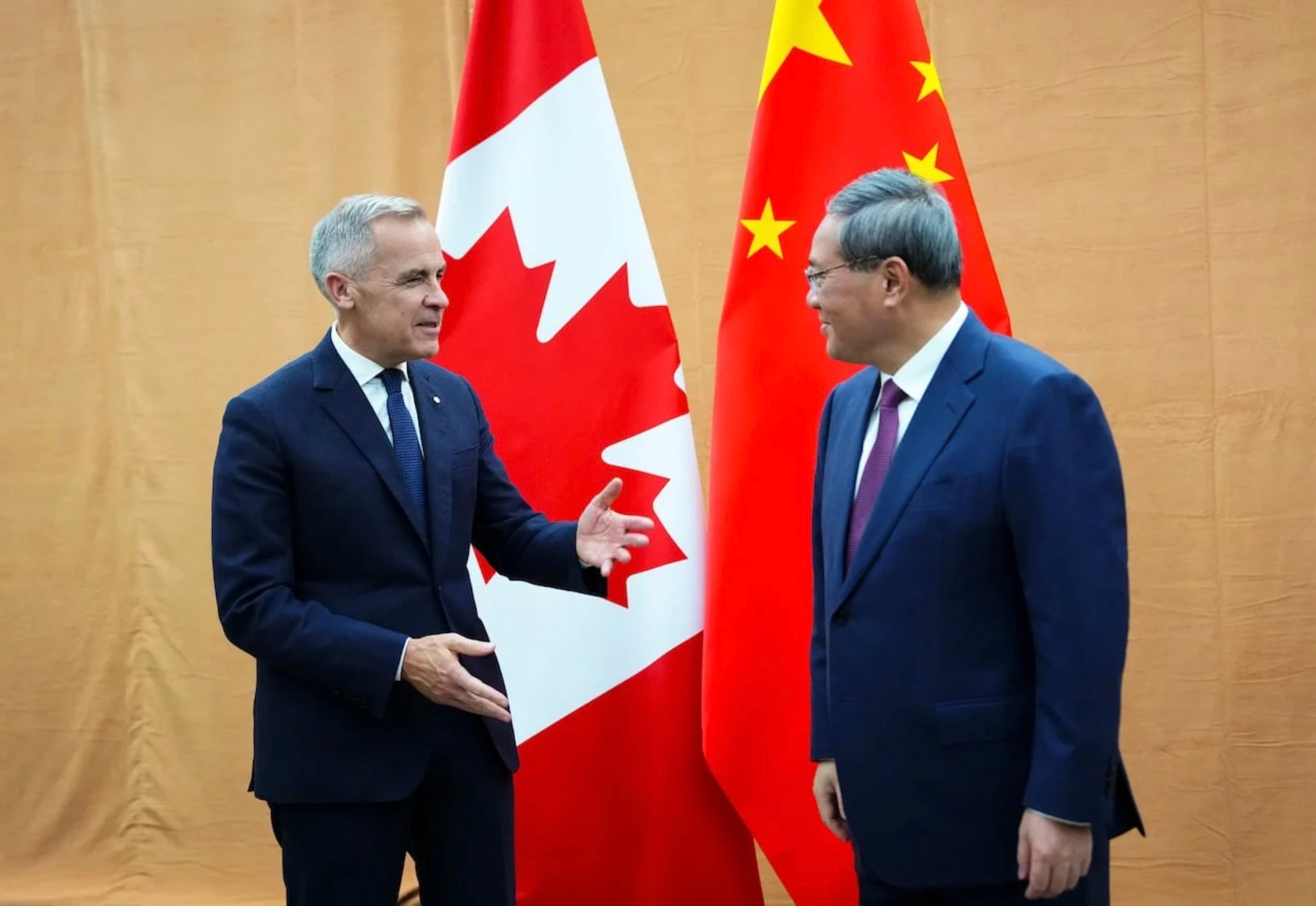
Carney’s arrival marked more than a diplomatic courtesy. Chinese officials signaled repeatedly that the visit represented a “turning point,” language echoed by Premier Li Qiang, the country’s second-most powerful leader, who received Carney personally at the Great Hall of the People on January 15.
“This is a new starting point for cooperation,” Li said, emphasizing China’s readiness to remove obstacles, improve communication, and rebuild trust. He identified clean energy, agriculture, aerospace, digital technology, and advanced manufacturing as priority areas for joint development.
Carney responded in kind, praising Xi’s leadership explicitly and repeatedly—a notable rhetorical choice in Chinese political culture—and describing the visit as laying the foundation for a “strategic partnership” spanning energy, agriculture, people-to-people ties, security cooperation, and multilateral engagement.
The language was deliberate. “Strategic partnership” implies long-term alignment across sectors, not a transactional reset.
Energy at the Center
The most consequential outcome of the visit was a new memorandum of understanding on energy cooperation, signed Thursday by Canadian Energy Minister Tim Hodgson and his Chinese counterpart. The agreement updates a 2017 framework and explicitly addresses Canadian oil, liquefied natural gas (LNG), and liquefied petroleum gas exports to China.
“The participants recognize Canada as an important potential partner in responsibly produced and reliable global oil, LNG, and LPG supply,” the document states.
That phrasing matters. It positions Canada not as a marginal supplier, but as a stable alternative to energy sources vulnerable to geopolitical disruption or political coercion. Chinese officials have watched Russia weaponize energy exports and remain wary of volatility in the Middle East. They have also taken note of how American administrations, including Donald Trump’s, have leveraged energy trade as a political tool.
“China is looking for reliable trading partners that do not use energy for coercion,” Hodgson said Thursday night.
The timing is critical. In 2024, roughly 96 percent of Canadian oil exports flowed to the United States. Since the Trans Mountain pipeline expansion came online in May of that year, Canada has gained Pacific export capacity, allowing crude to reach Asian markets directly. Chinese imports of Canadian oil have risen steadily, and LNG shipments from Canada’s first export facility began arriving in China in 2025.
The new agreement establishes ministerial-level energy dialogue—absent for nearly a decade—and commits both sides to regular meetings over the next five years. It also explicitly acknowledges that “conventional energy continues to play an important role in the energy transition,” underscoring China’s near-term demand for oil and gas alongside longer-term climate goals.
Beyond Energy: A Broader Framework
Energy was the headline, but it was far from the only area of cooperation. Ottawa and Beijing signed additional memorandums covering transnational crime, food safety, plant and animal health, wood construction, and cultural and tourism exchanges.
The crime agreement provides for intelligence sharing between the Royal Canadian Mounted Police and China’s Ministry of Public Security on issues ranging from cybercrime to money laundering. Another framework seeks to resolve long-standing agricultural trade barriers, including restrictions that have limited Canadian pet food exports since 2022.
Canadian lumber will also receive renewed promotion in Chinese construction, particularly in green and modern wood-building projects.
Taken together, the agreements form a comprehensive reset—security, trade, environment, and cultural exchange—rather than a narrow economic détente.
Investment Signals
Carney’s visit was also notable for what it signaled about Canadian openness to Chinese investment. On Thursday morning, before meeting Premier Li, Carney held discussions with executives from six major Chinese firms, including Alibaba, China National Petroleum Corporation, and Contemporary Amperex Technology.
Industry Minister Mélanie Joly said the focus was not merely trade but direct investment: Chinese companies building facilities in Canada under appropriate security review.
The joint economic roadmap released Thursday states plainly: “The Canadian side welcomes Chinese investments in Canada in areas such as energy, agriculture, consumer products, and other sectors.”
After years of Canadian caution toward Chinese capital, the language represents a significant shift.
The Washington Context
The geopolitical backdrop is impossible to ignore. President Donald Trump has imposed sweeping tariffs on Canadian goods, including steel, aluminum, and lumber, and has repeatedly threatened additional across-the-board duties. His rhetoric—at times suggesting Canada could become the “51st state”—has fueled political backlash north of the border.
Carney’s Beijing visit offered a clear counterpoint. While Washington applied pressure, Beijing extended ceremony. While Trump questioned Canadian sovereignty, China treated Carney as the leader of an independent nation with strategic choices.
Chinese state media was explicit. Global Times argued that Ottawa’s experience “blindly following the United States” had awakened its sense of strategic autonomy. China Daily warned that subordinating China policy to Washington would render the reset meaningless.
A Strategic Bet
Carney’s meeting with President Xi Jinping, scheduled for Friday, January 16, is expected to cap the visit and set the long-term framework for relations. In Chinese political culture, Xi’s personal reception carries decisive weight, signaling unified leadership support for engagement.
Carney’s strategy is clear: diversify Canada’s economic and diplomatic options, reduce dependence on U.S. goodwill, and pursue engagement rather than confrontation with Beijing. It is a calculated bet that a middle power can maintain relationships with both superpowers without being forced to choose sides.
Whether the approach succeeds remains uncertain. But the red carpets, the language of partnership, and the concrete agreements signed in Beijing suggest that China is prepared to reward Canadian autonomy with access, investment, and long-term cooperation.
For Washington, the message is equally clear. Canada has options—and it is increasingly willing to use them.