Canada has reached a strategic inflection point, and Prime Minister Mark Carney is making it clear that the country will no longer assume stability in its relationship with the United States. Following Donald Trump’s latest hostile remarks toward Canada—reviving threats over trade, sovereignty, and even annexation—Carney’s response has been calm, firm, and unmistakably serious. Defense, sovereignty, and national readiness have moved to the center of Canada’s political agenda, signaling a decisive shift in how Ottawa views the risks posed by Trump’s return to global power politics.
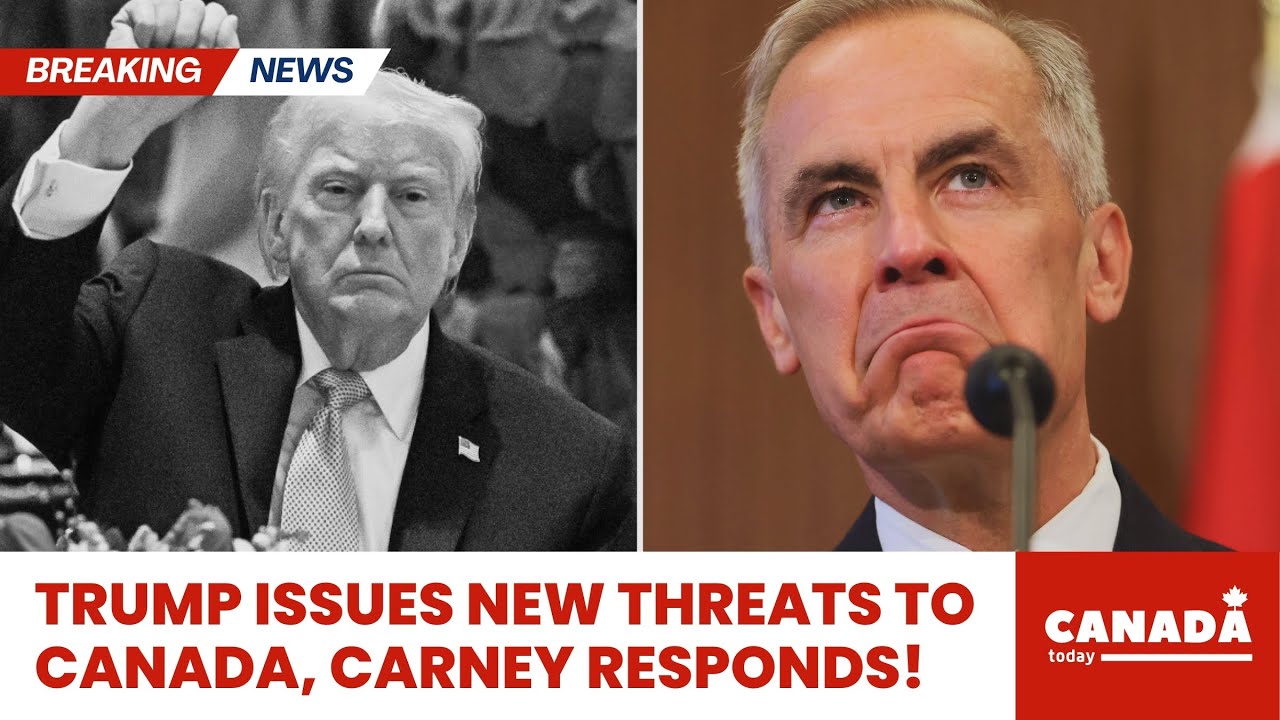
Analysts warn that Trump’s governing style fundamentally destabilizes predictable international relationships. His worldview treats alliances as leverage, agreements as temporary tools, and economic or military pressure as routine instruments of influence. Canada has experienced this firsthand during previous trade battles, particularly surrounding the USMCA/KUSMA agreement, which Trump has repeatedly threatened to abandon. With inflation rising and economic uncertainty growing, any disruption to trade would have severe consequences for both countries—but Canada’s vulnerability is especially acute.
What has changed is the scope of concern. Experts now argue that Trump’s increasingly aggressive global posture—visible in recent actions and rhetoric involving Venezuela, Greenland, Nigeria, and broader military assertiveness—extends beyond economics. When the United States projects power recklessly, its closest allies become indirect targets. Security specialists caution that Canada’s proximity, shared infrastructure, and strategic alignment with Washington place it squarely within any expanded risk environment created by Trump’s policies.
Equally troubling is Trump’s language toward Canada itself. References to taking Canada, undermining its sovereignty, or treating it as a subordinate asset were once dismissed as bluster. Today, those remarks are being reassessed as reflections of a mindset rooted in dominance and exploitation. Analysts emphasize that Trump’s rhetoric matters because it reveals how he views power: weaken partners, create dependency, and extract leverage. In that framework, Canada is not just a neighbor—it is a strategic resource.

This is the geopolitical reality shaping Carney’s leadership. Rather than relying solely on diplomacy and goodwill, his government is accelerating long-overdue defense modernization. A major focus is Arctic security, where climate change and global competition are rapidly transforming the region into a strategic flashpoint. Canada’s renewed interest in amphibious and ice-capable naval platforms reflects a recognition that sovereignty must be actively protected, not assumed. These capabilities would allow Canada to respond to emergencies, defend remote regions, and deter external pressure across its vast coastline.
Carney’s message is not one of aggression, but of maturity. Canada remains committed to cooperation, restraint, and international law—but it is no longer willing to confuse values with guarantees. Strength, in this context, is not provocation; it is protection. By investing in defense readiness and asserting sovereignty, Canada is preparing for a more unpredictable world shaped by leaders like Trump. In doing so, Carney is signaling that Canada will not hesitate, will not be intimidated, and will not leave its future to chance.